By Jim Glaub
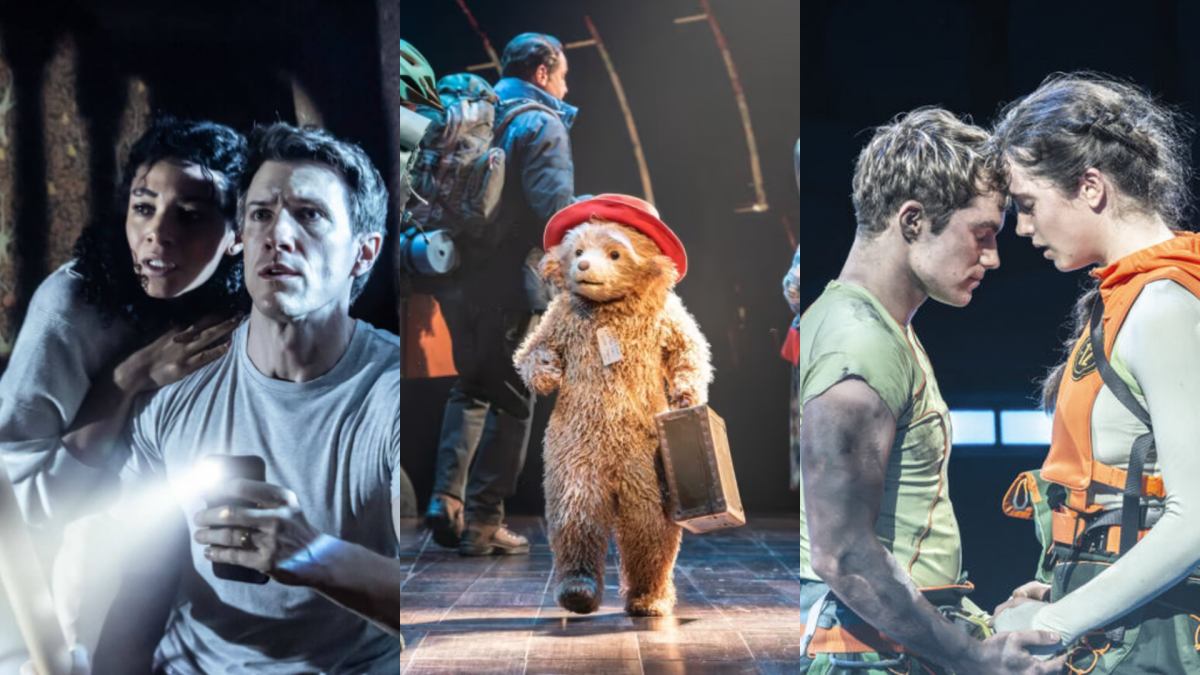
I went to London to see what the city is building on its stages—the shows with American transfer potential, the ones that could cross the Atlantic. They are not playing it safe.
What struck me wasn’t scale or budgets. It was confidence. These shows trust the audience. They trust silence, darkness, discomfort, sincerity, and joy. Across five very different productions, some with major IP, I kept seeing the same thing… experiences built with intention, generosity, and nerve.
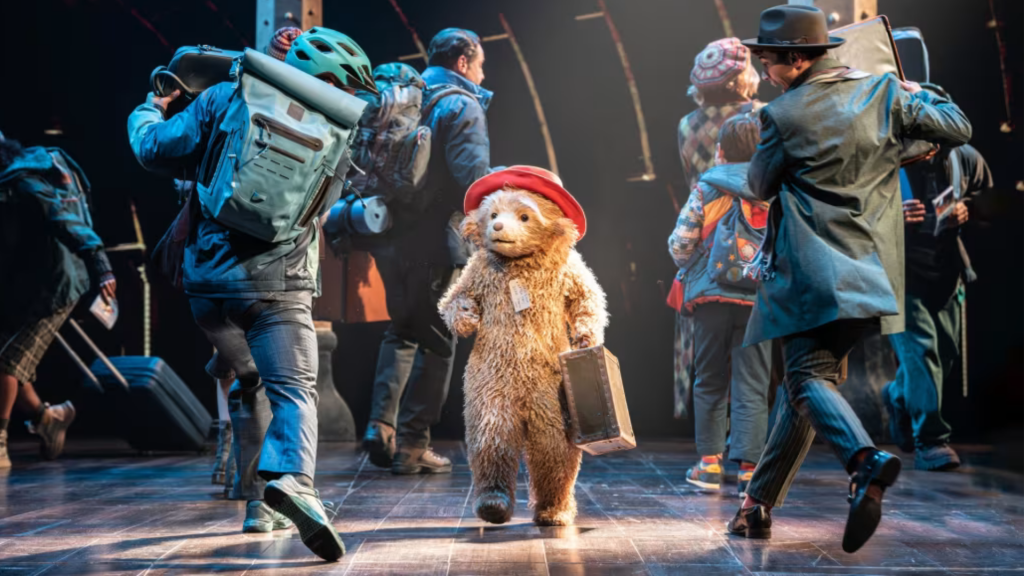
Paddington The Musical
Paddington is a big, beautiful act of kindness.
It would have been easy to turn this into a brand exercise or a loud family spectacle. Instead, what Luke Sheppard has directed is something far more generous. After & Juliet, My Son’s a Queer, and What’s New Pussycat?, he’s clearly mastered the balance of spectacle and joy. Here, he adds something rarer… taste.
This show radiates love. It’s not cloying or forced, but sincere and deeply felt in a way that sneaks up on you.
The craft is all there: earwormy music, stunning costumes, and a storybook set that never tips into theme park. There’s cheekiness, smart jokes, and theatrical magic, but what really lands is care. There’s respect for the character, for the audience, and for the idea that kindness itself is radical when placed at the center of a show.
I left smiling, teary, and oddly lighter, like I was carrying a piece of Paddington out into the world.
In a moment where so much entertainment is built on snark and edge, this show dares to be earnest. It works, and the world needs it.
The Unlikely Pilgrimage of Harold Fry
I walked into Harold Fry on its third preview with absolutely no idea what I was about to see. I assumed a twee British musical about an older man finding self-discovery.
I was wrong, and this show walked straight into my heart.
The ensemble carries the story with devastating warmth, and the lead performance by the incredible Mark Addy holds everything together without ever pushing, and Passenger’s score is quietly extraordinary. I need the cast album immediately.
What you get here isn’t just a story, but a gently transformational experience. It met me exactly where I was.
The tears came constantly, not necessarily from sadness, but from catharsis and from the release of believing that kindness still works, that community still matters, that people are actually good.
It has the imagination and emotional intelligence of Matilda, Fun Home, and Maybe Happy Ending, paired with the gentle epic quality of the movies of Forrest Gump and Big Fish. What stayed with me most was how it treats grief: not as an ending, but as a love letter to what we can no longer have. And yet, it gives you hope and a reminder that we only make it through by walking together.
This show will work in New York, not because it’s British, but because it’s human.
Some shows impress you, some entertain you – this one holds you.
The Hunger Games: On Stage
The Hunger Games on stage is a flex.
I’m still processing the scale. A full restaurant experience, a massive purpose-built theatre, an epic live production that never feels tentative. It’s ambitious, confident, and somehow still warm and human.
Songbird, the on-site restaurant, sets the tone before you ever reach your seat with excellent food, seamless service, and intentional design. Then, the theatre reveals the real triumph.
The logistics are staggering: audience flow, staffing, and distinct stadium sections. The way performers move through that space is unreal. Conor McPherson is a perfect choice for this material, and if this comes to New York, I’m excited to see what he sharpens.
What fascinated me most was the audience perspective. Are we the Capitol, consuming and cheering? Or are we aligned with the Resistance? I loved what the stadium gave us.
The show is powerful and devastating when it counts. The large-scale moments satisfy. SPOILER: Rue’s death wrecked me.
The Hunger Games isn’t about overthrowing a system by force, it’s about destabilizing it through community. That idea pulses beneath the spectacle, and when it surfaces, it’s electric.
Bold, thrilling theatre that embraces scale without sacrificing meaning.
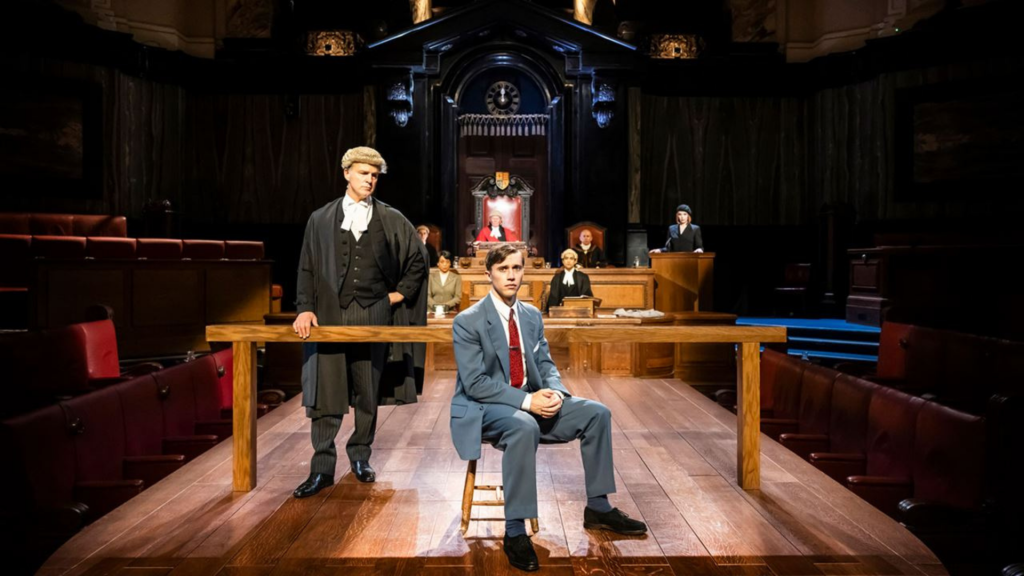
Witness for the Prosecution
If The Hunger Games is a flex of scale, Witness for the Prosecution is a flex of precision.
Agatha Christie’s courtroom thriller is staged inside London’s historic County Hall, not as a gimmick, but as a fully realized piece of environmental storytelling. You sit in the actual council chamber, sometimes in the jury box. The architecture does half the directing for you.
There’s no spectacle here, but there’s no spectacle needed.
The tension builds through language, timing, and the slow tightening of narrative screws. You feel implicated. You lean forward differently when the witness stand is only a few feet away, when the accused glances in your direction, and when the barrister pauses just long enough for doubt to bloom.
This is London trusting craft and that a 70-year-old play can still devastate if the container is right. It’s trusting that audiences don’t need reinvention, they need precision.
The result is gripping and a reminder that boldness isn’t always about size, sometimes it’s about restraint.
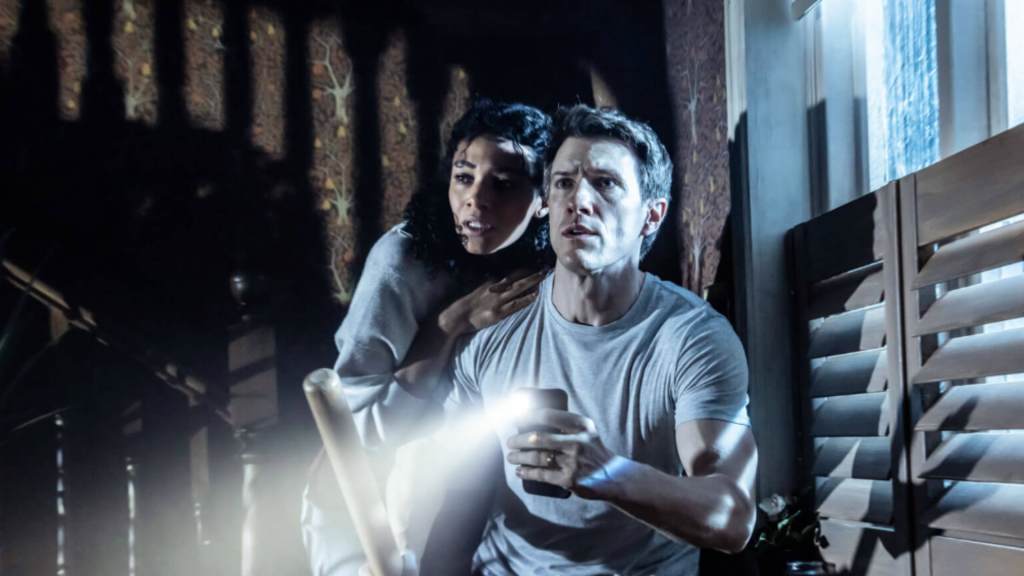
Paranormal Activity
Paranormal Activity is a deeply satisfying night at the theatre.
This isn’t prestige angst or horror bait – it’s craft, control, and a genuinely fun, pulse-raising experience. Think roller coaster, not haunted house. You know you’re safe… but your body doesn’t.
The direction by Felix Barrett (the vision behind Sleep No More) understands exactly how to use darkness, silence, and timing. It lets anticipation do the work. The set and performers ground the story just enough that the scares land hard, but the true stars are the lighting, sound, and theatrical tricks.
What’s especially smart is how accessible it is. You don’t need to know the films; you don’t even need to like horror. This is theatre flexing its unique power, reminding you that live performance can mess with your nervous system in ways film never can.
Paranormal Activity is slick, controlled, confident, and great night out that knows exactly when to let you breathe… and when not to.
What London Is Doing Right Now
These productions trust the audience. They invest in design without forgetting storytelling. They allow joy, grief, fear, and wonder to exist without apology.
London theatre right now feels alive, confident, and creatively fearless. After a week like this, it’s impossible not to come home inspired.