Categories
Broadway's Best Cover Story

Tony Nominations 2026: The Surprises, The Snubs, and the Shows That Were Forgotten

The Tony nominations are here, which means Broadway has entered its annual season of joy, confusion, congratulations, and group chats simply reading: “Wait. WHAT?”

Every year, nomination morning tells us what Broadway loved, what it respected, what it rewarded, and what it somehow pretended not to see. This year, the story was especially strange: Hollywood names hit a wall, a divisive revival became a nomination magnet, a closed show refused to disappear, and several major productions were left standing outside the party.

Here are the biggest surprises and snubs of the season.

The Biggest Surprises

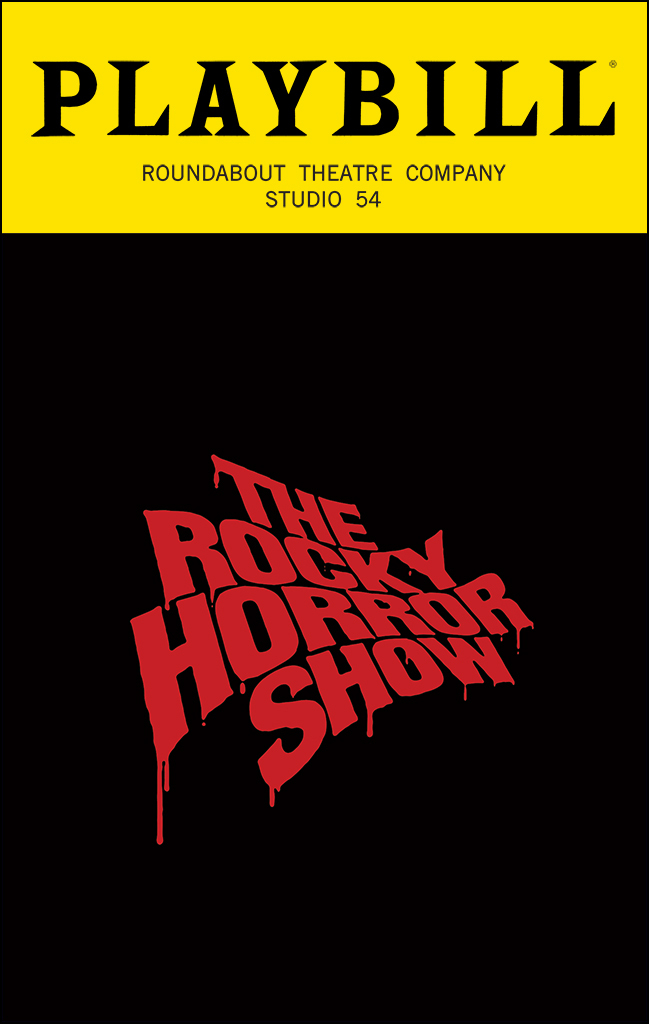
The Rocky Horror Show Crashes the Party

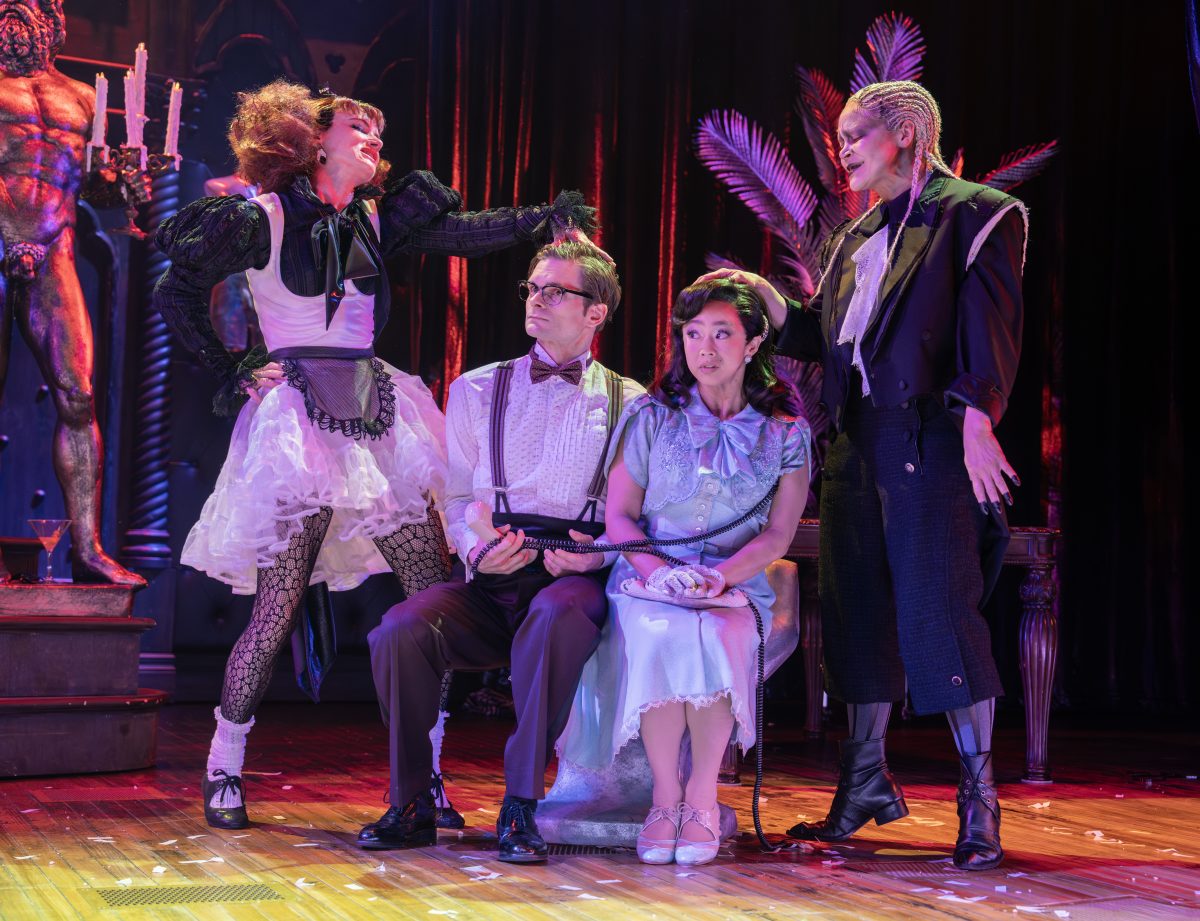
No one had The Rocky Horror Show down as one of the season’s Tony powerhouses.

The production was divisive and the reviews were mixed. The vibe was less “awards juggernaut” and more “late-night costume party with better cheekbones.”

And yet, nine nominations: Luke Evans, Stephanie Hsu, and Rachel Dratch all landed acting nominations, helping turn Rocky Horror into one of the most recognized productions of the season. Whatever the nominators saw in that show, they saw it loudly.
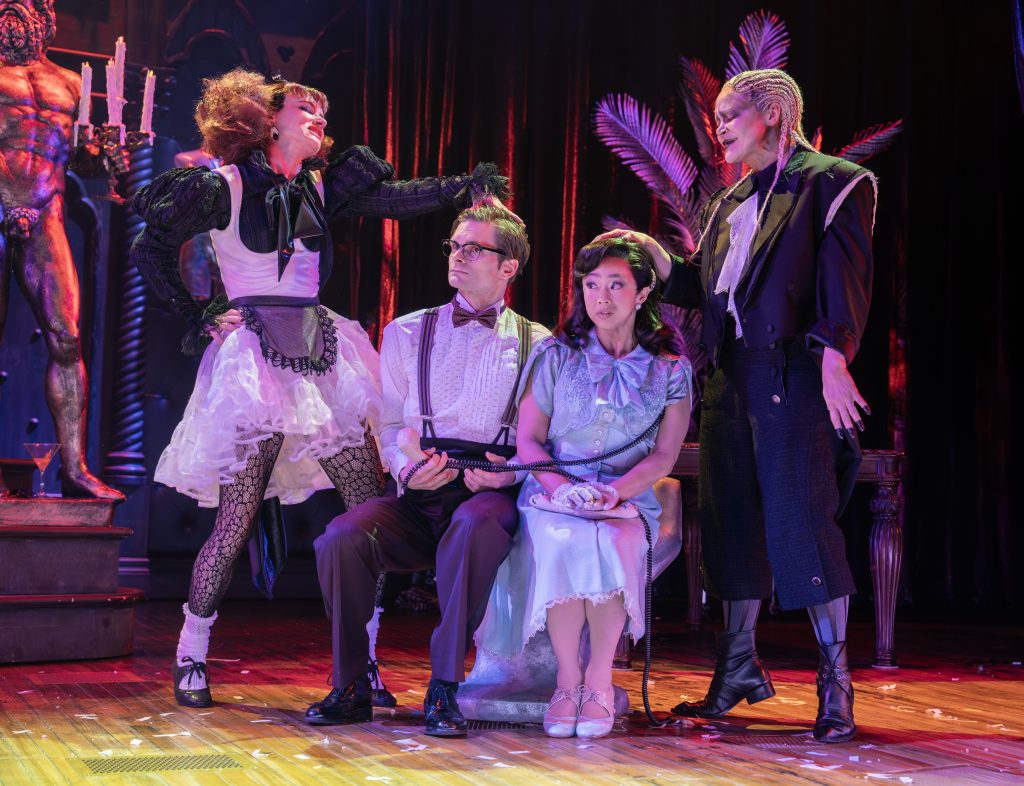
Photo by Joan Marcus

Alden Ehrenreich Proves He Belongs

Hollywood actors arrive on Broadway every season. Some prove something, some remind us they went to drama school, but Alden Ehrenreich did the former.

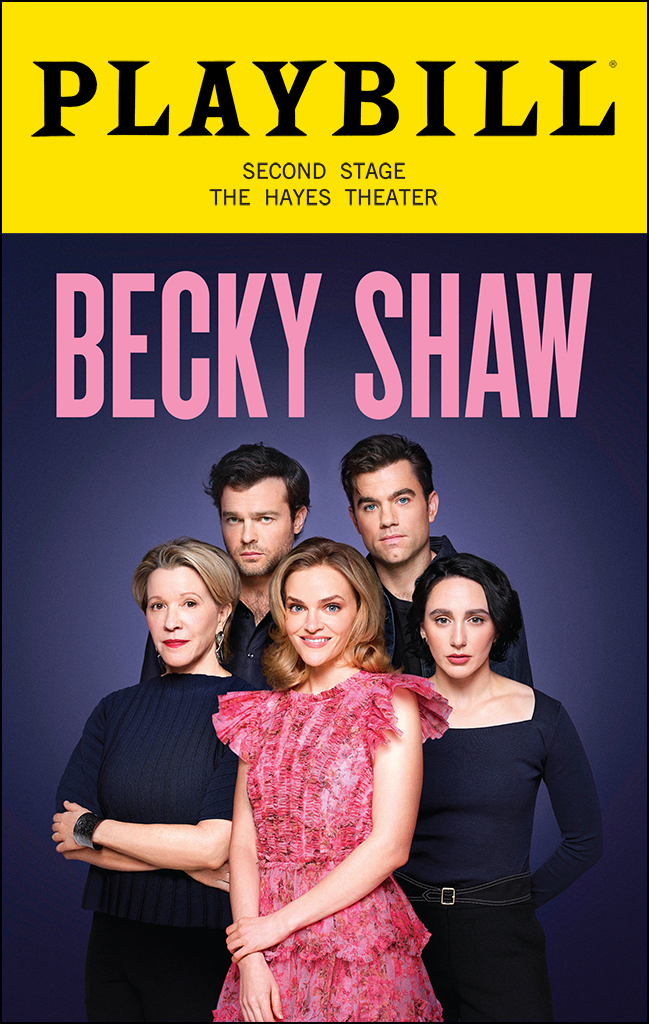
Ehrenreich’s Broadway debut in Becky Shaw earned him a nomination in a stacked acting field. It wasn’t a novelty pick, but proof of a fully alive stage performance. The nomination signals something important: this was not “movie star visits Broadway,” but an actor meeting the stage on its own terms.

Will Harrison Refuses to Be Forgotten

Nominations can be brutal to shows that close early in the season. Once the lights go out, the Tony machine usually moves on.

However, Will Harrison’s performance in Punch stayed with nominators, earning him a nomination months after the production closed and edging out splashier names like Adrien Brody and Jon Bernthal.

June Squibb Proves that Age is Just a Number

At age 96, June Squibb wouldn’t be blamed for relaxing in retirement, but instead, she took her incredible talents to the Helen Hayes Theatre, where she starred as the titular character in Marjorie Prime. With her breathtaking performance, June Squibb earned her first ever Tony Award nomination, and she’s broken the record for the oldest ever acting nominee. 
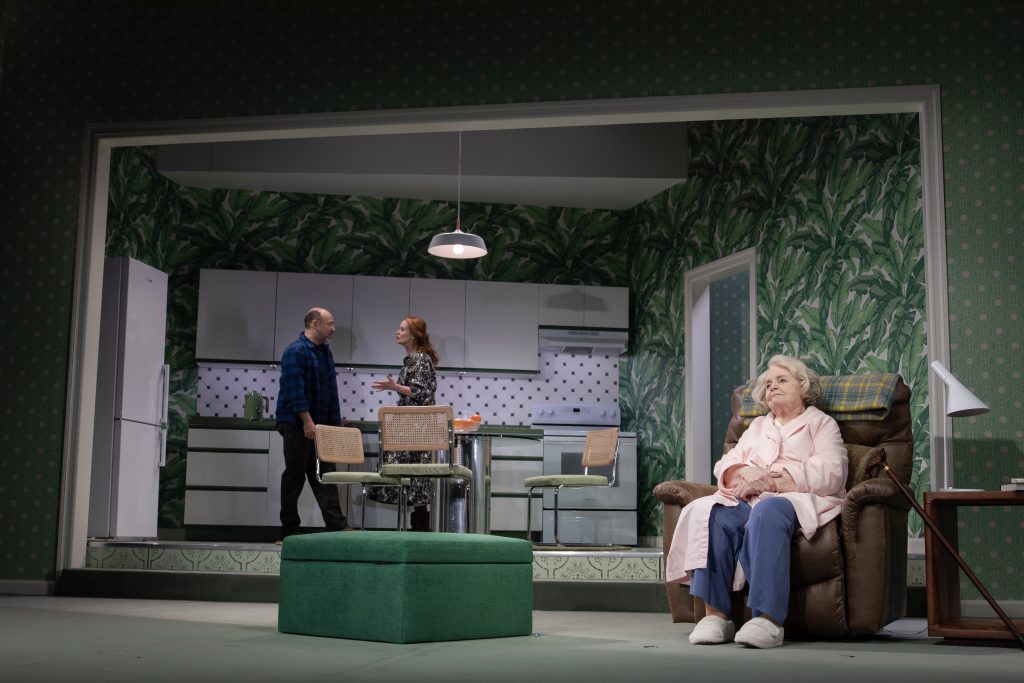
Photo by Joan Marcus

Danny Burstein Etches His Name in the Record Books

The formidable Danny Burstein earned his ninth Tony nomination, also for Marjorie Prime, breaking the record for most male acting nominations. The record of eight was previously held by Jason Robards, Jr. and it stood for nearly fifty years. With one Tony win under his belt for his role in Moulin Rouge!, might Burstein join the esteemed list of two-time winners this year?

The Biggest Snubs

Proof, Beaches, Art, and The Queen of Versailles Disappear

The loudest snubs this year may not be individual omissions, but full-show disappearances.

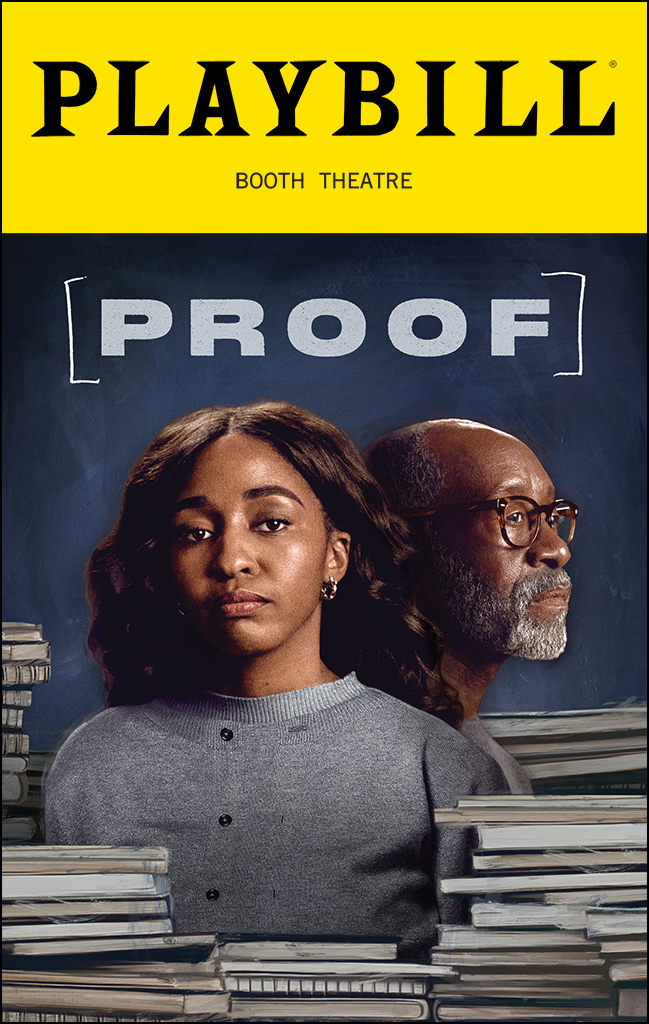
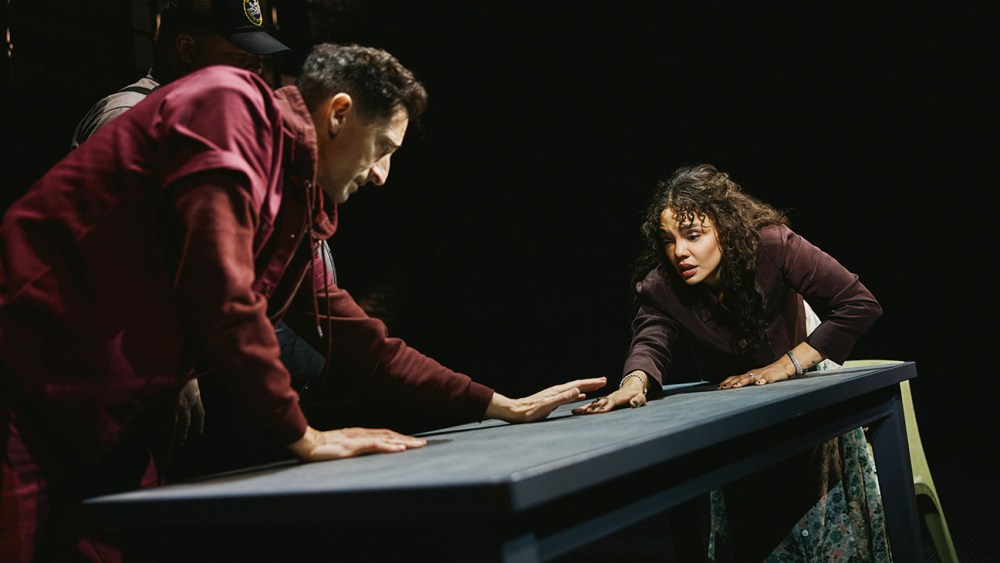
Proof, a revival of David Auburn’s Pulitzer Prize-winning play, arrived on Broadway boasting an Oscar nominee in Don Cheadle, an Emmy Award winner in Ayo Edebiri, and two-time Tony Award winner Kara Young. On paper, it should have registered somewhere. Instead, it garnered zero nominations.
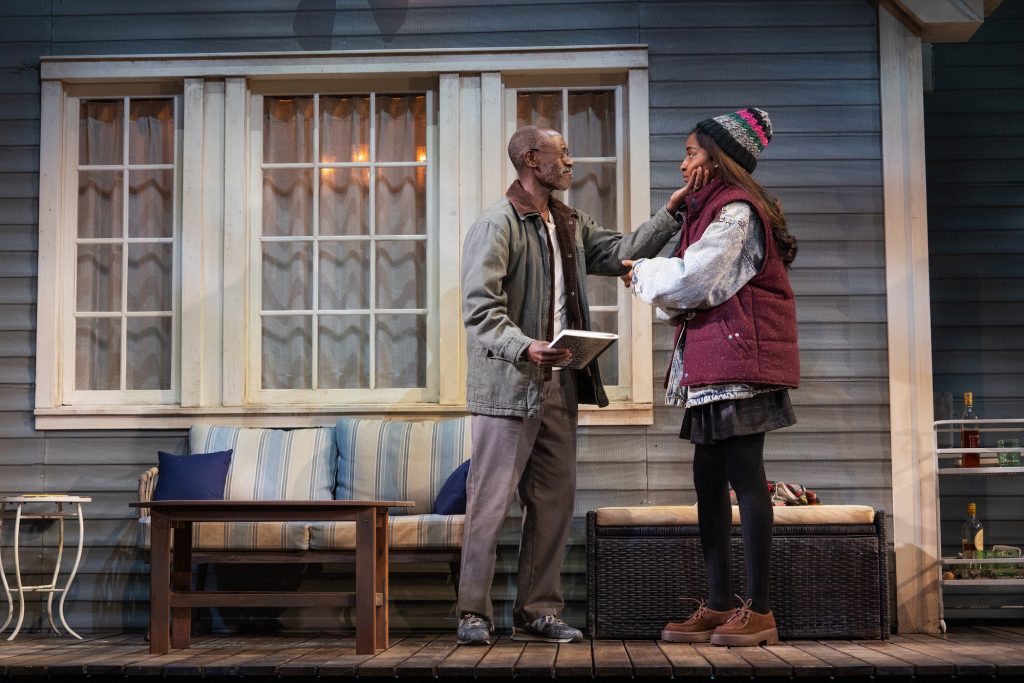
Photo by Matthew Murphy

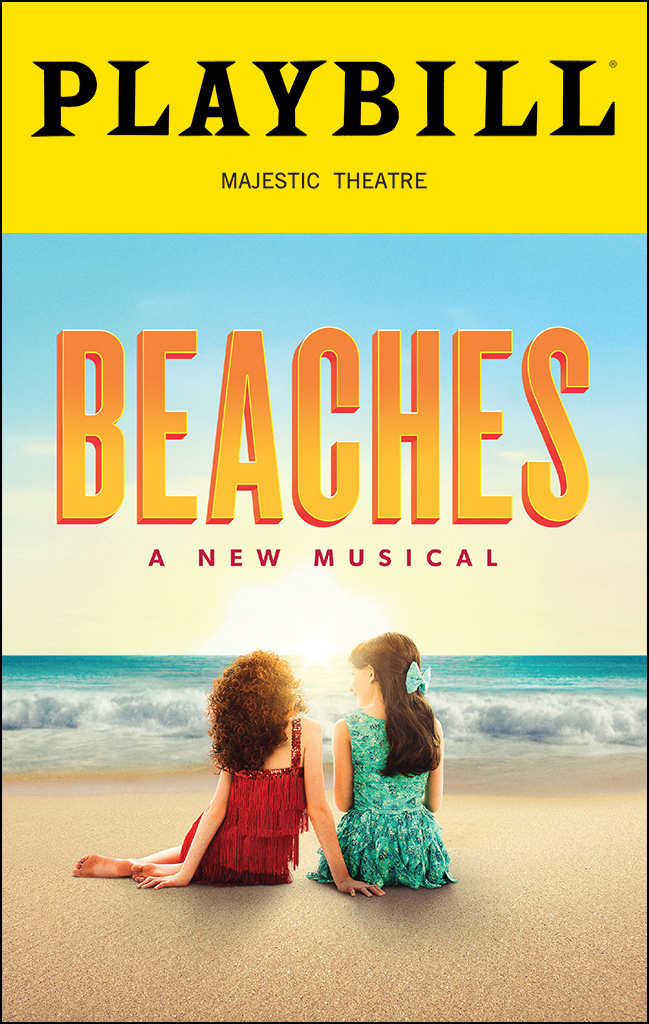
Beaches offered old-school musical emotion, a classic score, big voices, friendship, heartbreak, and a sincere Broadway sweep that the industry often claims to miss. Jessica Vosk seemed like a viable acting contender, carrying the voice, humor, heart, and impossible Bette Midler-sized expectations of Cee Cee Bloom. Still, the show was left off the board entirely.

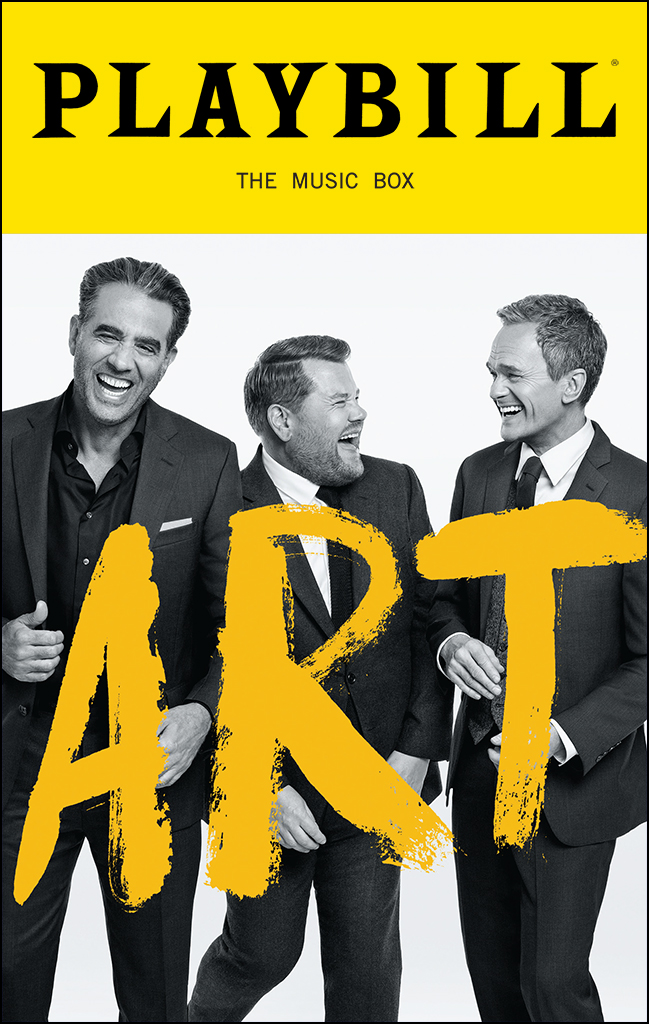
Art, the Yasmina Reza penned play is a three-hander that boasted favorites from stage and screen: Bobby Cannavale, James Corden, and Neil Patrick Harris in a curious comedy that turns the art world in its ear. In a season heavy with play revivals, Art couldn’t seem to craft a narrative that fit it into the awards season conversation.

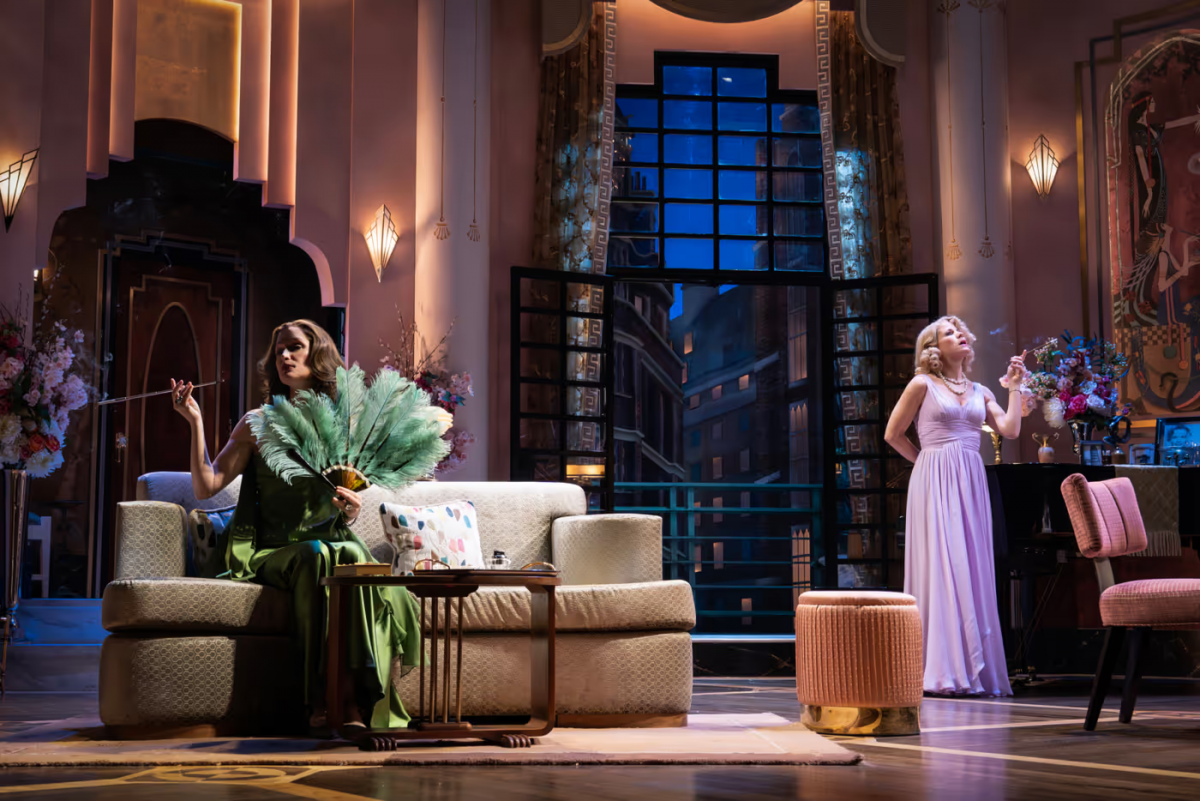
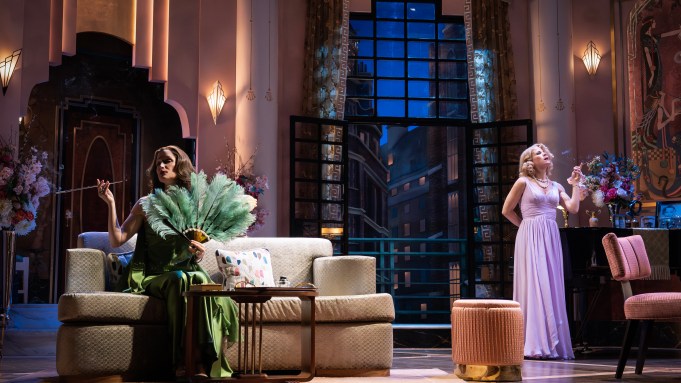
The Queen of Versailles arrived with ambition, scale, spectacle, and serious pedigree with music and lyrics by Stephen Schwartz and Broadway icon Kristin Chenoweth as leading lady. A big musical with a recognizable title simply vanishing from the nominations is its own kind of Broadway whiplash.

Photo by Julieta Cervantes

Lea Michele and Aaron Tveit Miss for Chess

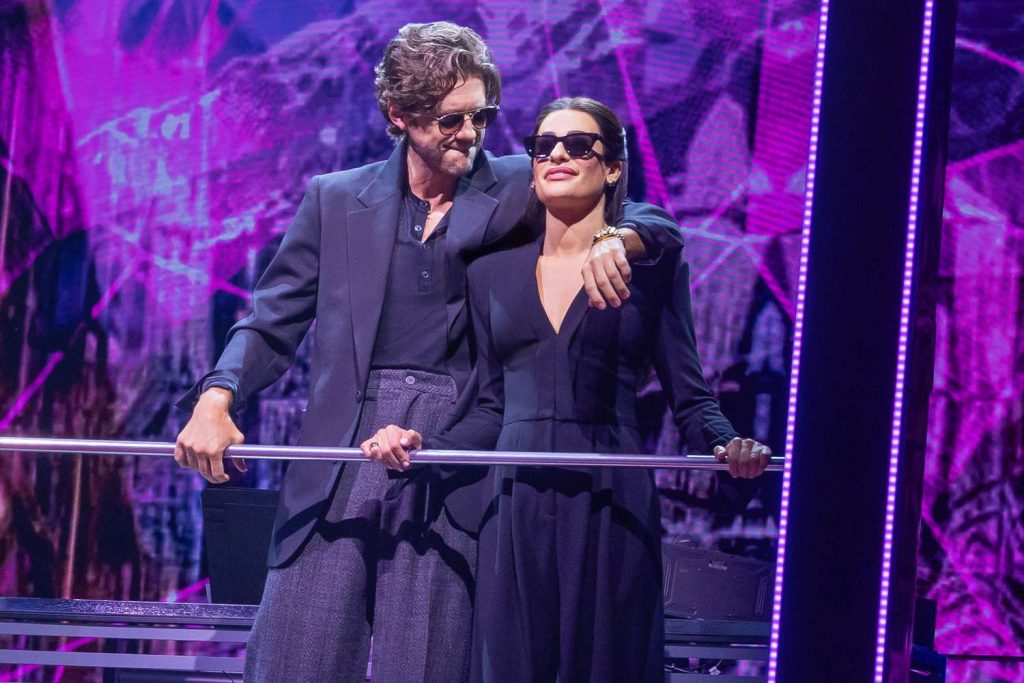
Chess was one of the season’s hotter tickets, powered by Lea Michele and Aaron Tveit. But Tony nominators played a different game. Neither star received a nomination, even as co-stars Nicholas Christopher, Hannah Cruz, and Bryce Pinkham all made the cut. For Michele, the omission is especially striking. Despite her high-profile Broadway career and major comeback narrative, she remains without a Tony nomination.

Photo by Matthew Murphy

Hollywood’s Heavy Hitters Hit a Wall

Adrien Brody came to Broadway with a fresh Oscar glow from The Brutalist. Keanu Reeves and Taraji P. Henson arrived with serious screen credibility. Neither made the Tony list.

The reminder is familiar, but still fascinating: Broadway is not easily seduced by screen prestige. Film careers do matter, especially when considering the financial aspects of Broadway. But this year, nominators have their own standards and their own allergy to inevitability.

Laurie Metcalf Gets One Seat Instead of Two

Laurie Metcalf did receive a nomination for Death of a Salesman, because Laurie Metcalf being excellent on stage is one of the few civic institutions we can still count on. Yet, her acclaimed work in Little Bear Ridge Road was left out, ending the possibility of a rare double acting nomination in a single Tony season.

Nevertheless, Metcalf has 7 nominations to her name (including 4 in a row from 2016-2019) and 2 wins, so her status as one of the great stage actors of her generation is certainly cemented.
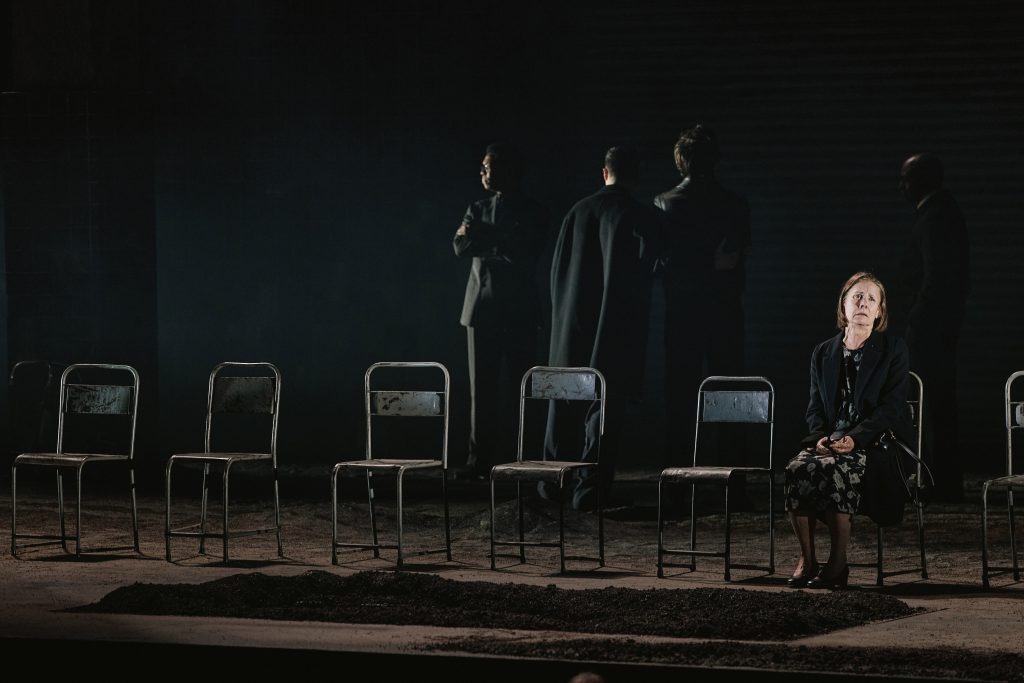
Photo by Emilio Madrid

What the Nominations Really Told Us

The Tony ceremony will sort out the winners soon enough, but nomination morning already told its own story: that Broadway is willing to reopen complicated doors. It told us movie stars still have to prove themselves under stage lights, and that a closed show can still haunt nominators in the best possible way. 

The Tonys honor excellence, but every year, they also reveal Broadway’s mood, blind spots, grudges, crushes, and strange little instincts. Time will tell if the awardees follow these trends.
Categories
Broadway's Best

Broadway’s 2025/2026 Season Is Closed. So What Was It All About?

The curtain has come down. Every show has opened and the 2025–2026 Broadway season is now history. Before the Tonys hand out their envelopes and the discourse shifts to who won and who was snubbed, it’s worth pausing to ask a quieter question: what was Broadway actually saying this year?

Taken together, this season told us something, not in any single show, but in the accumulation of them: the recurring questions, the shared anxieties, the themes that kept surfacing across very different stages. Here’s what we found.

By Jim Glaub


This season asked: who are you, really?

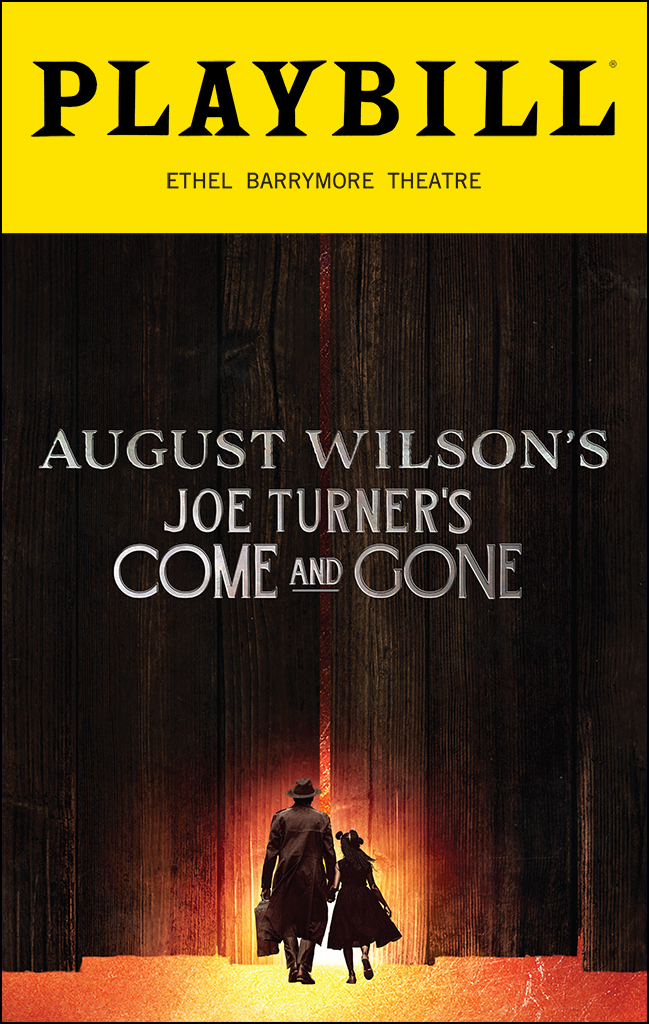
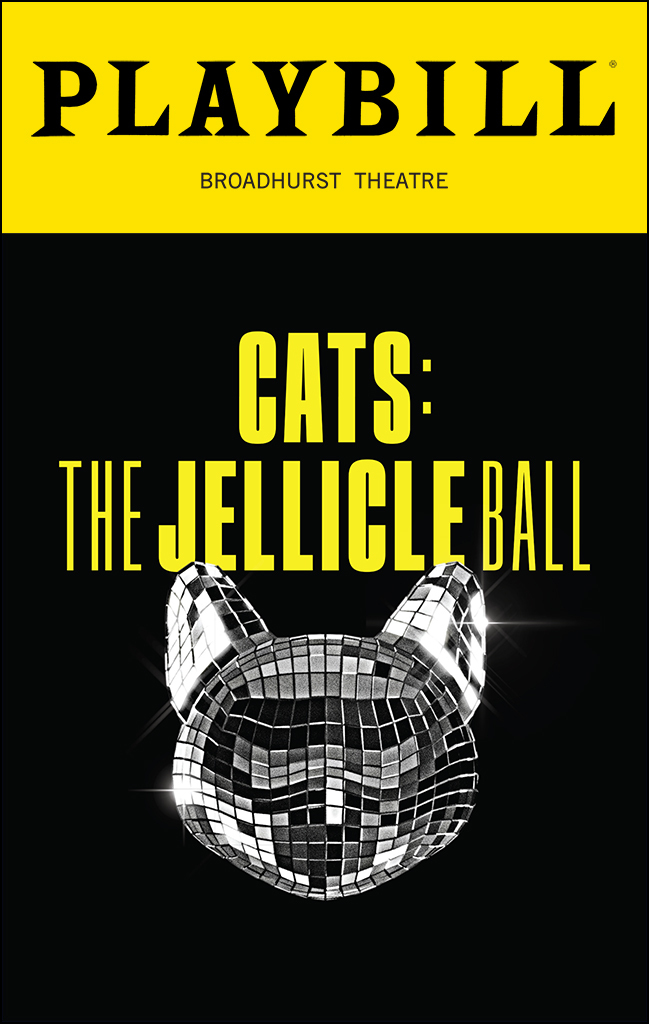
Identity was everywhere. The Lost Boys explored the fear of growing up and what we sacrifice when we refuse to. Cats: The Jellicle Ball turned selfhood into something performed, shaped by community and spectacle (and death drops). Call Me Izzy made the simple act of naming yourself feel like the most consequential thing a person can do. Joe Turner’s Come and Gone went deeper still, tracing what it takes to reclaim an identity that history tried to erase, and The Rocky Horror Picture Show reminded us, joyfully and defiantly, that self-expression needs no apology.

These are completely different shows circling the same question: who am I?

This season asked: can you trust what you know?

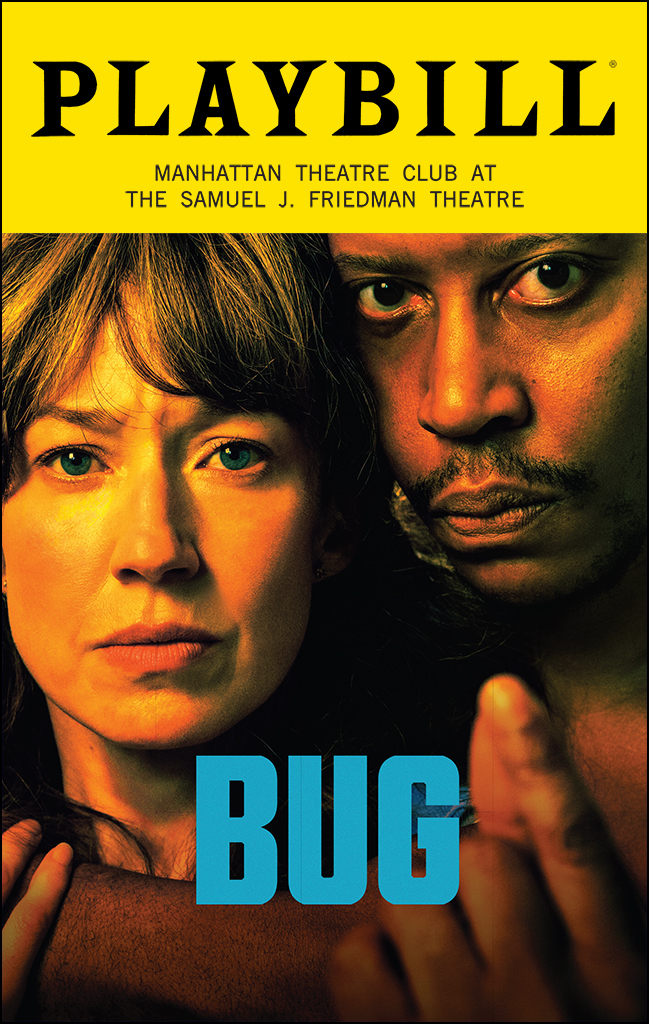
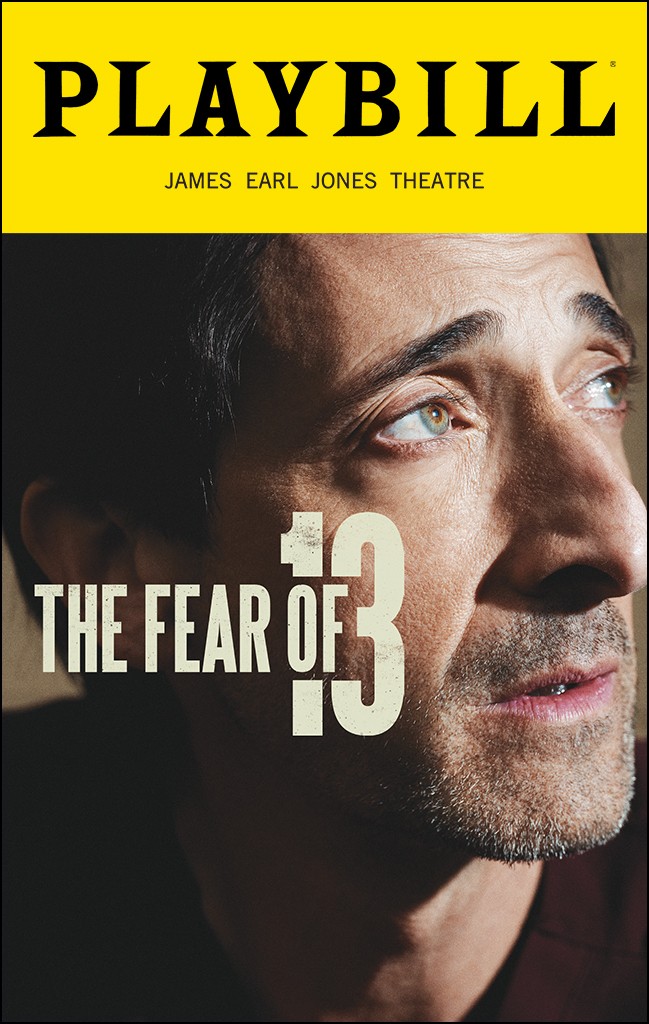
Several productions this year put perception itself on trial. Proof followed a woman wrestling with whether she can trust her own brilliant mind. Bug watched paranoia quietly dismantle reality. Oedipus delivered its ancient warning: that the truth, once uncovered, cannot be unfound. Marjorie Prime asked something gentler but no less unsettling, whether the past is something we remember, or something we build. And The Fear of 13 argued that truth doesn’t reveal itself. Someone has to fight for it.

In a year when fact and fiction feel increasingly negotiable, Broadway put truth itself on trial and didn’t offer a verdict.

This season asked: who built this, and who pays for it?

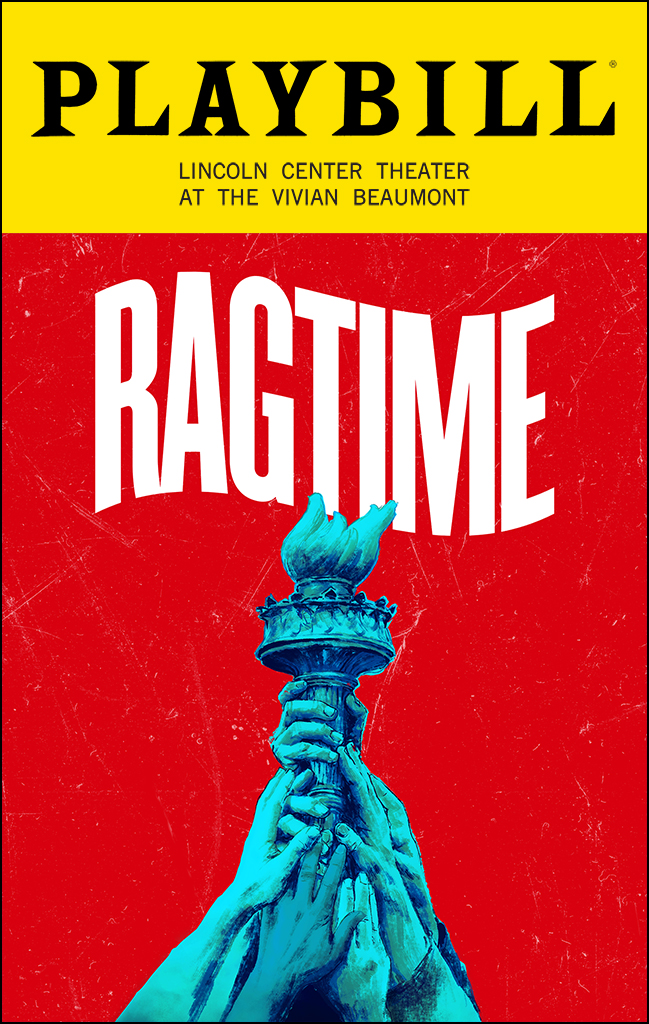
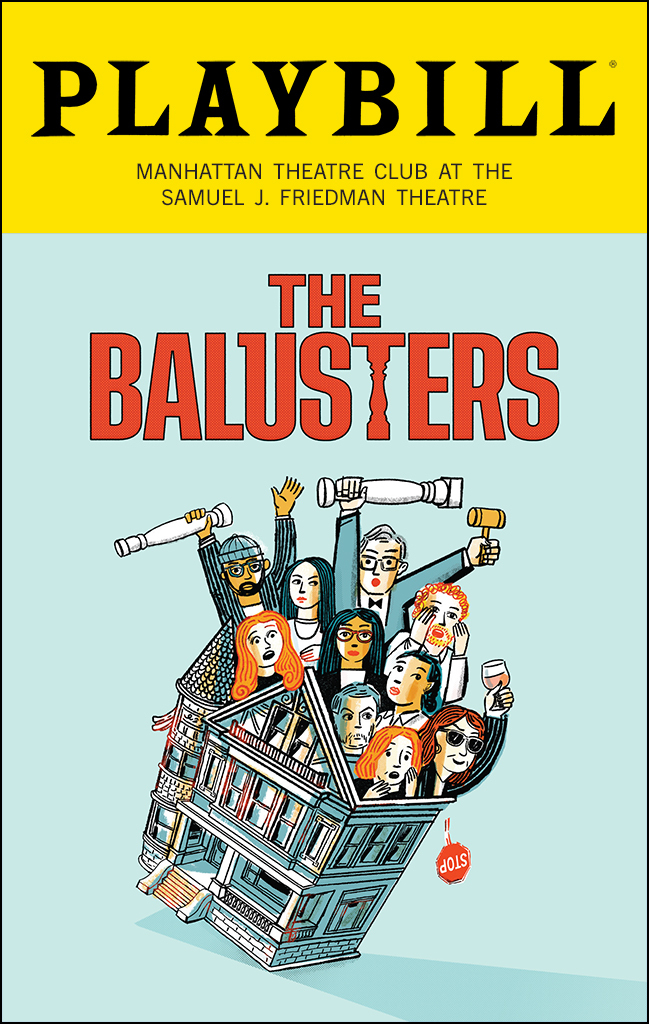
The season’s most politically charged work gathered around questions of power and legacy. Death of a Salesman, as devastating as ever, laid bare the gap between the American Dream and American reality. Ragtime brilliantly mapped the contradictions of national identity across race, class, and immigrant experience. The Queen of Versailles examined what excess looks like from the inside, and what it looks like when it falls apart. Giant traced how power shifts across generations, while Liberation and The Balusters both asked how long any system can hold before its foundations show.

These are not abstract questions, they are the questions on the front page every morning. This season, Broadway held up a mirror and the reflection was uncomfortably familiar.

This season asked: what happens after the moment you can’t take back?

Some of the season’s most gripping work lived in aftermath. Dog Day Afternoon put a desperate man under a public microscope and watched the pressure build. Punch followed the ripple effects of a single act of violence far beyond its origin. Becky Shaw looked at the quieter damage: what happens when well-meaning people make careless choices and the people around them absorb the cost. Waiting for Godot made the case, quietly, that choosing not to act is still a choice, and it carries weight. Little Bear Ridge Road asked what happens when emotional distance quietly becomes permanent.

This season asked: who do you hold onto?

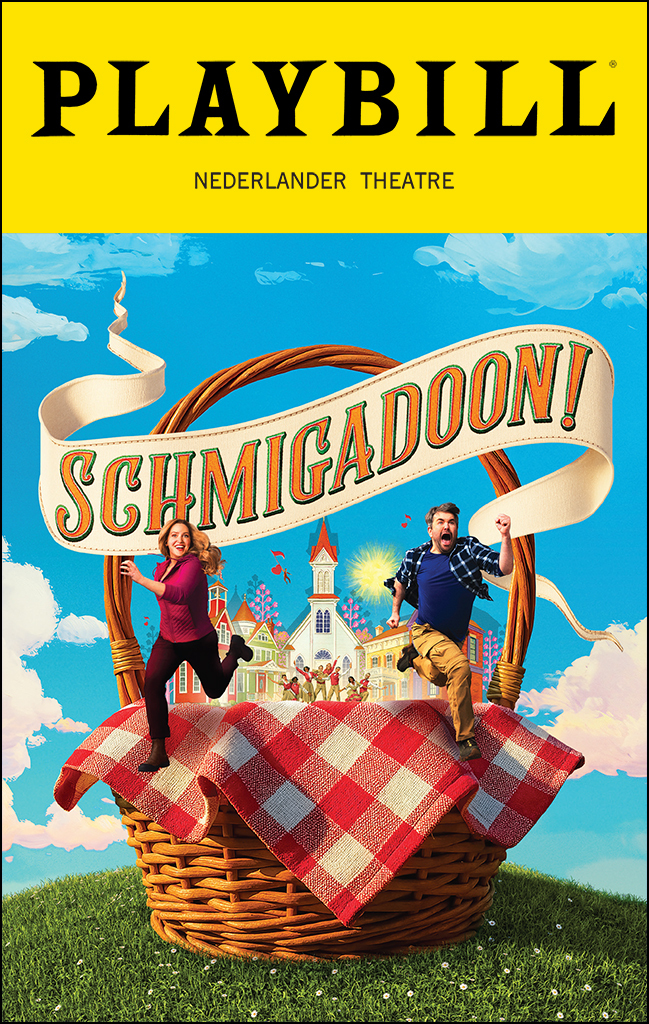
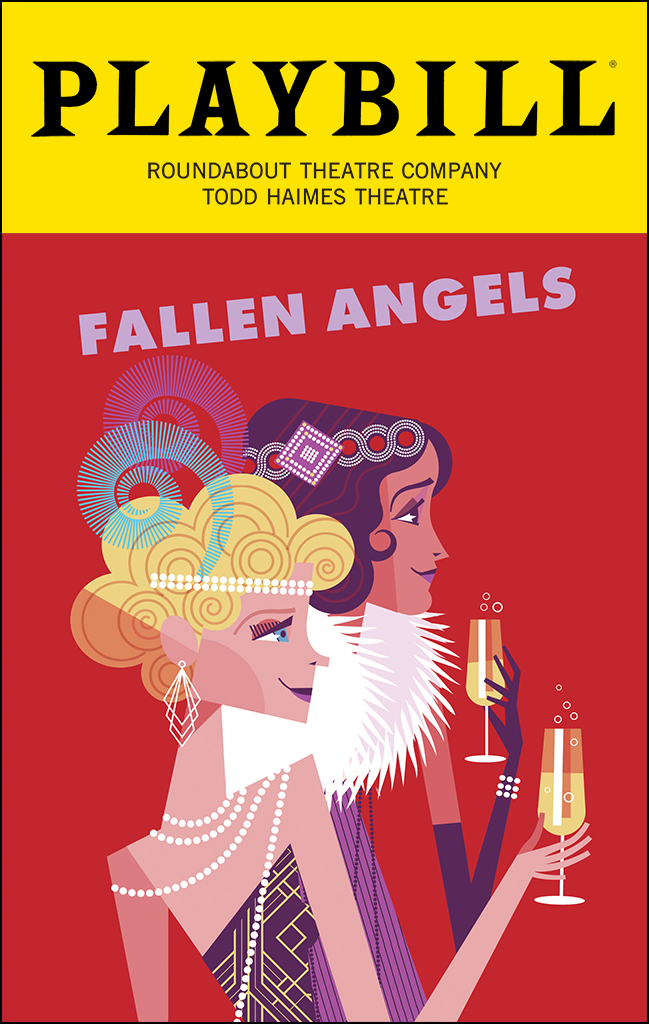
There was love, not romance exactly, but connection in all its forms. Beaches: A New Musical made the case that a friendship can be the central love story of a life. Two Strangers Carry a Cake Across New York found something true and surprising in a chance encounter. Chess put love in direct tension with loyalty and ideology. Schmigadoon! argued that real connection requires putting down your defenses. Fallen Angels approached it from a different angle entirely, with Noël Coward’s razor wit asking what long-term love actually looks like when an old flame reappears and the carefully maintained surface begins to crack.

We live in a world with more ways to connect than ever before, and an epidemic of loneliness to show for it. This season asked the question underneath that contradiction: not how do we reach each other, but who are we actually willing to show up for?

This season made room for joy.

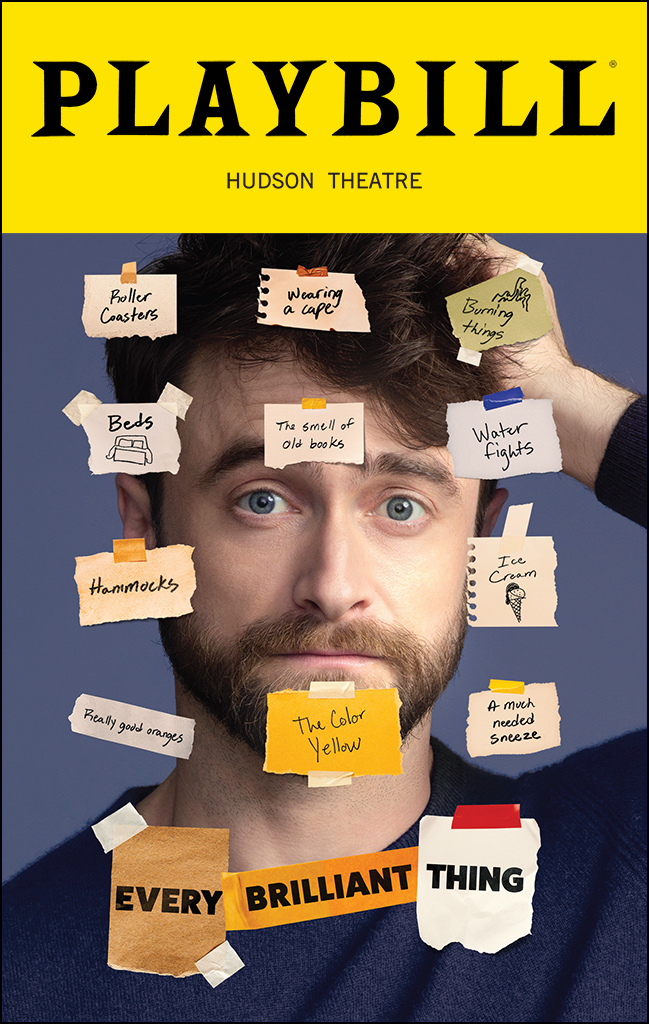
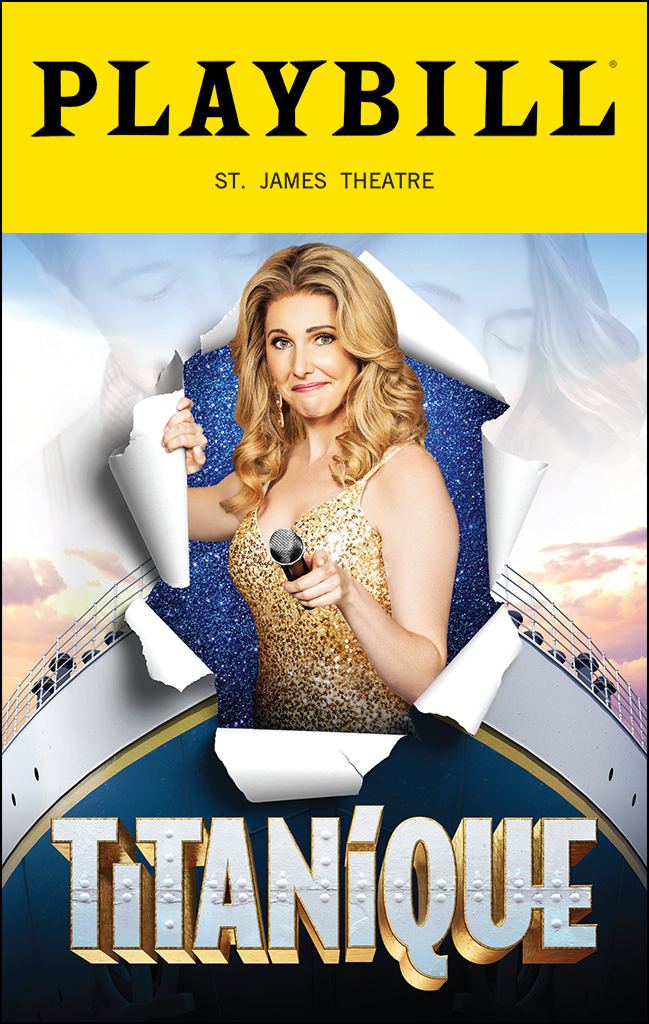
Not every show this season asked a hard question, some just insisted on joy, and in 2026, that might be the hardest position of all. We’re living in a moment that makes delight feel frivolous, that treats lightness as a failure of seriousness, and Broadway pushed back. Titanique reinvented myth purely for the pleasure of it, and dared you to feel guilty about laughing. Every Brilliant Thing catalogued small delights, a list built against despair, until they added up to something that felt, unexpectedly, like a reason to keep going. Art hid genuine feeling inside a comedy of manners, which is perhaps the only way to sneak tenderness past an audience that has learned to be defended against it. Mamma Mia! chose warmth, deliberately and without apology, in a season and a world that kept choosing difficulty

In this moment, choosing joy is a radical act. And yet, ask anyone in the industry and they’ll tell you: this was a weird one. No foolproof hits or single juggernaut that swept the conversation. Instead, a season of clear frontrunners in some categories and genuine uncertainty in others, a slate of shows that didn’t all want the same audience or offer the same experience.

And maybe that was exactly the point.

This wasn’t a season built for everyone. It was a season built to reflect everyone, which is a different thing entirely. Divided, emotional, searching, occasionally exhausting, and shot through with unexpected moments of beauty and laughter. Sound familiar? It should. Broadway in 2025-2026 looked a lot like the world it was made in.

So much of what this season offered was a slice of joy, a few hours of laughter, beauty, and feeling in a world that can feel relentlessly heavy. Not every show landed for every person and not every theme resonated, but somewhere in those thirty productions, there was something for the grieving, the hopeful, the furious, the romantic, the skeptical, and the ones who just needed to laugh.

That’s what this community has always done in difficult times: holds up a mirror, asks hard questions, and finds joy even when joy feels radical. Then, the curtain comes down, the house lights come up, and we all walk back out into the world we came from.

Broadway didn’t try to comfort us this season, it tried to reflect us, and in that, it did something uncommonly well.

Categories
Broadway's Best

A Season of Famous Faces and Theatrical Joy

Broadway, in 2026, feels expansive—open to possibility, collaboration, and a renewed sense of play. Names that echo from film, television, music, and beyond, gathering here not as a novelty, but as a celebration, and audiences are surely enjoying the ride. 

Daniel Radcliffe, in Every Brilliant Thing, draws the audience into something quietly profound; while Adrien Brody, in The Fear of 13, brings a thoughtful intensity that seems to deepen in the presence of a live audience. 

Photo by Emilio Madrid

Nearby, Ayo Edebiri offers a beautifully measured turn in Proof, revealing a versatility that feels powerful and delightful. And Rose Byrne, in Fallen Angels, is theatrical elegance with a lightness that makes the form feel fresh and alive.

Photo by Joan Marcus

Then there is Death of a Salesman, led by Nathan Lane and Laurie Metcalf—a pairing of artists whose mastery turns a familiar text into something newly resonant. Watching them is less about witnessing celebrity than about experiencing craft at its most refined.

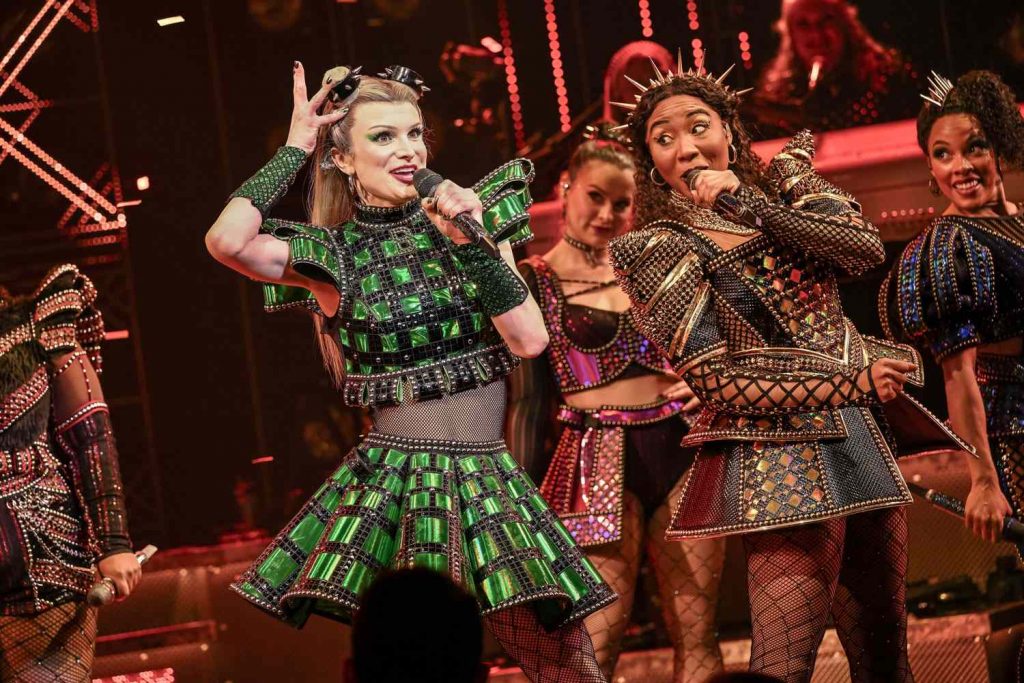
Megan Thee Stallion brings her unmistakable presence to Moulin Rouge!, infusing the production with a fresh, kinetic energy. In Six, Dylan Mulvaney steps seamlessly into a show already attuned to contemporary voices, creating a connection that feels immediate and celebratory.

In Giant, John Lithgow, already an Olivier Award winner for the role, brings his Roald Dahl stateside in a masterful performance that’s making waves on Broadway as well.

Meanwhile, Lea Michele and Aaron Tveit, in Chess, offer something like a homecoming—they’re already Broadway icons who are giving performances that feel rooted, expansive, and deeply connected to the musical theatre tradition.

Photo by Matthew Murphy

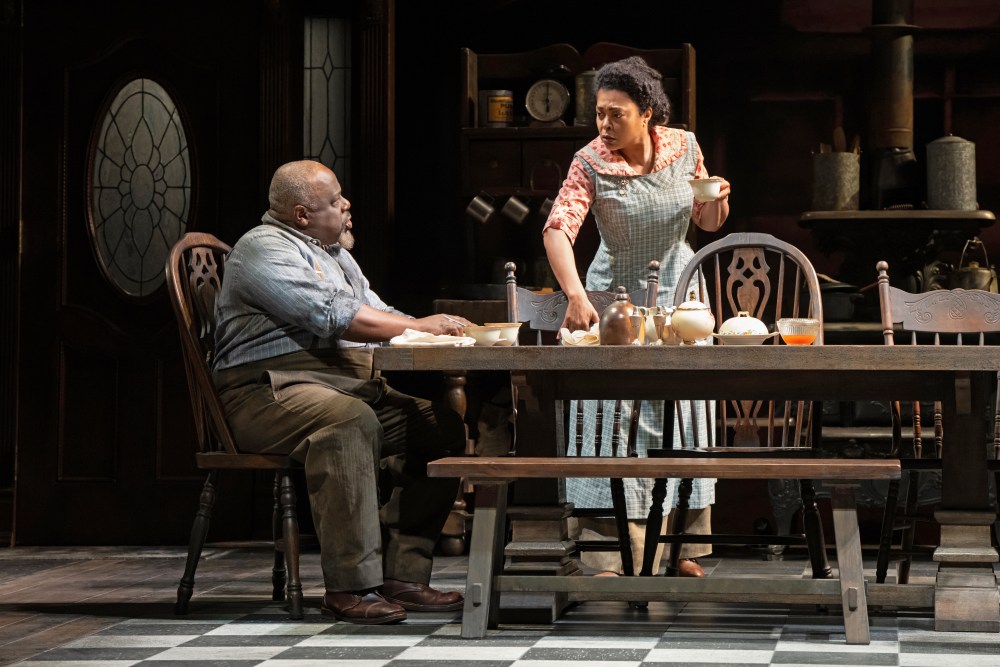
And in Joe Turner’s Come and Gone, Taraji P. Henson and Cedric the Entertainer bring warmth and presence to a breathtaking story that continues to resonate, inviting new audiences into its world.

Photo by Julieta Cervantes

What distinguishes this moment is not simply the number of recognizable names, but the spirit in which they are arriving. For artists like Don Cheadle and Tessa Thompson, the stage offers a chance to reconnect with the immediacy of live performance—a space where storytelling unfolds in real time, shared between actor and audience.

This season sparkles with Hollywood stardust and Broadway royalty, and we love it!

Categories
Broadway's Best

Headlines and Footlights: The Theatre’s Love Affair with Journalism

Playwrights are consistently drawn to newsrooms and broadcast desks because these environments act as a perfect, ready-made pressure cooker for dramatic conflict. Here’s a sampling of plays that center around journalism.

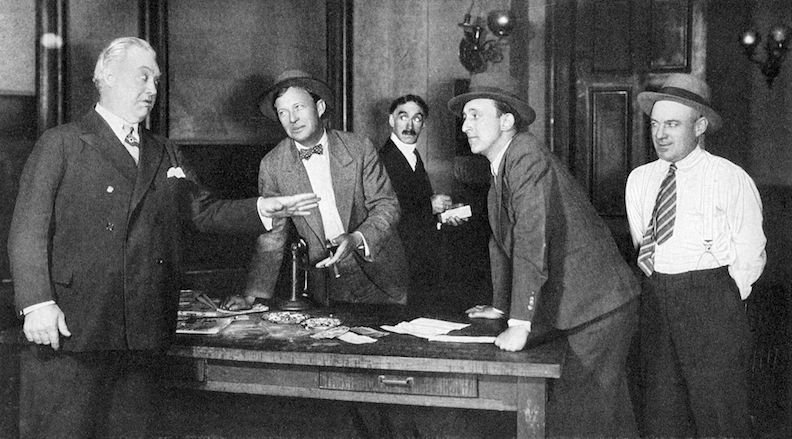
The Front Page (1928) by Ben Hecht and Charles MacArthur
A fast-talking, definitive comedy about a star reporter trying to quit the tabloid business, and his ruthless editor who will go to illegal extremes to keep him on a breaking story. This play has had 4 revivals, most recently in 2016 starring Nathan Lane, John Slattery, and John Goodman.

Night and Day (1978) by Tom Stoppard
Set during a violent African rebellion, this play contrasts a cynical veteran reporter and an idealistic freelancer to debate press freedom, ethics, and the dangerous pursuit of an exclusive scoop. The lead role was created by Diana Rigg in London and Maggie Smith on Broadway.

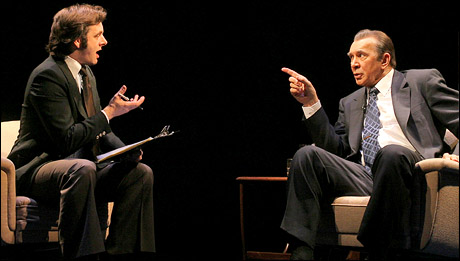
Frost/Nixon (2006) by Peter Morgan
Recreates the high-stakes 1977 television interviews between David Frost (Michael Sheen) and Richard Nixon (Frank Langella), highlighting the psychological warfare and accountability demanded by broadcast journalism.

Time Stands Still (2009) by Donald Margulies
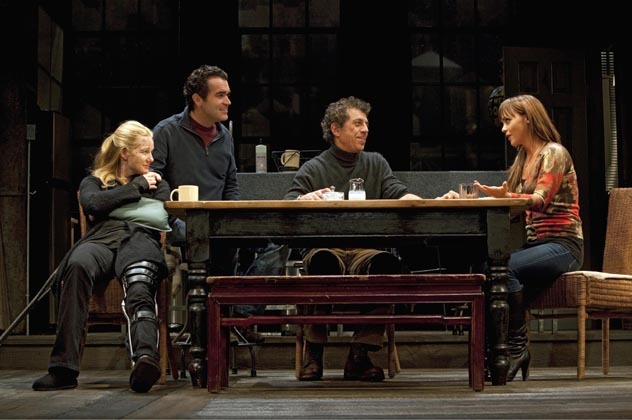
An emotional drama about a wounded photojournalist (Laura Linney) and a foreign correspondent (Brian d’Arcy James) recovering in Brooklyn, wrestling with the moral ambiguities and exploitative nature of documenting human tragedy.

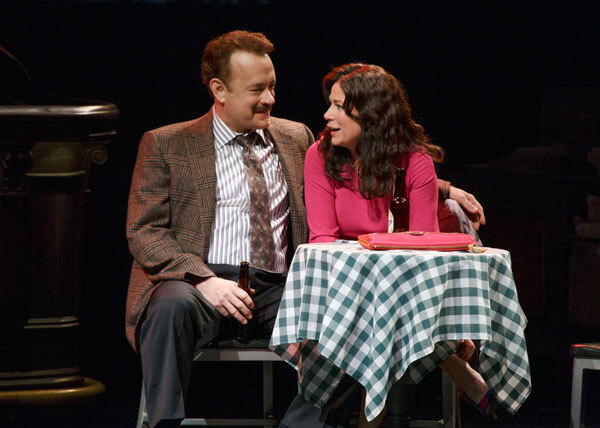
Lucky Guy (2013) by Nora Ephron
Ephron’s final play captures the gritty, hard-drinking 1980s tabloid culture through the meteoric rise, scandalous fall, and redemption of Pulitzer-winning columnist Mike McAlary, played by Tom Hanks in his Broadway debut.

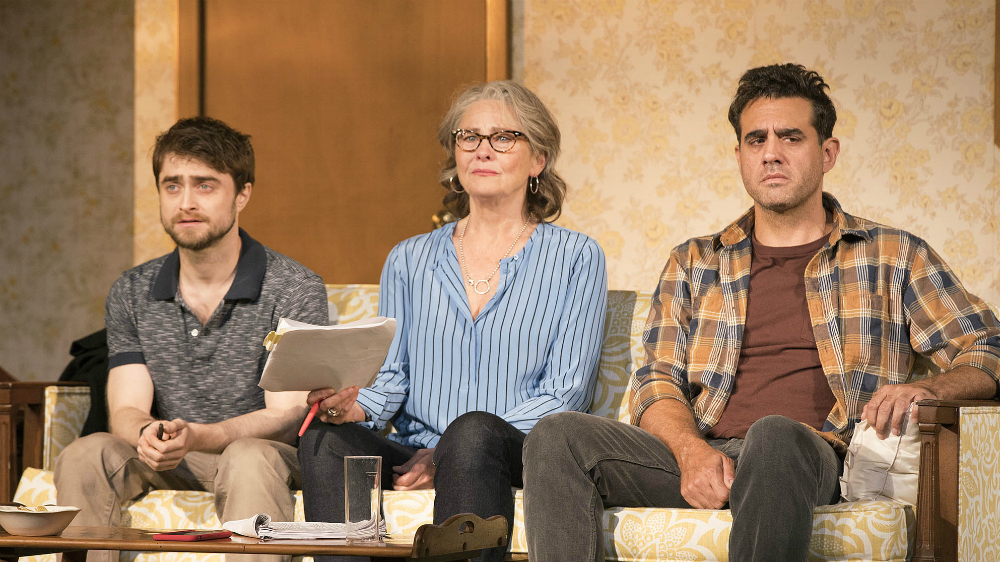
The Lifespan of a Fact (2018) by Jeremy Kareken, David Murrell, and Gordon Farrell
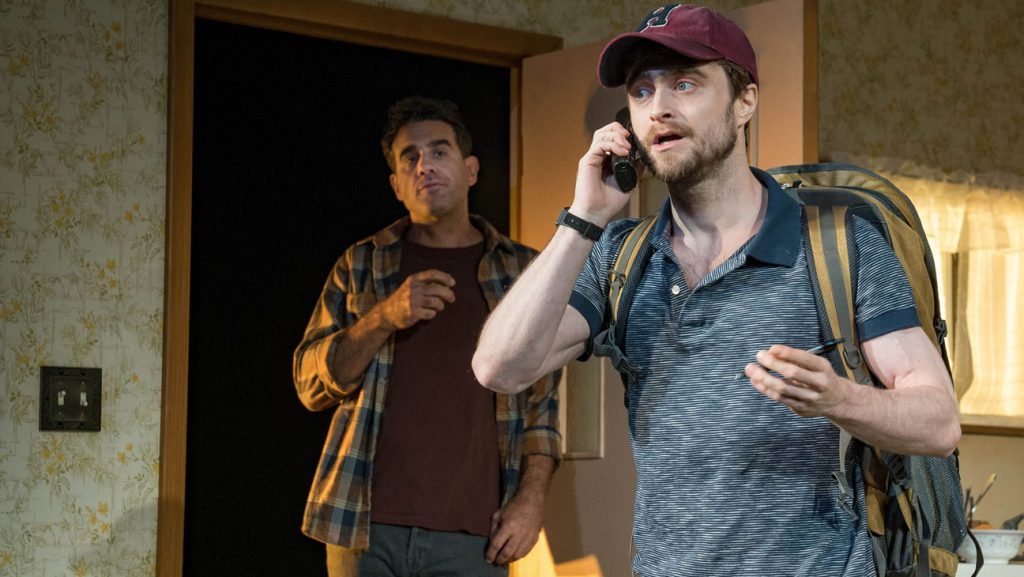
A high-stakes ideological battle between an overzealous fact-checker and an acclaimed author, questioning the value of verifiable facts versus emotional truth in storytelling. This three actor play starred Bobby Cannavale, Cherry Jones, and Daniel Radcliffe.


With a built-in ticking clock, moral and ethical dilemmas, and naturally sharp dialogue, there’s a clear intersection for theatre and journalism. With the internet and the 24 hour news cycle making the news move faster than ever before, what can we expect to see from future playwrights? Only time will tell.

Categories
Broadway's Best

Then & Now: Daniel Radcliffe’s Broadway Journey — From Wizard to Tony Award-Winning Powerhouse

There are Broadway journeys… and then there’s the arc of Daniel Radcliffe, a career that began under the global spotlight of a wand and Hogwarts robes, and evolved into one of the most surprisingly fearless stage reinventions of a generation.This is a story of transformation through the stage.

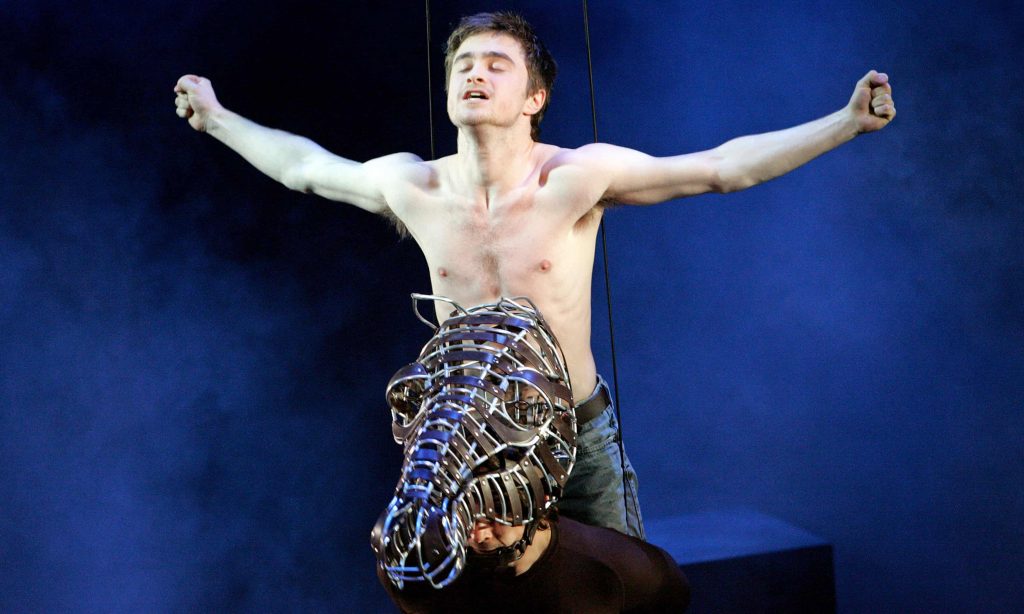
When Daniel Radcliffe first stepped onto Broadway, it wasn’t as a safe post-franchise transition, it was a shock to the system. A young Radcliffe, barely out of his teens, chose one of the most psychologically intense plays in modern theatre, Equus (2008). The role demanded vulnerability, physical exposure, and emotional extremity that intentionally shattered audience expectations.

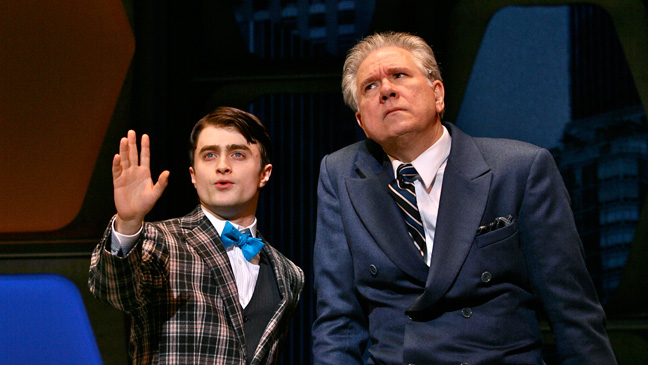
Then came the pivot to pure musical comedy in How to Succeed in Business Without Really Trying (2011). We didn’t see that coming. Radcliffe didn’t just survive Broadway; he was becoming a Broadway baby (and at just 21, he still was!) Dances, comedic timing, and full-scale musical performance showed a different kind of craft: discipline without spectacle, his charm was undeniable. The message was clear: he wasn’t testing Broadway, he was building a second career in it.

Between major headlines, Radcliffe kept returning to stage work that prioritized complexity over scale, including the plays The Cripple of Inishmaan (2014), a dark comedy in which he played the titular character, a 17 year old orphan with physical disabilities whose life changes when a Hollywood crew begins filming on his isolated island in Ireland.

Next up was The Lifespan of a Fact in 2018, a three-hander in which he starred opposite heavyweights Bobby Canavale and Cherry Jones. Radcliffe held his own as a determined young factchecker forced to contend with a challenging author (Canavale) and demanding editor (Jones.)

With a third play under his belt, and fourth Broadway production within a 10 year span, Radcliffe continued showing the world that Broadway was where he wanted to be.

In the critically acclaimed revival of Merrily We Roll Along, Radcliffe stepped fully into ensemble-driven emotional storytelling alongside powerhouse co-stars. The role demanded restraint, musical precision, and emotional aging, winning him a Tony Award for Best Featured Actor in a Musical

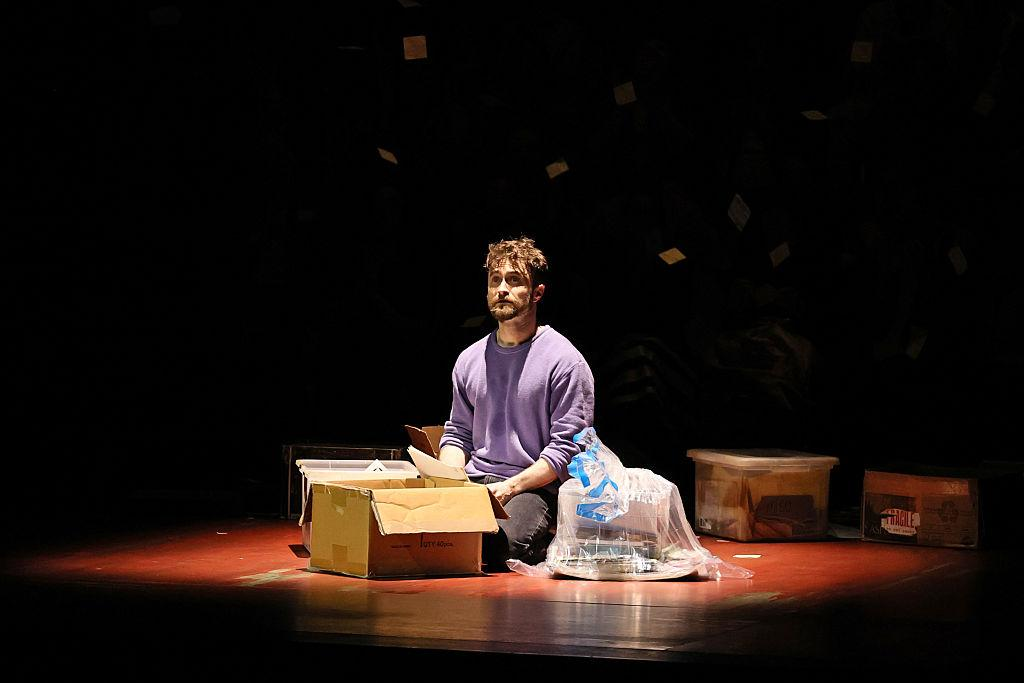
If Merrily We Roll Along showed Radcliffe as a fully integrated Broadway performer, Every Brilliant Thing shows something even more revealing: an actor comfortable with silence, improvisation, and vulnerability without theatrical armor.

In a way, it echoes the earliest intention of his stage career. It shows his willingness to step into discomfort — but with none of the distance of spectacle.

Every Brilliant Thing is perhaps where his performance isn’t about becoming someone else, but about standing in front of an audience and simply holding a shared emotional space. What a fantastic journey for Daniel.

We are no longer seeing “Daniel Radcliffe doing Broadway.”

Daniel Radcliffe’s Broadway journey is about consistency over spectacle. He has expanded beyond the silhouette of a major franchise, one role, one risk, one performance at a time. And on Broadway, that kind of patience is its own kind of stardom.

Categories
Broadway's Best

War on Stage: Plays That Bring Conflict to Life

War has shaped some of the most powerful storytelling in theatre history. From World War I dramas to Vietnam-era protests to contemporary reexaminations of identity, the stage has long been a place to explore not just conflict but its lasting consequences. These plays span decades of theatrical history, offering perspectives from the battlefield, the courtroom, and the homefront. What connects them all is a shared focus on humanity under pressure.

What Price Glory (1924)
Set during World War I, this early American war play follows two Marines navigating both the brutality of combat and the absurdities of military life. It blends humor with stark realism, offering a surprisingly modern take on masculinity and survival. A major Broadway success, it was later adapted into several films, including a 1926 silent classic and a 1952 John Ford remake.

Journey’s End (1928)
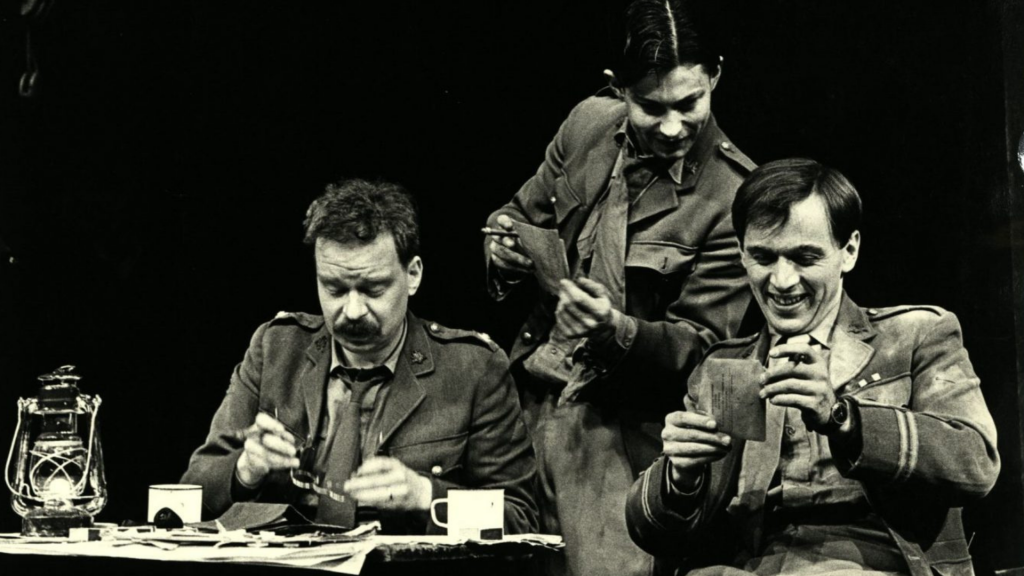
R.C. Sherriff’s landmark play unfolds in a British trench where officers await a German attack. Rather than focusing on action, it captures the psychological toll of waiting. The original London production was a sensation, and the 1929 Broadway transfer established it as the defining World War I drama.

Watch on the Rhine (1941)
Written by Lillian Hellman as World War II raged, this drama centers on an anti-fascist resistance fighter visiting his American in-laws. It won the New York Drama Critics’ Circle Award for Best Play, and its urgent message resonated with audiences just months before the United States entered the war.

The Eve of St. Mark (1942)
This Maxwell Anderson drama follows a young soldier from rural America to the Philippines. While Anne Baxter starred in the 1944 film, the original Broadway production was a critical success that used innovative staging to depict the emotional distance between the front lines and home.

All My Sons (1947)
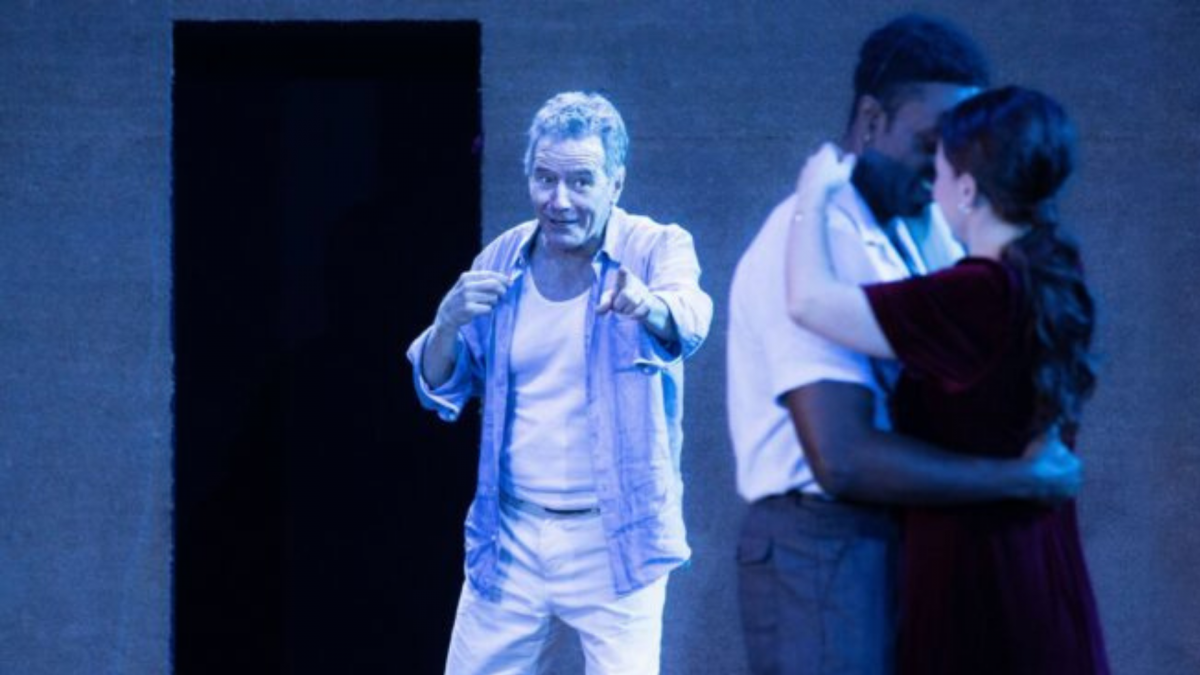
Arthur Miller’s devastating postwar drama examines wartime profiteering and the moral cost of survival. The original production won the Tony Award for Best Author and remains a cornerstone of the American canon. The play continues to resonate in revival, including a recent high-profile West End production starring Bryan Cranston, which brought renewed attention to Miller’s exploration of accountability, family, and the lingering consequences of war.

Command Decision (1947)
Set in a WWII bomber command unit, this play explores the impossible choices faced by leaders sending men into dangerous missions. The original Broadway production starred Paul Kelly and ran for over 400 performances, reflecting the public’s fascination with the moral complexities of the recently ended war.

Mister Roberts (1948)
Taking place aboard a Navy cargo ship, this play balances humor with the frustration of a crew longing for meaningful action. It won the inaugural Tony Award for Best Play, with Henry Fonda originating the title role before reprising it on screen.

Stalag 17 (1951)
Inside a German prisoner-of-war camp, American soldiers search for a traitor among them. The Broadway production featured Robert Strauss, who later received an Academy Award nomination for reprising his role in the 1953 film adaptation.

The Caine Mutiny Court-Martial (1954)
Adapted by Herman Wouk from his Pulitzer Prize-winning novel, this courtroom drama examines leadership, paranoia, and justice within the U.S. Navy. While the film version received multiple Oscar nominations, the play remains one of the most frequently revived legal dramas in theatre.

The Andersonville Trial (1959)
This documentary-style drama explores the real-life trial of a Confederate prison commandant after the Civil War. Its focus on responsibility and the defense of “following orders” has made it a lasting influence on political and historical theatre.

The Basic Training of Pavlo Hummel (1971)
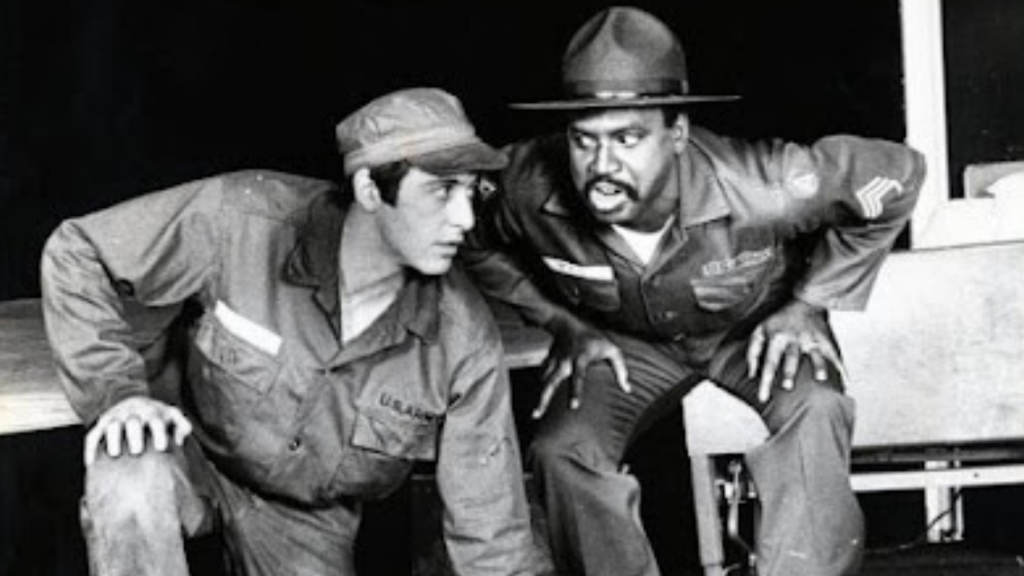
The first of David Rabe’s Vietnam War trilogy, this play offers a raw and unflinching look at military indoctrination and the dehumanizing effects of war. The 1977 Broadway production earned Al Pacino a Tony Award for Best Actor.

Sticks and Bones (1971)
This dark satire about a blinded Vietnam veteran returning home won the Tony Award for Best Play. Its critique of American media, family dynamics, and denial made it one of the most controversial and impactful plays of its era.

Streamers (1976)
Set in a barracks as soldiers await deployment to Vietnam, this intense ensemble drama explores race, fear, and fragility under pressure. Premiering at Lincoln Center Theater, it won the New York Drama Critics’ Circle Award and is widely considered Rabe’s masterpiece.

A Soldier’s Play (1981)
Set on a segregated Army base during World War II, Charles Fuller’s Pulitzer Prize-winning drama examines racial tensions within the military through a gripping murder investigation. The 2020 Broadway revival starring Blair Underwood and David Alan Grier won the Tony Award for Best Revival of a Play.

A Few Good Men (1989)
Aaron Sorkin’s courtroom drama centers on Marines accused of murder and the chain of command that protects those in power. The original Broadway production starred Tom Hulce and helped launch Sorkin’s career before the story became an iconic film

Categories
Broadway's Best

Broadway’s Irish Voices

Every St. Patrick’s Day, Broadway has plenty of reasons to celebrate Ireland. For more than a century, Irish playwrights have helped define the language, humor, and emotional power of modern theatre. From Oscar Wilde’s sparkling comedies to contemporary works by Martin McDonagh, Conor McPherson, and Enda Walsh, Irish writers continue to shape what audiences see on New York stages.

Some of the most influential plays in theatre history were written by Irish dramatists, and in recent decades Broadway has also embraced Irish-authored musicals and new plays that bring distinctly Irish storytelling to American audiences.

Below are notable Broadway productions written by Irish writers.

Hangmen

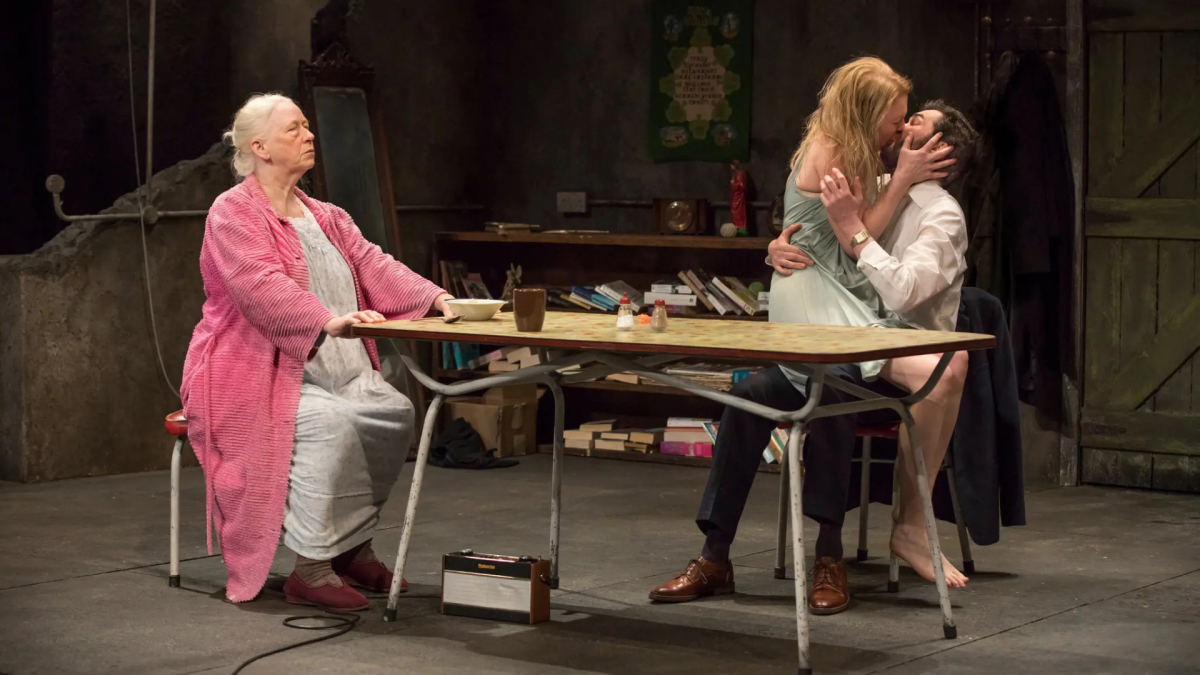
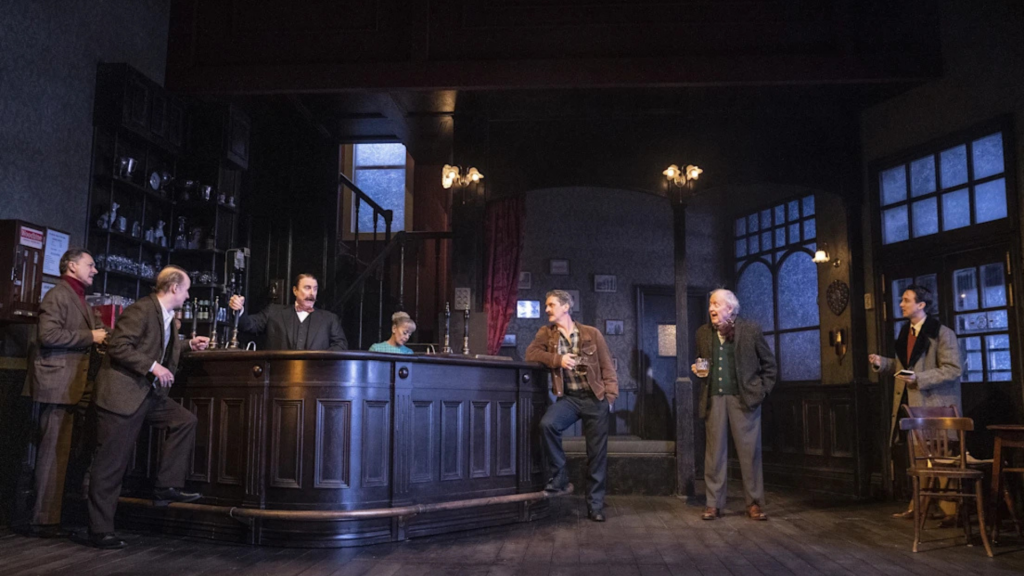
Martin McDonagh returned to Broadway with Hangmen, which opened at the Golden Theatre on April 21, 2022 and ran through June 18, 2022 after previews began in April. The dark comedy takes place in 1965 England just after the abolition of capital punishment and follows Harry Wade, a former executioner navigating life after his profession disappears. Directed by Matthew Dunster and starring David Threlfall, the production earned a Tony Award nomination for Best Play and reminded audiences how sharply McDonagh blends menace, humor, and social observation.

Girl from the North Country

Irish playwright Conor McPherson wrote and directed the musical Girl from the North Country, which first opened on Broadway at the Belasco Theatre on March 5, 2020. The production was forced to close shortly after due to the Broadway shutdown but returned on October 13, 2021 and ran through June 19, 2022. Using the songs of Bob Dylan, the show tells the story of a struggling Minnesota guesthouse during the Great Depression. The production received seven Tony Award nominations including Best Musical and Best Book of a Musical, further establishing McPherson as one of the most distinctive contemporary Irish voices on Broadway.

The Cripple of Inishmaan

One of Martin McDonagh’s most beloved plays reached Broadway in a revival starring Daniel Radcliffe. The production opened at the Cort Theatre on April 20, 2014 and ran through July 20, 2014. Set on the remote Aran Islands in the 1930s, the play follows Billy Claven, a young disabled man who dreams of escaping his isolated village to pursue a life in film when a Hollywood crew arrives nearby. The production was both critically acclaimed and commercially successful, introducing many Broadway audiences to McDonagh’s signature mix of biting humor and unexpected tenderness.

Once

Based on the beloved Irish film, Once opened on Broadway at the Bernard B. Jacobs Theatre on March 18, 2012 and ran through January 4, 2015. With music by Irish songwriter Glen Hansard and a book by Irish playwright Enda Walsh, the show tells the intimate story of two musicians who meet on the streets of Dublin and discover an unexpected creative connection. The production won eight Tony Awards including Best Musical and became known for its innovative staging in which the actors also served as the orchestra.

The Beauty Queen of Leenane

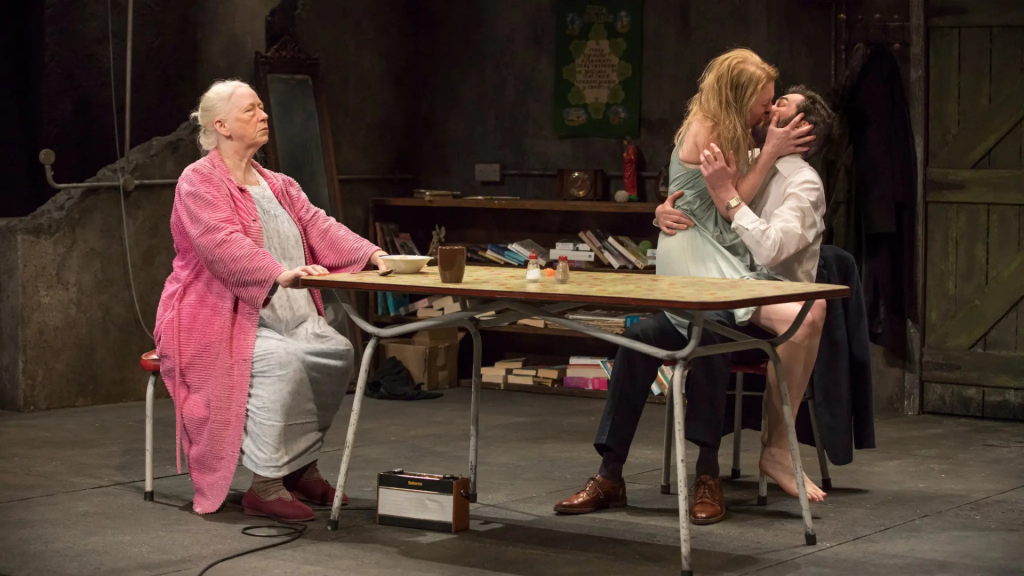
Martin McDonagh’s breakthrough play arrived on Broadway at the Walter Kerr Theatre on April 23, 1998 and ran through August 16, 1998. Set in rural County Galway, the play follows Maureen Folan and her manipulative mother Mag in a darkly comic and increasingly unsettling portrait of isolation and resentment. The production received four Tony Award nominations including Best Play and helped establish McDonagh as one of the most exciting playwrights of his generation.

Dancing at Lughnasa

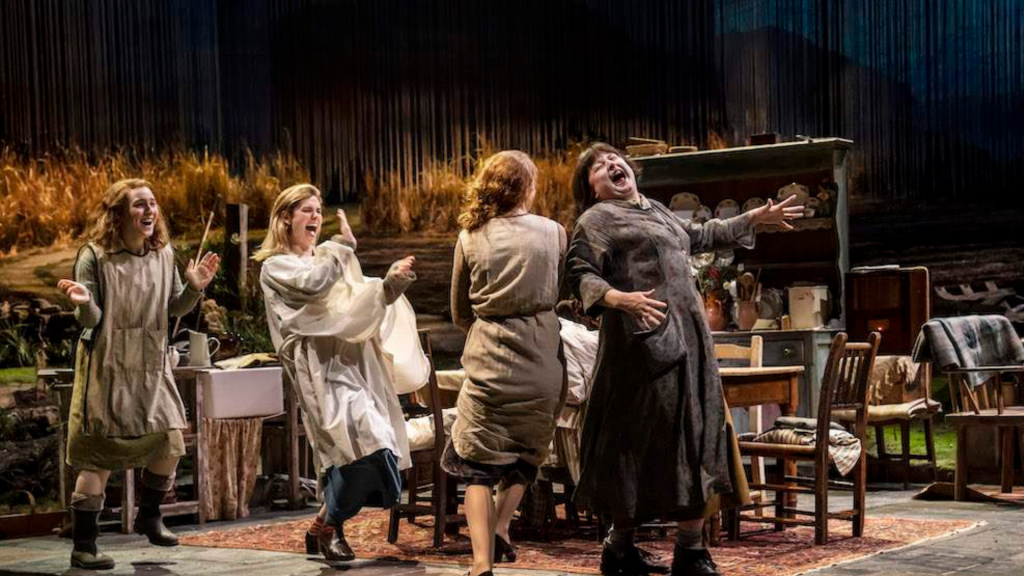
Brian Friel’s Dancing at Lughnasa premiered on Broadway at the Plymouth Theatre on October 24, 1991 and ran for more than a year through November 1992. Set in rural Donegal in 1936, the play follows the five Mundy sisters whose quiet lives are shaped by family tensions, economic uncertainty, and the changing world around them. The production won the Tony Award for Best Play and remains one of the most beloved Irish dramas ever to reach Broadway.

Waiting for Godot

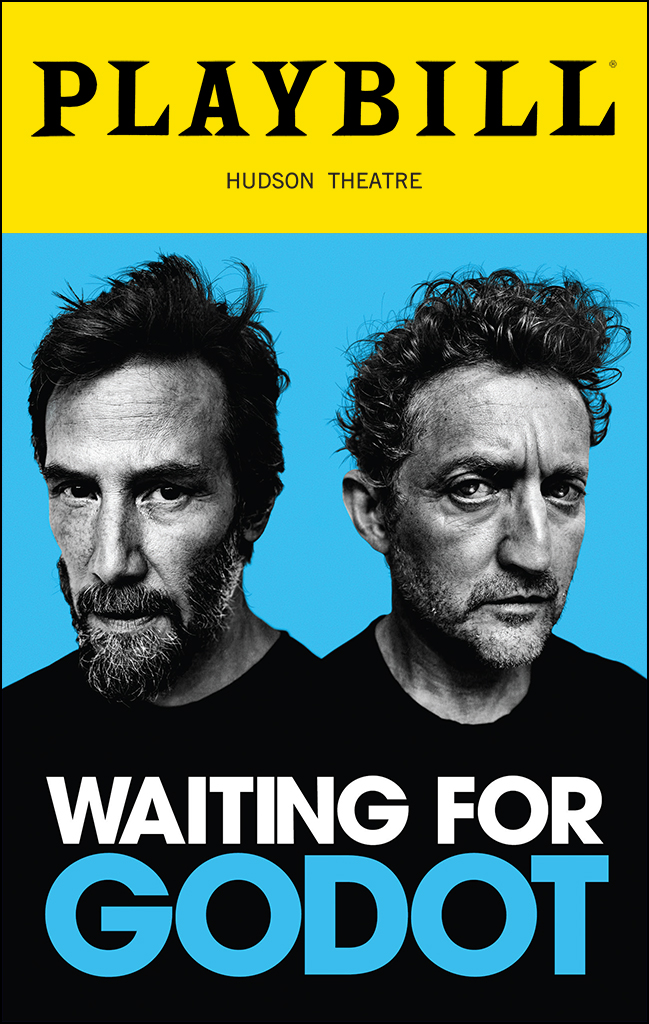
Samuel Beckett’s landmark play Waiting for Godot made its Broadway debut at the John Golden Theatre on April 19, 1956. The play follows two men, Vladimir and Estragon, who spend their days waiting beside a lonely tree for someone named Godot who never arrives. Beckett’s surreal and philosophical drama introduced American audiences to the Theatre of the Absurd and has returned to Broadway several times since, including a celebrated revival starring Ian McKellen and Patrick Stewart in 2013. More recently, the play returned to Broadway in a high-profile revival starring Keanu Reeves and Alex Winter, bringing renewed attention and a new generation of theatergoers to Beckett’s enduring meditation on time, existence, and human connection.

The Importance of Being Earnest

Oscar Wilde’s dazzling comedy has been a Broadway staple for decades. One notable revival opened at the American Airlines Theatre on January 13, 2011 and ran through July 3, 2011. Wilde’s 1895 play follows two men who invent fictional identities to escape social obligations, only to become entangled in romantic complications. Its sparkling dialogue and playful satire of Victorian manners have made it one of the most enduring comedies in theatre history, frequently revived on Broadway and around the world.

Categories
Broadway's Best

Reel to Real: The Films That Found a Second Life in Theatre – Plays Edition

Hollywood and Broadway have always shared a creative dialogue. Sometimes a story begins on stage and becomes a film. Just as often, the path runs in reverse. A movie so rich in character, tension, or cultural resonance eventually finds its way back to live theatre.

While movie to musical adaptations often dominate the conversation, there is a quieter and increasingly fascinating tradition of films becoming plays. These adaptations strip away cinematic spectacle and rediscover what made the story compelling in the first place: character, language, and the immediacy of live performance.

Dog Day Afternoon

Sidney Lumet’s 1975 film starring Al Pacino remains one of the most gripping crime dramas ever made. Based on the true story of a chaotic Brooklyn bank robbery, Dog Day Afternoon blends social commentary, dark humor, and raw humanity.

The story feels almost inherently theatrical. Much of the action unfolds in a single location, the bank itself, creating a pressure cooker environment that translates naturally to the stage. Without cinematic cuts, the tension becomes immediate and unavoidable.

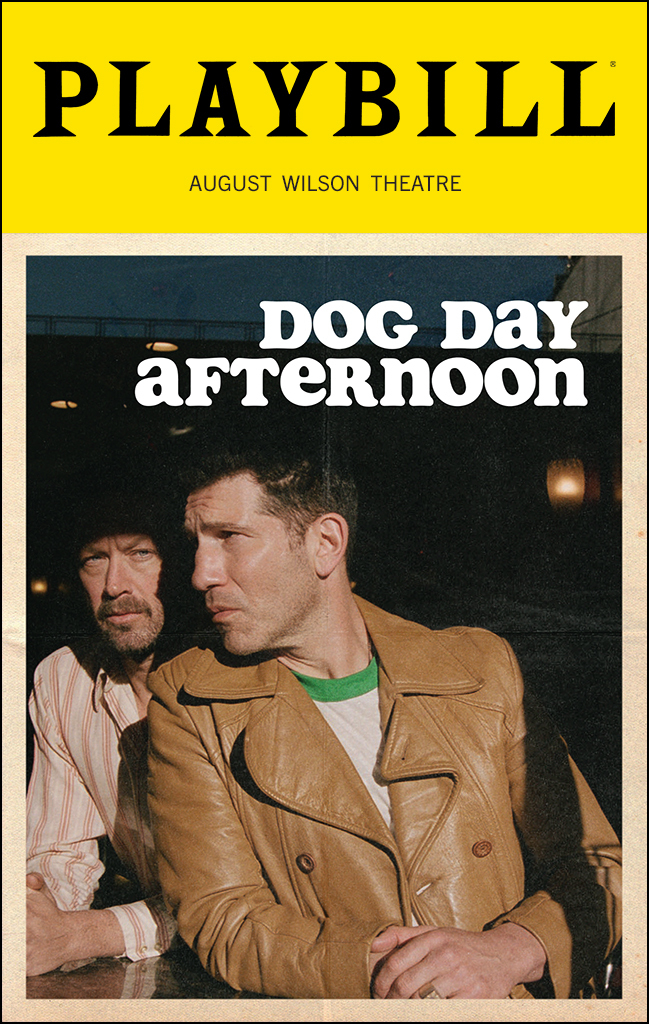
In 2026, the story makes its Broadway debut in a major stage adaptation written by Pulitzer Prize winner Stephen Adly Guirgis and directed by Rupert Goold. The production stars Jon Bernthal and Ebon Moss-Bachrach, both making their Broadway debuts. Previews begin March 10, 2026 at the August Wilson Theatre, with an official opening on March 30 and a limited engagement running through July 12.

Like the film, the play follows a Brooklyn bank robbery that spirals into a citywide spectacle as the media, police, and public descend on the scene. On stage, the audience sits inside the chaos, experiencing every turn of the story in real time.

Tickets:
https://dogdayafternoon.com/

Good Night, and Good Luck

George Clooney’s 2005 film Good Night, and Good Luck dramatizes the real life battle between broadcast journalist Edward R. Murrow and Senator Joseph McCarthy during the height of the Red Scare.

The story’s structure, newsroom debates, and moral confrontations make it particularly suited to the stage. In 2025, the film was adapted for Broadway by George Clooney and Grant Heslov.

The production opened at the Winter Garden Theatre in April 2025, starring George Clooney as Edward R. Murrow, marking the actor’s Broadway debut. The play recreates the urgency of live television journalism in the 1950s while examining the responsibility of the press in moments of political pressure.

What made the film gripping on screen becomes even more immediate in the theatre, as the audience experiences Murrow’s broadcasts unfolding live in front of them.

Dr. Strangelove

Stanley Kubrick’s 1964 dark comedy Dr. Strangelove or: How I Learned to Stop Worrying and Love the Bomb remains one of the sharpest political satires ever made.

In 2024, the film was adapted for the stage by Armando Iannucci and Sean Foley. The production premiered in London’s West End at the Noël Coward Theatre, running from October 2024 through January 2025.

The production starred Steve Coogan performing multiple roles, echoing Peter Sellers’ famous multi character performance in the original film.

The stage version embraced the absurdity of Cold War paranoia while using inventive staging to recreate the iconic War Room. The theatrical adaptation proved that Kubrick’s biting satire still resonates in a world where political brinkmanship remains all too real.

All About Eve

Joseph L. Mankiewicz’s 1950 film All About Eve remains one of the most iconic stories ever told about the theatre world. The film follows ambitious young actress Eve Harrington as she insinuates herself into the life of Broadway star Margo Channing.

The story returned to the stage in 2019 in a new adaptation directed by Ivo van Hove at London’s Noël Coward Theatre. The production ran from February through May 2019 and starred Gillian Anderson as Margo Channing.

Using live video cameras and modern staging, the production reexamined the film’s themes of fame, ambition, aging, and power within the entertainment industry.

To Kill a Mockingbird

Perhaps the most famous film to play adaptation of recent years is To Kill a Mockingbird. The 1962 film adaptation of Harper Lee’s novel, starring Gregory Peck, became an American classic.

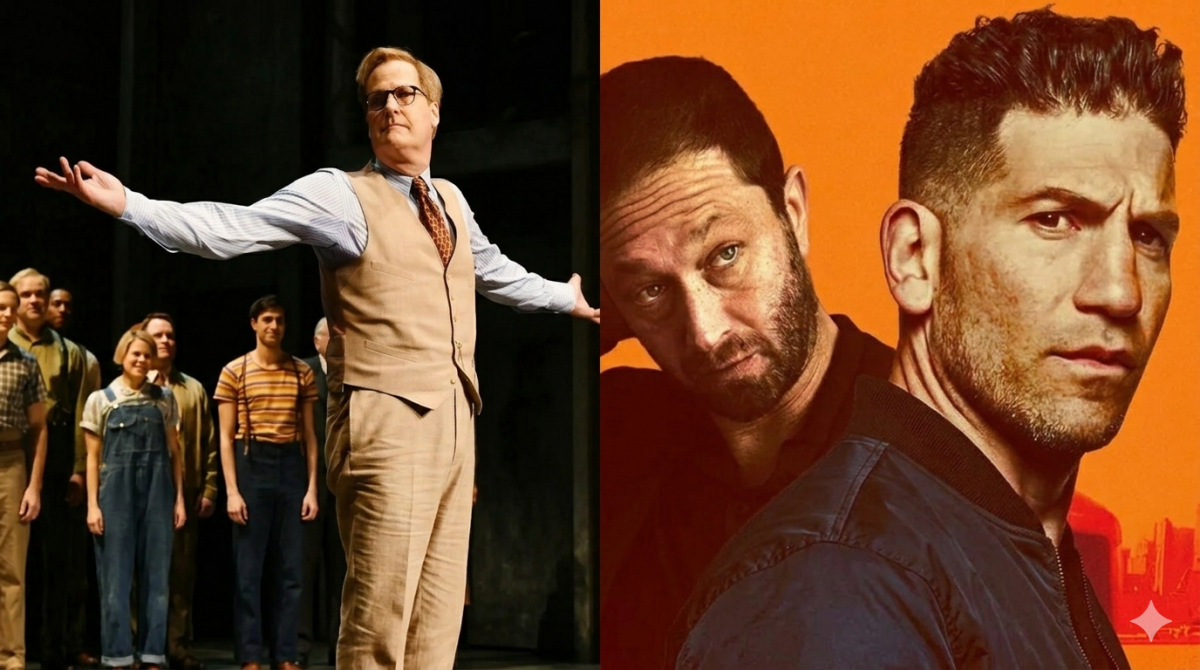
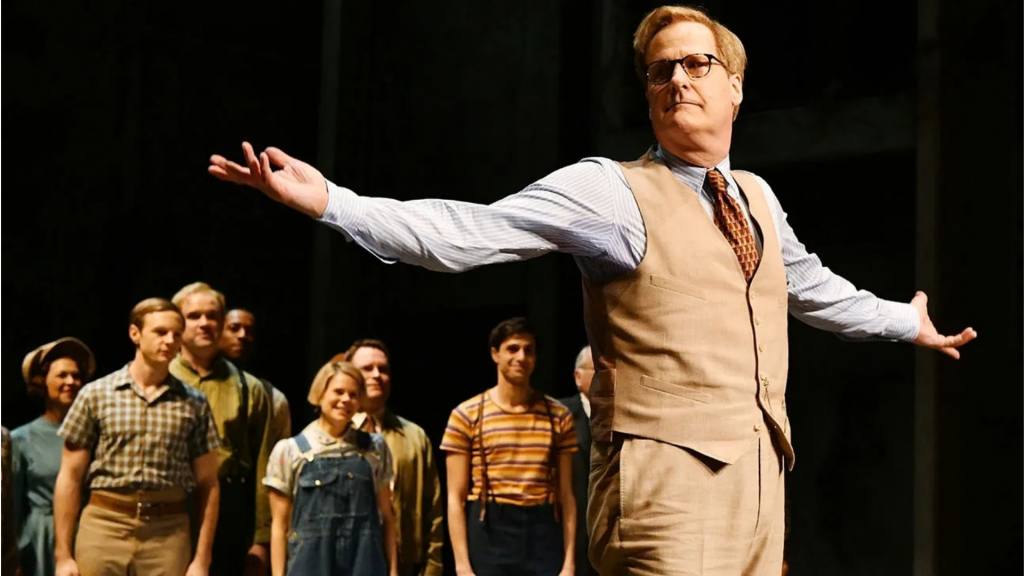
In 2018, playwright Aaron Sorkin reimagined the story for Broadway in a production directed by Bartlett Sher. The play opened at the Shubert Theatre on December 13, 2018, starring Jeff Daniels as Atticus Finch.

The production became one of the highest grossing plays in Broadway history and ran until January 2022, later launching national and international tours.

Rather than simply recreating the film, Sorkin reshaped the narrative structure, giving greater voice to Scout, Jem, and Dill as narrators while presenting Atticus as a man grappling with the moral complexity of his time.

Network

The 1976 film Network, a blistering satire of television news and corporate media, was adapted into a stage play by Lee Hall.

The production premiered at the National Theatre in London in 2017, starring Bryan Cranston, before transferring to Broadway in 2018 at the Belasco Theatre. Cranston reprised his role as news anchor Howard Beale and won the Tony Award for Best Actor in a Play.

The stage version was one of the first to make use of the recent trend to use live cameras and screens throughout the theatre, turning the audience into participants in the broadcast world that the play critiques. The result was both theatrical and cinematic at once.

The Graduate

Few films capture generational confusion quite like Mike Nichols’ 1967 film The Graduate, starring Dustin Hoffman. Its story of an aimless college graduate seduced by the older Mrs. Robinson became a defining portrait of the late 1960s.

The stage adaptation premiered in London’s West End in 2000 before transferring to Broadway. The Broadway production opened April 4, 2002 at the Plymouth Theatre (now the Gerald Schoenfeld Theatre) and ran for 380 performances.

The production starred Kathleen Turner as Mrs. Robinson, with Alicia Silverstone as Elaine and Jason Biggs as Benjamin. It became widely discussed for its bold staging choices, including a nude scene that echoed the provocative tone of the original film.

Categories
Broadway's Best

Inside the Algorithm: Matthew Libby’s Data Asks What We’re Becoming

What happens when a playwright with a degree in cognitive science turns his gaze toward Silicon Valley?

You get Data, a razor sharp, unnervingly timely new play that feels like it was written yesterday even though it wasn’t.

Matthew Libby, born and raised in Los Angeles and educated at Stanford before earning his MFA in Dramatic Writing from NYU, has been thinking about artificial intelligence long before it became a Super Bowl commercial buzzword. In fact, he has been developing Data since 2018, the same play he brought with him into grad school.

“I’ve always known I wanted to be a writer,” Libby shares. “But the only thing more important than knowing how to write is having stuff to write about.” At Stanford, that “stuff” became cognitive science and an academic deep dive into AI, years before ChatGPT entered everyday vocabulary.

From Silicon Valley to the Stage

Libby describes Data as rooted in his coming of age experience in Silicon Valley, a world where the tech industry does not just seem appealing but inevitable.

“There’s this sense that it’s not only the best thing to do, it’s the only thing to do,” he explains.

While briefly considering a tech career, Libby interviewed at Palantir, a powerful data analytics company that contracts with governments and enterprises. He did not get the internship, but the experience stayed with him. Years later, headlines about immigration policy and data driven enforcement brought that company back into sharp focus. The fictional corporation in Data echoes those real world giants.

“I think if the play does anything,” Libby says, “I hope it makes people aware of how much of this is actually happening.”

Demystifying the Machine

One of the most striking elements of Data is not just its topicality but its clarity. Libby is not interested in treating AI as a mystical black box or an alien intelligence descending upon humanity.

“AI isn’t inherently good or bad,” he says. “It’s a tool. A hammer isn’t good or bad. It depends on how it’s used.”

For Libby, writing the play became an act of demystification. He hopes audiences walk away with language, vocabulary to articulate the concerns they may already feel but struggle to define.

“These systems are the result of thousands of human decisions,” he explains. “They’re not gods. They’re not perfect. They reflect human values and human biases.”
In a world where AI often feels like electricity, inevitable and unstoppable, Data insists on something radical: understanding.

A Play About Dehumanization

Without giving away spoilers, Libby is clear about what the play is truly about.

“It’s a play about dehumanization,” he says. “How we dehumanize each other and how we dehumanize ourselves.”
In an increasingly technological world, he suggests, we are often encouraged to reduce ourselves to metrics, productivity, and data points. Data explores how that mindset operates at the governmental level, within workplaces, and inside our most personal relationships.
But it does not stop at diagnosis.

“The end of the play is about breaking out of that cycle,” Libby shares. “It’s about returning to inherent humanity. Realizing that there are some things that can’t be put into an algorithm, that we are not our data.”

That final turn from critique to reclamation is where the play lands its emotional punch.

An Unintentional AI Trilogy

Data is not Libby’s only foray into artificial intelligence. In fact, he has realized he has created an unofficial trilogy:

The Machine, set in the past and exploring generative AI
Data, set in the present and focused on predictive and analytical AI
Sisters, set in the future and imagining sentient AI

All three were written before the explosion of public AI tools, making them less reactive and more foundational in their inquiry.

“I’m going to pretend it was intentional,” he jokes. “But taken together, I think they say everything I want to say about living in an AI infused world.”

What to Talk About on the Way Home

Audiences have already been telling Libby how timely the play feels, but he gently reminds them that these questions have been with us for years.

“I’m not a prophet,” he says. “I just pay attention.”

As Data continues its run through March 29, Libby hopes theatergoers leave not only shaken but curious. Curious enough to research. Curious enough to question. Curious enough to examine the ways they may be flattening themselves, or others, into something less human.

Data is at the Lucille Lortel Theatre through March 29, 2026

Tickets at https://www.datatheplay.com/

Categories
Broadway's Best

London Is Taking Big Swings Right Now

By Jim Glaub

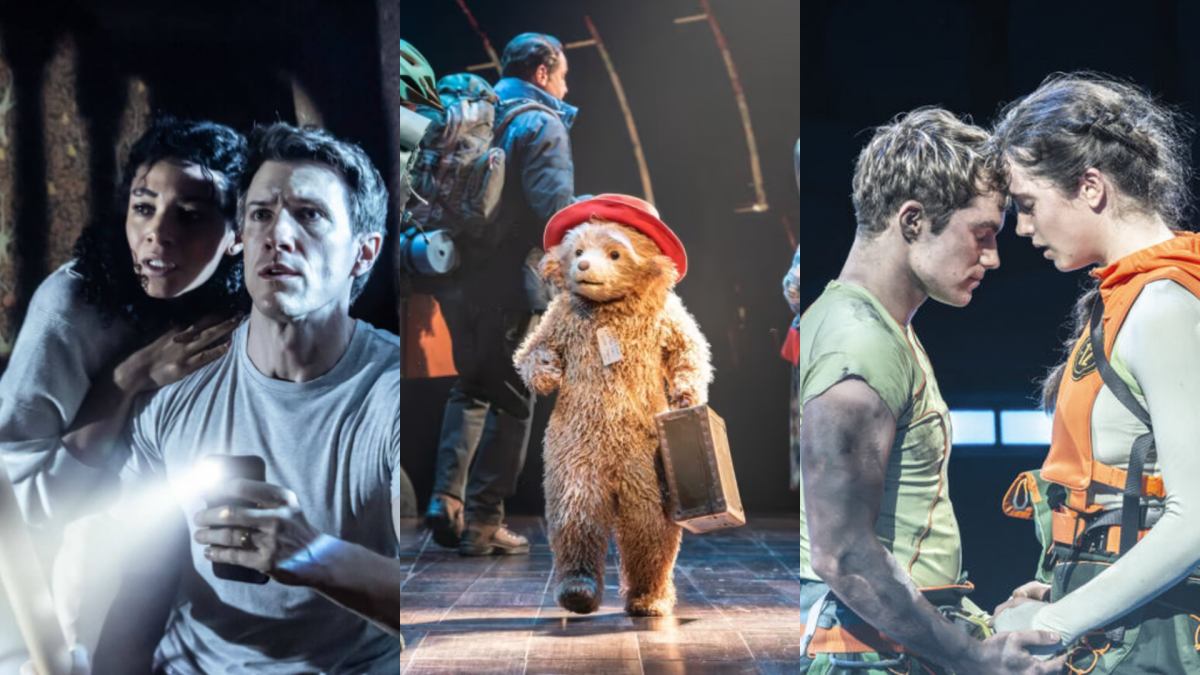
I went to London to see what the city is building on its stages—the shows with American transfer potential, the ones that could cross the Atlantic. They are not playing it safe.

What struck me wasn’t scale or budgets. It was confidence. These shows trust the audience. They trust silence, darkness, discomfort, sincerity, and joy. Across five very different productions, some with major IP, I kept seeing the same thing… experiences built with intention, generosity, and nerve.

Paddington The Musical

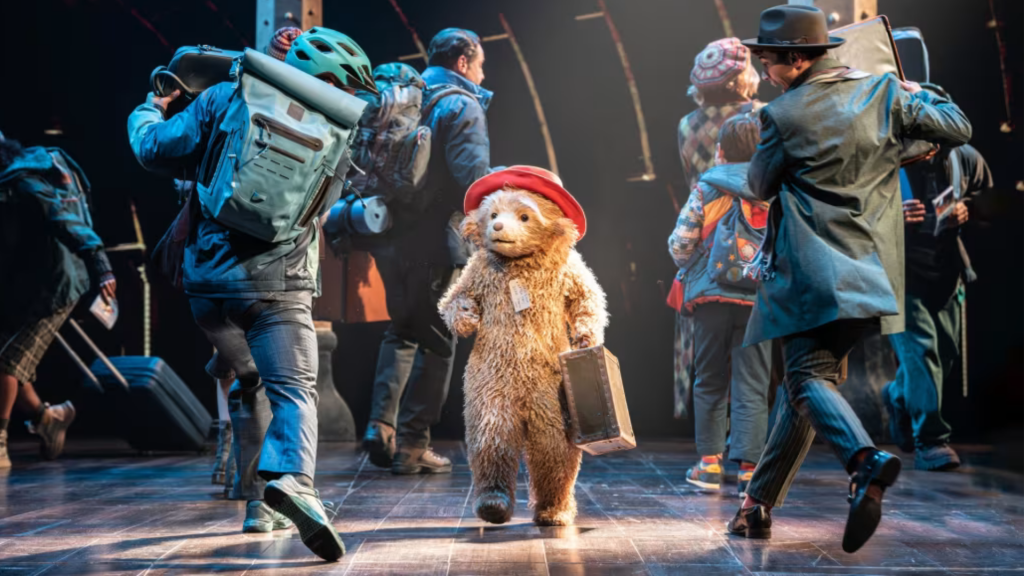
Paddington is a big, beautiful act of kindness.

It would have been easy to turn this into a brand exercise or a loud family spectacle. Instead, what Luke Sheppard has directed is something far more generous. After & Juliet, My Son’s a Queer, and What’s New Pussycat?, he’s clearly mastered the balance of spectacle and joy. Here, he adds something rarer… taste.

This show radiates love. It’s not cloying or forced, but sincere and deeply felt in a way that sneaks up on you.

The craft is all there: earwormy music, stunning costumes, and a storybook set that never tips into theme park. There’s cheekiness, smart jokes, and theatrical magic, but what really lands is care. There’s respect for the character, for the audience, and for the idea that kindness itself is radical when placed at the center of a show.

I left smiling, teary, and oddly lighter, like I was carrying a piece of Paddington out into the world.

In a moment where so much entertainment is built on snark and edge, this show dares to be earnest. It works, and the world needs it.

The Unlikely Pilgrimage of Harold Fry

I walked into Harold Fry on its third preview with absolutely no idea what I was about to see. I assumed a twee British musical about an older man finding self-discovery.

I was wrong, and this show walked straight into my heart.

The ensemble carries the story with devastating warmth, and the lead performance by the incredible Mark Addy holds everything together without ever pushing, and Passenger’s score is quietly extraordinary. I need the cast album immediately.

What you get here isn’t just a story, but a gently transformational experience. It met me exactly where I was.

The tears came constantly, not necessarily from sadness, but from catharsis and from the release of believing that kindness still works, that community still matters, that people are actually good.

It has the imagination and emotional intelligence of Matilda, Fun Home, and Maybe Happy Ending, paired with the gentle epic quality of the movies of Forrest Gump and Big Fish. What stayed with me most was how it treats grief: not as an ending, but as a love letter to what we can no longer have. And yet, it gives you hope and a reminder that we only make it through by walking together.

This show will work in New York, not because it’s British, but because it’s human.

Some shows impress you, some entertain you – this one holds you.

The Hunger Games: On Stage

The Hunger Games on stage is a flex.

I’m still processing the scale. A full restaurant experience, a massive purpose-built theatre, an epic live production that never feels tentative. It’s ambitious, confident, and somehow still warm and human.

Songbird, the on-site restaurant, sets the tone before you ever reach your seat with excellent food, seamless service, and intentional design. Then, the theatre reveals the real triumph.

The logistics are staggering: audience flow, staffing, and distinct stadium sections. The way performers move through that space is unreal. Conor McPherson is a perfect choice for this material, and if this comes to New York, I’m excited to see what he sharpens.

What fascinated me most was the audience perspective. Are we the Capitol, consuming and cheering? Or are we aligned with the Resistance? I loved what the stadium gave us.

The show is powerful and devastating when it counts. The large-scale moments satisfy. SPOILER: Rue’s death wrecked me.

The Hunger Games isn’t about overthrowing a system by force, it’s about destabilizing it through community. That idea pulses beneath the spectacle, and when it surfaces, it’s electric.

Bold, thrilling theatre that embraces scale without sacrificing meaning.

Witness for the Prosecution

If The Hunger Games is a flex of scale, Witness for the Prosecution is a flex of precision.

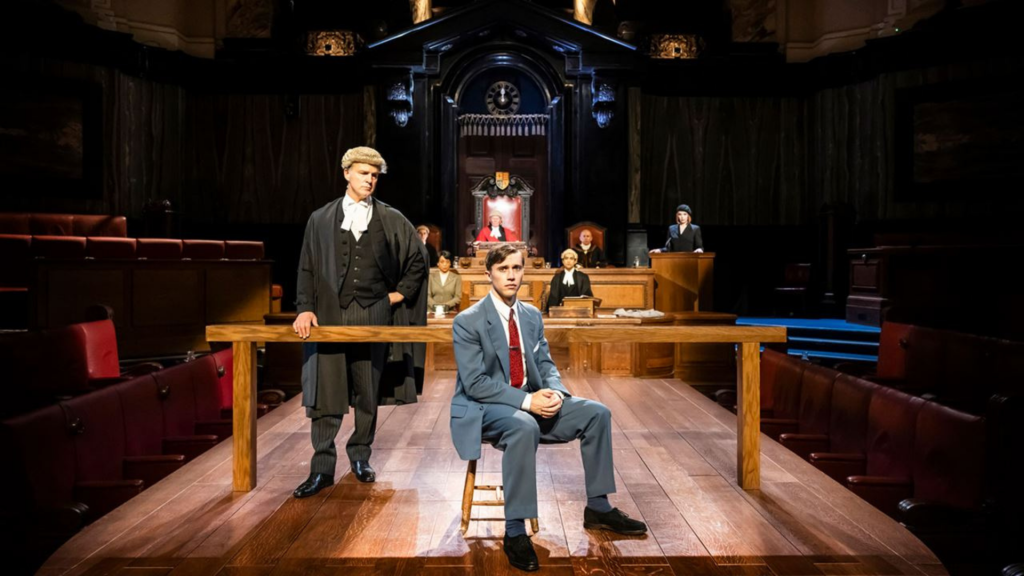
Agatha Christie’s courtroom thriller is staged inside London’s historic County Hall, not as a gimmick, but as a fully realized piece of environmental storytelling. You sit in the actual council chamber, sometimes in the jury box. The architecture does half the directing for you.

There’s no spectacle here, but there’s no spectacle needed.

The tension builds through language, timing, and the slow tightening of narrative screws. You feel implicated. You lean forward differently when the witness stand is only a few feet away, when the accused glances in your direction, and when the barrister pauses just long enough for doubt to bloom.

This is London trusting craft and that a 70-year-old play can still devastate if the container is right. It’s trusting that audiences don’t need reinvention, they need precision.

The result is gripping and a reminder that boldness isn’t always about size, sometimes it’s about restraint.

Paranormal Activity

Paranormal Activity is a deeply satisfying night at the theatre.

This isn’t prestige angst or horror bait – it’s craft, control, and a genuinely fun, pulse-raising experience. Think roller coaster, not haunted house. You know you’re safe… but your body doesn’t.

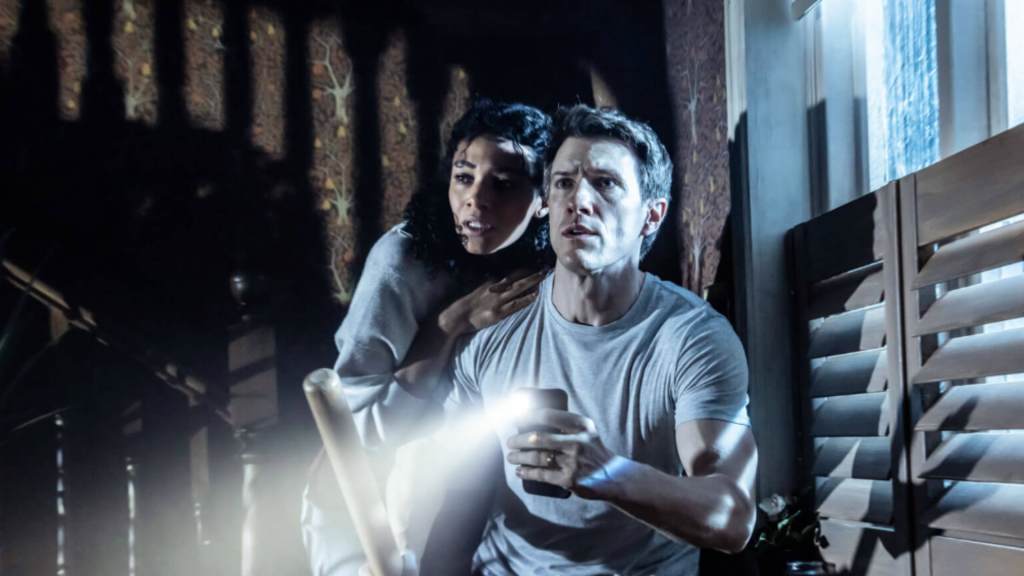
The direction by Felix Barrett (the vision behind Sleep No More) understands exactly how to use darkness, silence, and timing. It lets anticipation do the work. The set and performers ground the story just enough that the scares land hard, but the true stars are the lighting, sound, and theatrical tricks.

What’s especially smart is how accessible it is. You don’t need to know the films; you don’t even need to like horror. This is theatre flexing its unique power, reminding you that live performance can mess with your nervous system in ways film never can.

Paranormal Activity is slick, controlled, confident, and great night out that knows exactly when to let you breathe… and when not to.

What London Is Doing Right Now

These productions trust the audience. They invest in design without forgetting storytelling. They allow joy, grief, fear, and wonder to exist without apology.

London theatre right now feels alive, confident, and creatively fearless. After a week like this, it’s impossible not to come home inspired.