
War has shaped some of the most powerful storytelling in theatre history. From World War I dramas to Vietnam-era protests to contemporary reexaminations of identity, the stage has long been a place to explore not just conflict but its lasting consequences. These plays span decades of theatrical history, offering perspectives from the battlefield, the courtroom, and the homefront. What connects them all is a shared focus on humanity under pressure.
What Price Glory (1924)
Set during World War I, this early American war play follows two Marines navigating both the brutality of combat and the absurdities of military life. It blends humor with stark realism, offering a surprisingly modern take on masculinity and survival. A major Broadway success, it was later adapted into several films, including a 1926 silent classic and a 1952 John Ford remake.
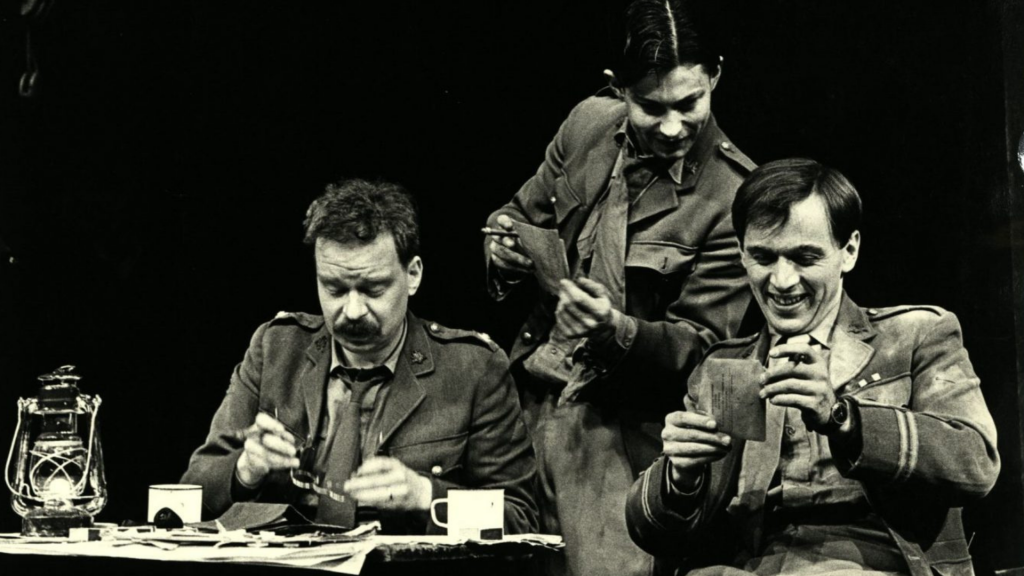
Journey’s End (1928)
R.C. Sherriff’s landmark play unfolds in a British trench where officers await a German attack. Rather than focusing on action, it captures the psychological toll of waiting. The original London production was a sensation, and the 1929 Broadway transfer established it as the defining World War I drama.
Watch on the Rhine (1941)
Written by Lillian Hellman as World War II raged, this drama centers on an anti-fascist resistance fighter visiting his American in-laws. It won the New York Drama Critics’ Circle Award for Best Play, and its urgent message resonated with audiences just months before the United States entered the war.
The Eve of St. Mark (1942)
This Maxwell Anderson drama follows a young soldier from rural America to the Philippines. While Anne Baxter starred in the 1944 film, the original Broadway production was a critical success that used innovative staging to depict the emotional distance between the front lines and home.
All My Sons (1947)
Arthur Miller’s devastating postwar drama examines wartime profiteering and the moral cost of survival. The original production won the Tony Award for Best Author and remains a cornerstone of the American canon. The play continues to resonate in revival, including a recent high-profile West End production starring Bryan Cranston, which brought renewed attention to Miller’s exploration of accountability, family, and the lingering consequences of war.
Command Decision (1947)
Set in a WWII bomber command unit, this play explores the impossible choices faced by leaders sending men into dangerous missions. The original Broadway production starred Paul Kelly and ran for over 400 performances, reflecting the public’s fascination with the moral complexities of the recently ended war.
Mister Roberts (1948)
Taking place aboard a Navy cargo ship, this play balances humor with the frustration of a crew longing for meaningful action. It won the inaugural Tony Award for Best Play, with Henry Fonda originating the title role before reprising it on screen.
Stalag 17 (1951)
Inside a German prisoner-of-war camp, American soldiers search for a traitor among them. The Broadway production featured Robert Strauss, who later received an Academy Award nomination for reprising his role in the 1953 film adaptation.
The Caine Mutiny Court-Martial (1954)
Adapted by Herman Wouk from his Pulitzer Prize-winning novel, this courtroom drama examines leadership, paranoia, and justice within the U.S. Navy. While the film version received multiple Oscar nominations, the play remains one of the most frequently revived legal dramas in theatre.
The Andersonville Trial (1959)
This documentary-style drama explores the real-life trial of a Confederate prison commandant after the Civil War. Its focus on responsibility and the defense of “following orders” has made it a lasting influence on political and historical theatre.
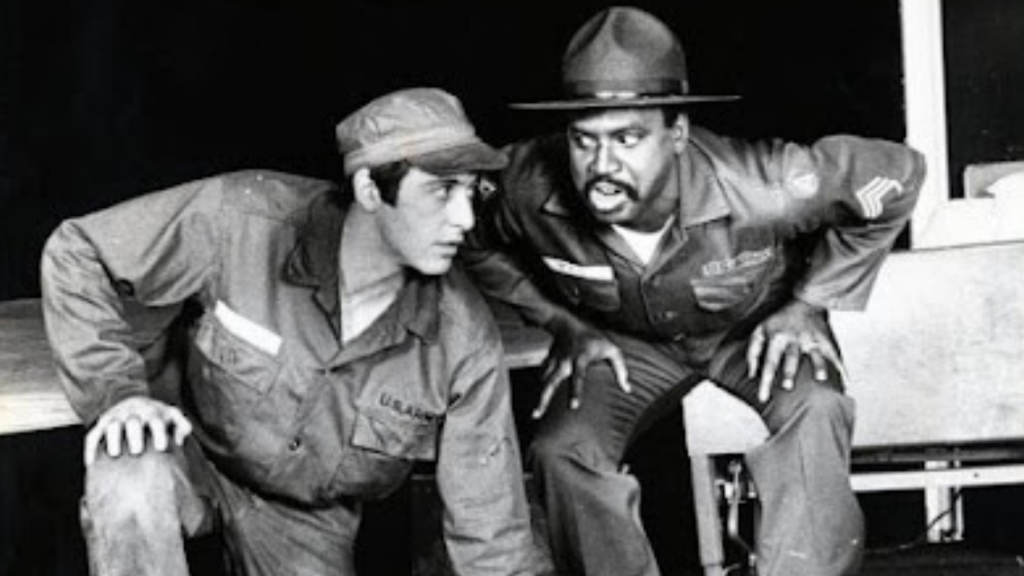
The Basic Training of Pavlo Hummel (1971)
The first of David Rabe’s Vietnam War trilogy, this play offers a raw and unflinching look at military indoctrination and the dehumanizing effects of war. The 1977 Broadway production earned Al Pacino a Tony Award for Best Actor.
Sticks and Bones (1971)
This dark satire about a blinded Vietnam veteran returning home won the Tony Award for Best Play. Its critique of American media, family dynamics, and denial made it one of the most controversial and impactful plays of its era.
Streamers (1976)
Set in a barracks as soldiers await deployment to Vietnam, this intense ensemble drama explores race, fear, and fragility under pressure. Premiering at Lincoln Center Theater, it won the New York Drama Critics’ Circle Award and is widely considered Rabe’s masterpiece.
A Soldier’s Play (1981)
Set on a segregated Army base during World War II, Charles Fuller’s Pulitzer Prize-winning drama examines racial tensions within the military through a gripping murder investigation. The 2020 Broadway revival starring Blair Underwood and David Alan Grier won the Tony Award for Best Revival of a Play.
A Few Good Men (1989)
Aaron Sorkin’s courtroom drama centers on Marines accused of murder and the chain of command that protects those in power. The original Broadway production starred Tom Hulce and helped launch Sorkin’s career before the story became an iconic film