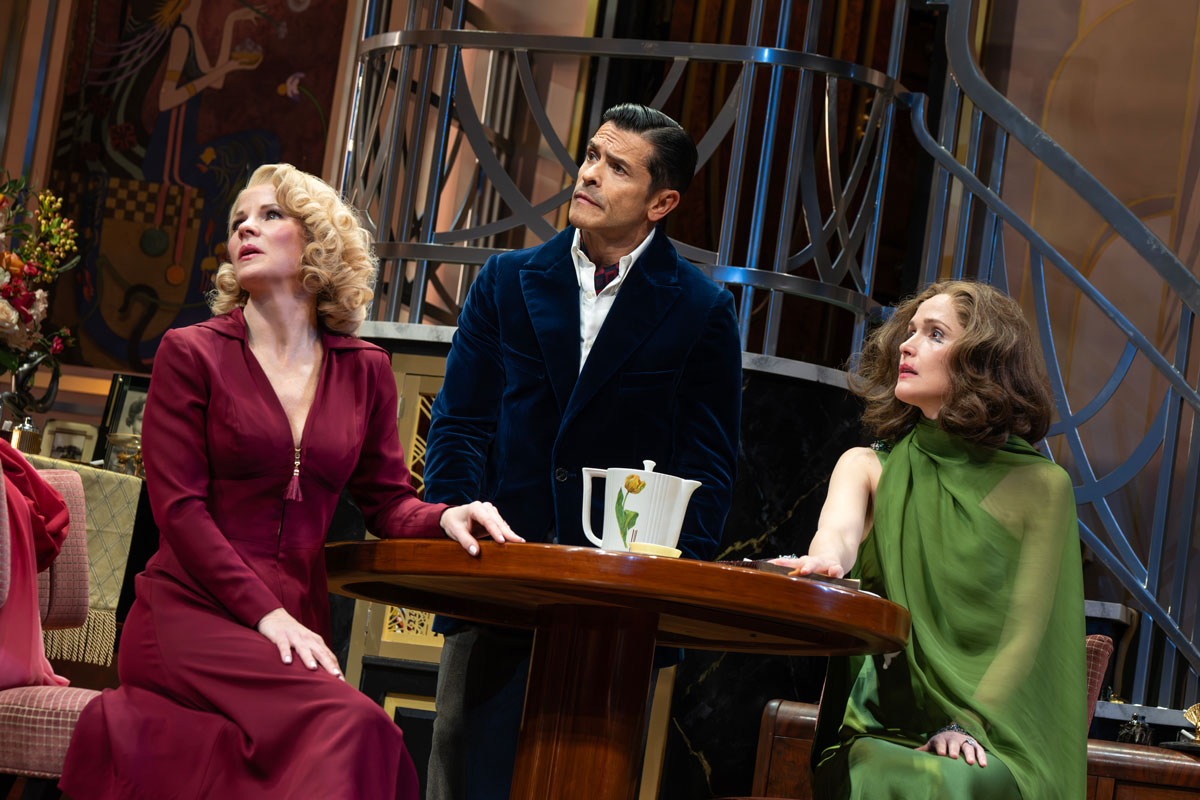
There is a distinct kind of magic that occurs when a century-old theatrical artifact is dusted off, popped and primed, then poured out for a contemporary audience, like a frosty bottle of expensive champagne. When Roundabout Theatre Company announced their major Broadway revival of Noël Coward’s initially-taboo 1925 comedy, Fallen Angels, at the beautifully renovated Todd Haimes Theatre, insiders and stage fans alike responded with immense curiosity. Could a drawing-room farce centered on upper-class British housewives pining over a shared pre-marital French lover still resonate, let alone provoke the raucous belly laughs required of a premium Broadway ticket today?
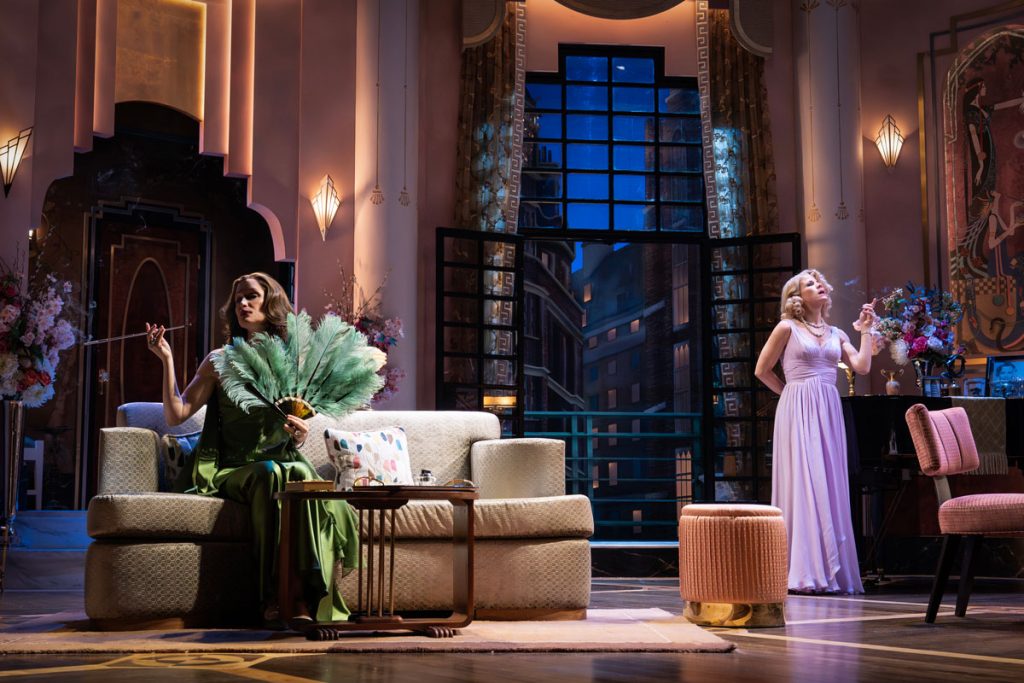
The overwhelming answer is yes. Under the witty direction of Tony Award nominee Scott Ellis, the intermission-free production is a flawless display of comedic timing, distinguished clowning, and shameless escapism. Museum-piece preciousness of the Art Deco era is replaced with a relentless, dizzying energy that channels the best of classic Hollywood screwball comedies, albeit while dripping in silk and feathers. Led by a dream-team of femme power, Tony winner Kelli O’Hara and Golden Globe winner Rose Byrne, Fallen Angels does more than simply entertain; it serves as a gorgeous and hilarious, hour-and-a-half reminder of how profoundly fresh pure theatrical fun can be.
Walking into the new Todd Haimes Theatre feels less like entering a cavernous Broadway house and more like being invited into an exclusive, upscale mid-1920s salon. The perfect location to tell this story. But this is also a venue designed for shared amusement, providing the ideal acoustic chamber for the fits of laughter that will undoubtedly plague the audience.
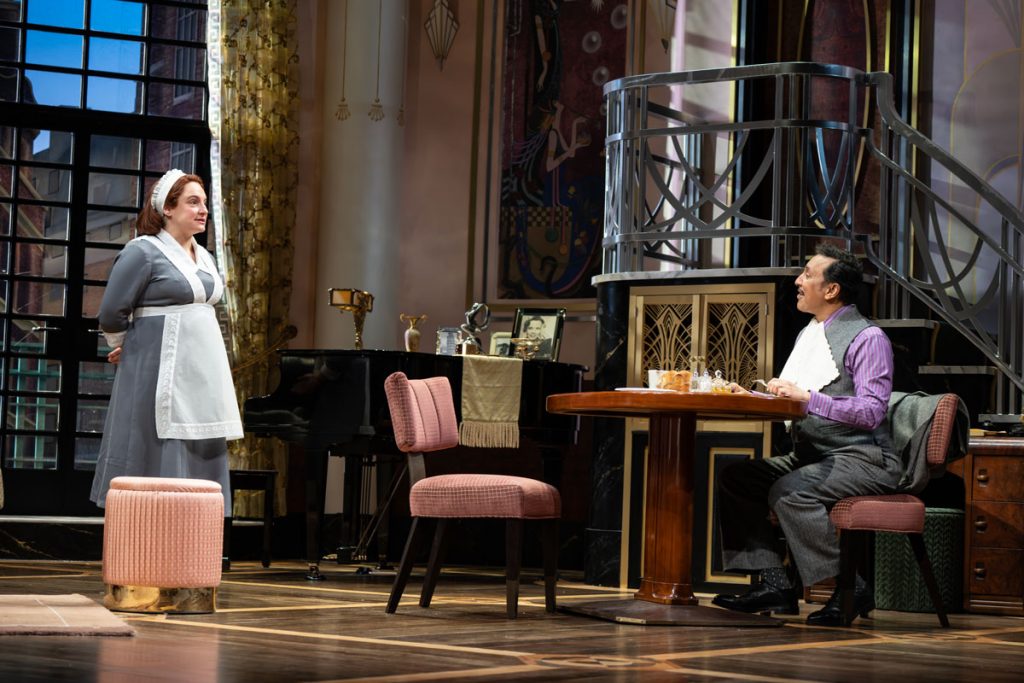
Set and vibe designer, David Rockwell, has outdone himself with this one, constructing a luxurious and stately London drawing room that is a colorful feast for the eyes. Expect rich textures, deluxe furnishings, architectural flourishes, and an expansive layout that gives the actors ample room to slide, stumble, and stomp during their most unhinged physical sequences. The set feels grounded in its period historical accuracy, yet vibrant and cinematic enough to look entirely alive. Matching Rockwell’s memorable space is the work of costume designer Jeff Mahshie. The garments worn by Byrne and O’Hara are nothing short of frothy. From the draped, fluid lines of silk pajamas to more structured, glamorous evening wear, Mahshie’s dressings capture the reckless indulgence of the Roaring Twenties with gilded precision. The wardrobes act as a brilliant comedic foil, as the characters’ internal composure completely unravels, their external wardrobe remains stubbornly glamorous, heightening the delicious absurdity of the affair.
While Fallen Angels is largely driven by its two delightful leading ladies, the revival’s supporting cast also promises that the momentum never falters when the spotlight shifts away from the central sofa. Tracee Chimo plays the newly hired, brilliant and outspoken maid, and is a scene-stealing delight. Saunders prides herself on a life of endless past experiences in which she feels inclined to serve the ladies, as often as a fresh glass of bubbles. Whenever Chimo enters the scene, you can expect a haughty punchline to follow.
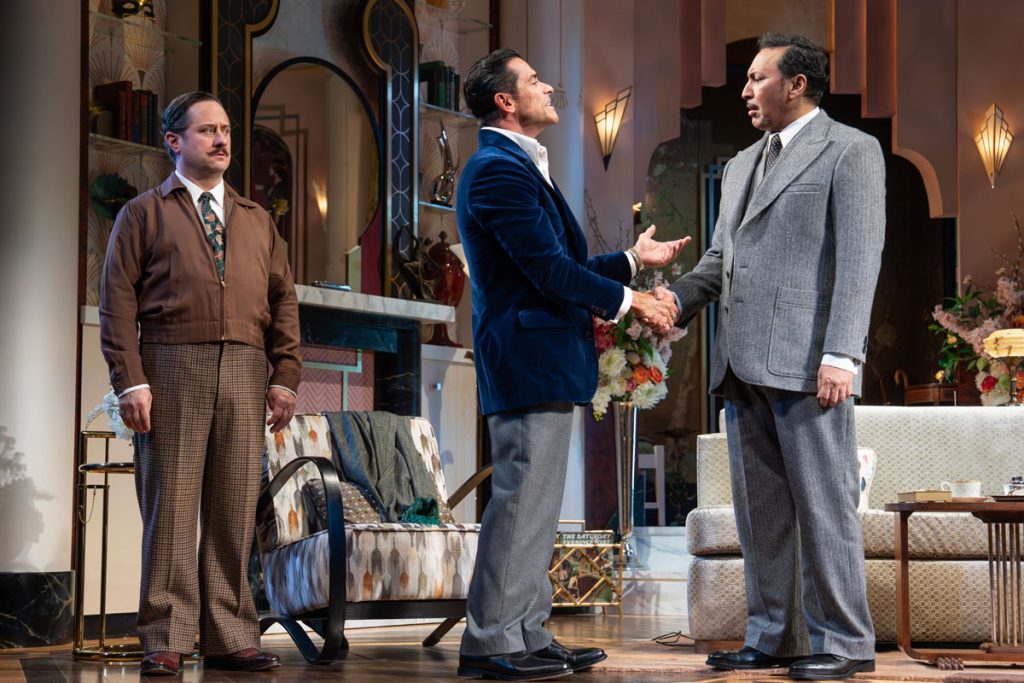
In a Broadway landscape that often leans into moody dramas or massive, highly-engineered spectacles, Fallen Angels rises to the surface as a hilarious love letter to the art of the actor. It does not ask you to dig deep, nor does it seek to resemble the heavy anxieties of the modern world. Instead, Fallen Angels offers a glorious, unadulterated escape into a ninety-minute sanctuary of laughs, messy glitz and glamour, and memorable, standout performances. See it before it ends on June 7!
