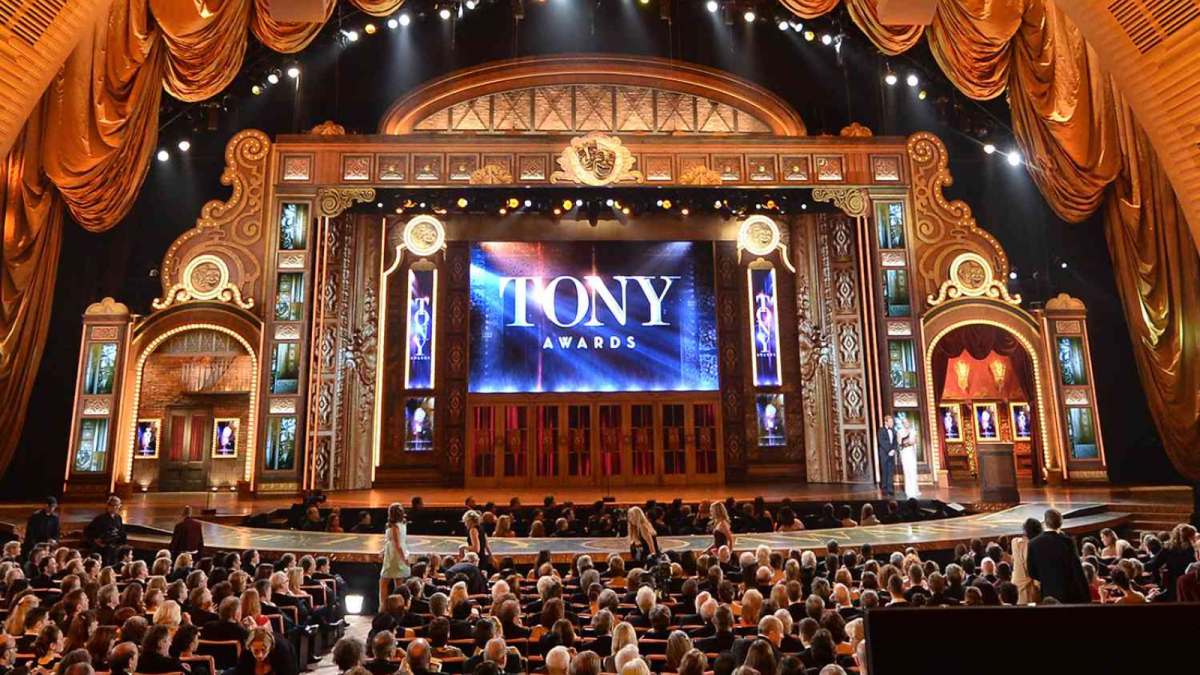
The Tony Award nominations arrive on Tuesday, May 5th at 8am-and with them comes the annual ritual of thrills, confusion, and being personally offended on behalf of someone you’ve never met.
But how does a Broadway show actually get nominated for a Tony Award?

The answer is more interesting than “people vote.” It is also more complicated.
First, a show has to be eligible. Not every great production in New York can compete for a Tony. Off-Broadway shows and touring productions are not eligible. The official Tony Awards FAQ states that only Broadway productions that open in one of the 41 designated Broadway theatres in Manhattan are eligible. So yes, your favorite downtown miracle may be brilliant, devastating, and performed under one perfect bare bulb, but unless it transfers to an eligible Broadway theatre, Tony voters are not circling it on a ballot.
Think of the Administration Committee as Broadway’s Supreme Court – except the cases involve whether an actress counts as “featured” and the oral arguments happen over lunch. Is a performer leading or supporting? Is something a revival if it’s never actually been on Broadway before? The committee decides, and then everyone else argues about it loudly until June.

That matters because Tony categories are not always as obvious as they look. Is a performer leading or featured? Is a production a revival even if it has never been on Broadway before? Is a role placement determined by billing, producer request, or committee judgment? The answer is often: let the Administration Committee decide, and then let everyone else debate it loudly until June. Many times, producers will petition a category (for example, an actress to be put into a featured role instead of lead) to help with their chances of winning, but at the end of the day, the committee is there to determine it.
Once eligibility is settled, the nominations themselves are chosen by the Tony Awards Nominating Committee. This is a rotating group of theatre professionals selected by the Administration Committee. They serve overlapping three-year terms, are asked to see every new Broadway production, and then meet shortly after the eligibility deadline to determine the nominations by secret ballot. The ballots are supervised by an accounting firm to check accuracy.
In other words, this is not the full Tony voting body deciding nominations. It is a smaller group of nominators whose job is to watch the season, consider the eligible candidates, and vote.

For the 2025-2026 Broadway season, the Tony Awards announced a Nominating Committee of 64 members. The group includes actors, directors, designers, producers, writers, administrators, educators, and other theatre professionals. That range matters. The idea is that the nominations should come from people who understand the many crafts that make Broadway Broadway, from the person belting downstage center to the person who crafted the sound.
After the nominations are announced, the process shifts. The winners are chosen by the larger Tony voting body. The Tony Awards says there are approximately 831 eligible voters, though that number can fluctuate year to year. Voters include members of The Broadway League, the American Theatre Wing, theatre unions and guilds, critics, casting professionals, press agents, managers, and the Nominating Committee.

Of course, every season comes with its own share of “wait… what?” moments, and this year delivered. The Tony Awards Administration Committee made a notable ruling that Marjorie Prime would be eligible for Best Revival of a Play, despite never having appeared on Broadway before, a reminder that “revival” can mean returning to prominence, not just returning to Broadway. Then there’s Schmigadoon!, where composer Cinco Paul was deemed eligible for Best Original Score, even though the music technically originated on television, signaling a continued evolution in how the Tonys define “written for the theatre.” And in the ever-strategic world of performance categories, both Jessica Vosk and Kelli Barrett were ruled eligible as Leading Actress contenders for Beaches, despite initial hopes to position Barrett in Featured. When that happens, the category doesn’t shrink, it expands, meaning more nominees and a slightly more crowded race. In other words, even the rules have plot twists.
There’s one more catch worth savoring: voters are expected to actually attend the productions they vote on. Skip a show and fail to log it in the Tony Voter Portal, and you’re locked out of voting in its categories. In other words, you cannot phone in the Tonys – even if you very much want to.
So the Tony nomination process is really a three-act play – one that somehow requires four committees and an accounting firm just to reach intermission.
Act One: a Broadway production opens and qualifies. Act Two: the Administration Committee rules on categories and eligibility. Act Three: the Nominating Committee sees everything, convenes, and votes by secret ballot. Curtain.
The Tonys matter because Broadway people care. A nomination can extend a run, change a career, boost a box office, and introduce audiences to shows they might otherwise miss. It is industry procedure, yes, but it is also storytelling. Every nomination morning tells us what Broadway is choosing to celebrate, what it is still wrestling with, and which performances managed to cut through the noise.
The Tonys may end with a trophy, but they begin with rules, committees, eligibility meetings, and a room full of people who saw everything.