Categories
Creative

From Younger Than Springtime to Springtime for Hitler: Broadways Infatuation with Spring

By Katie Birenboim

The sun is shining, cherry blossoms are blooming, and many world economies are opening up (slowly but surely).  It seems like spring 2021 has finally arrived, bringing with it the seasonal sense of joy, promise, and new beginnings that has long been lauded by writers and artists throughout history.  While many people may associate springtime with Shakespeare sonnets, Impressionist paintings, or even madrigals, spring has also been the focus of many Broadway composers and lyricists. 
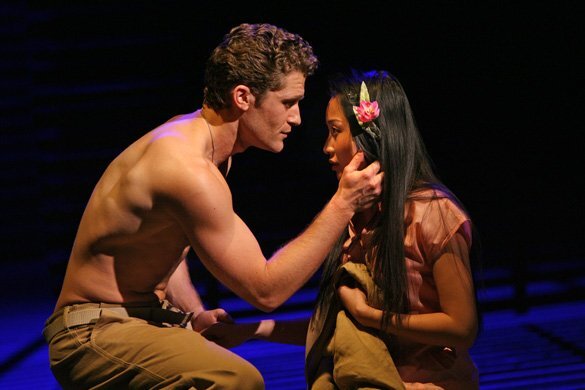
The most obvious example of springtime making its way into the Broadway canon is the song “Younger Than Springtime” from Rodgers and Hammerstein’s South Pacific.  Sung right after Lieutenant Cable and Liat first meet (and make love), “Younger Than Springtime” has all the classic markers of a spring love song.  Cable compares Liat to spring – favorably – saying she is “younger than springtime,” “gayer than laughter,” “sweeter than music,” and “warmer than the winds of June.”  But the song also has a great “turn” – certainly one of the reasons it’s still so well-known today.  While Cable begins the song by saying that Liat is like springtime, halfway through, he implies that she is also transformative: “when your youth/and joy invade my arms/and fill my heart as now they do/then younger than springtime/am I.”  Through Liat’s love, Cable argues that he becomes someone who is “gayer than laughter,” “softer than starlight,” and “younger than springtime,” too.
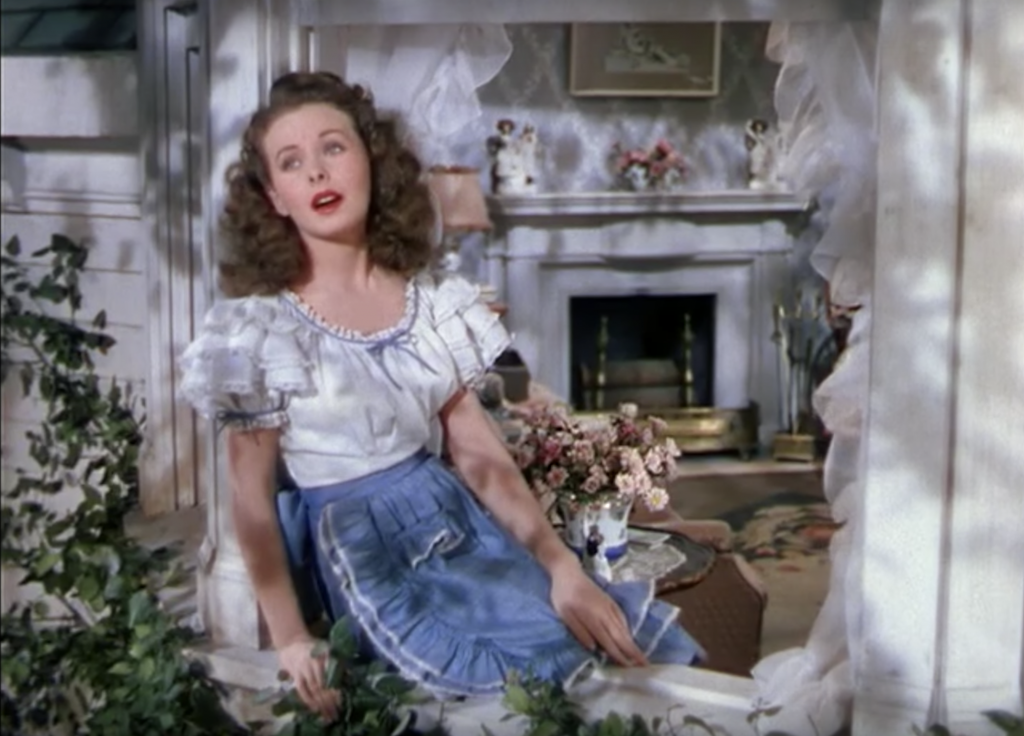
Another well-known use of spring in the lyrics, title, and imagery of a Broadway song can be found in “It Might As Well Be Spring” from State Fair, another Rodgers and Hammerstein collaboration.  The song plays with some of the springtime tropes and patterns used in “Younger Than Springtime.”  The singer, Margy, makes clear that she hasn’t seen any of the typical, physical signs of oncoming spring.  In fact, it’s decidedly not spring: “I haven’t seen a crocus or a rosebud/or a robin on the wing,” Margy sings, “But…it might as well be spring.”  This is a prime example of Oscar Hammerstein’s genius use of conditional thinking.  In the same way Hammerstein implies in Carousel that Julie Jordan is madly in love with Billy Bigelow using the conditional “IF I loved you,” and that Laurie and Curly in Oklahoma! are similarly destined to mate with the conditional “people will SAY we’re in love,” Hammerstein is able to write a spring love song that’s not actually sung during springtime. 

The song grows even more rich and complex in its associations with the season.  While the characteristics of springtime that Cable lists in “Younger Than Springtime” are all positive, for Margy “it might as well be spring” not only because she’s “starry-eyed,” “giddy,” and “gay,” but also because she feels “restless,” “jumpy,” and “vaguely discontented.”  In “It Might As Well Be Spring” you get both sides of the coin: the good and the bad, the positive and the negative, perhaps best summed up by the lyric: “But I feel so gay/in a melancholy way/that it might as well be spring.”  Here, spring is being used as a metaphor for the “nameless” discontent Margy feels with her life at the moment – a vague restlessness which sets up most of the action of the play: while Margy is dating Harry, who wants to marry her, she “keep[s] wishing [she] were somewhere else,/Walking down a strange new street./Hearing words that [she’s]…never heard/ From a man [she’s] yet to meet.”  These lyrics foreshadow her meeting, and falling in love with, Pat at the (titular) state fair.  It’s also hard not to read these lyrics without picking up something of a sexual edge.  When Margy starts the song, she sings of “want[ing] a lot of…things/[she’s] never had before.”  Given the traditional associations of birth, new beginnings, love, and even sexuality, with springtime, “It Might As Well Be Spring” could easily speak to Margy’s desires as a newly minted young woman. 
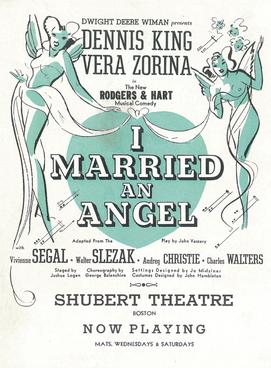
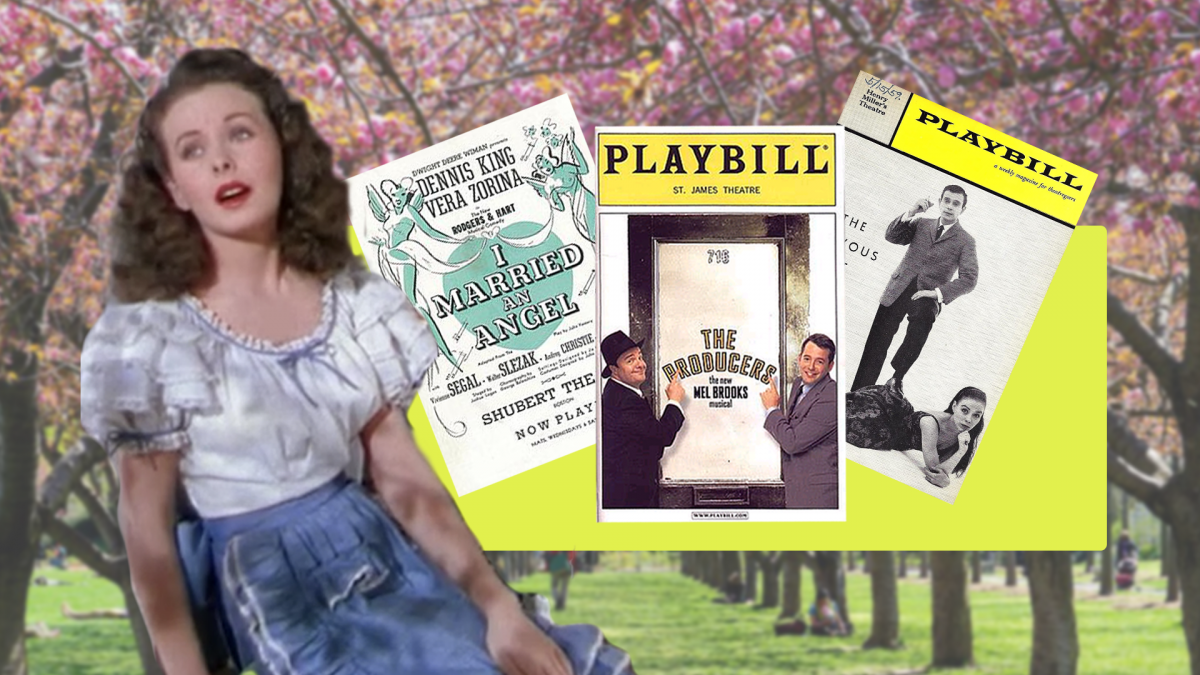
 Many Broadway songs focus on this deeper side of spring’s transitions.  In Rodgers and Hart’s I Married an Angel, for example, Willy sings “Spring Is Here” when things with his angel-wife (yes, you read that correctly) have gone sour.  “Spring is here/why doesn’t my heart go dancing?/spring is here/why isn’t the waltz entrancing?…Maybe it’s because nobody needs me…Maybe it’s because nobody loves me,” he sings.  It’s another clever inversion of the springtime myth: spring may be here, with its gentle “breezes,” and “lads and girls…drinking May wine,” but because Willy has fallen out of love, he can no longer enjoy it.  It’s a springtime love song that depends on negative space rather than positive space: without “love,” “desire,” or “ambition,” there can be no spring.
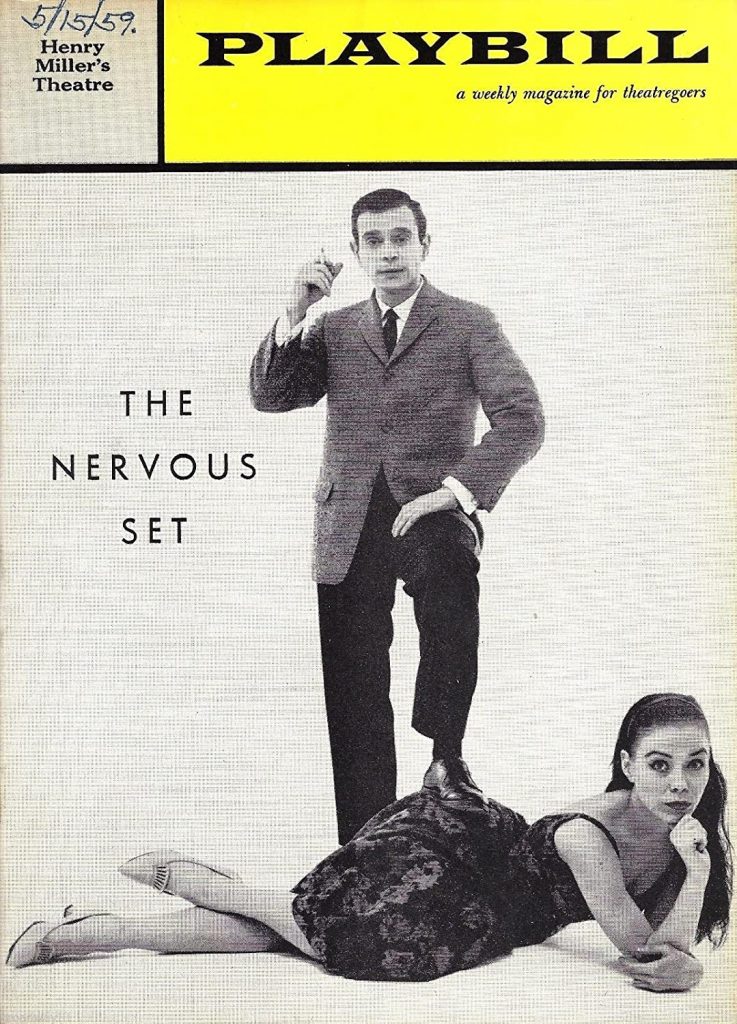
“Spring Can Really Hang You Up the Most,” Fran Landesman and Tommy Wolf’s 1955 tune which was then incorporated into the 1959 musical The Nervous Set, similarly focuses on the “have-nots” of spring rather than the “haves.”  A send-up of the first lines of T.S. Eliot’s “The Wasteland” (“April is the cruelest month…”), “Spring Can Really Hang You Up the Most” implies that spring can actually be the worst time of the year – if you’re single, that is.  “Spring this year has got me feeling like a horse that never left the post;/I lie in my room staring up at the ceiling/Spring can really hang you up the most!” the lyrics read.  The song reverses traditional springtime psychology and implies that the singer was happy and in love in the winter, and now, during the joyful spring season of rebirth, is experiencing loneliness. “Love seemed sure around the New Year,” she sings, “Now it’s April, love is just a ghost;/ Spring arrived on time, only what became of you, dear?”  It should be noted that this song, as well as “It Might As Well Be Spring,” became jazz standards, covered by the likes of Ella Fitzgerald and Frank Sinatra.  The season’s failure to deliver on its promise is clearly a recurring theme on Broadway and beyond.
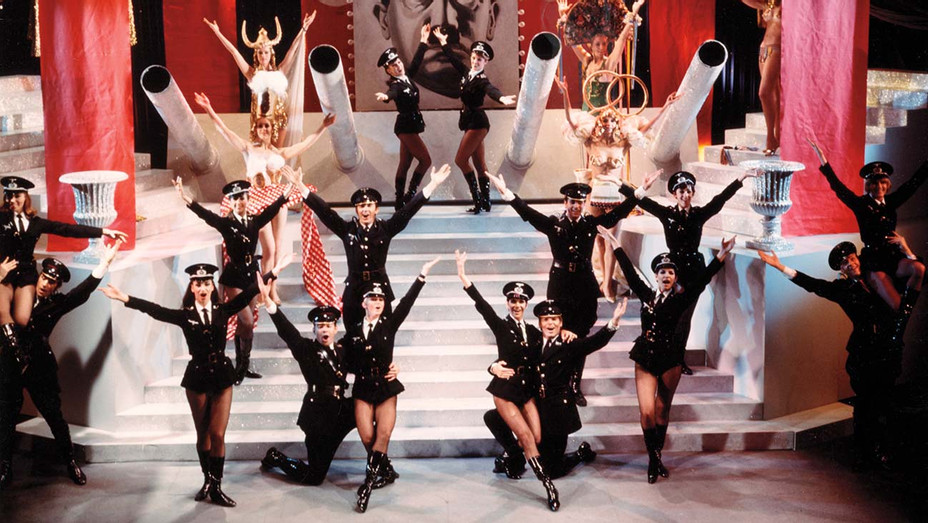
But no discussion of spring on Broadway would be complete without “Springtime for Hitler” from Mel Brooks’ The Producers.  The major song in the musical’s show-within-a-show, a favorable retelling of WWII from the perspective of a disgruntled Nazi, “Springtime for Hitler” shows Brooks’ thoughtful understanding – and appreciation – of spring’s metaphorical function in Golden Age musicals.  As the tap-dancing, sausage-wearing Nazis sing lines like “And now it’s springtime for Hitler and Germany/Deutschland is happy and gay,” Brooks is sending up the positive traits associated with springtime in musicals like South Pacific and State Fair.  And to the Nazis represented in the show, “springtime for Hitler” is indeed positive: it encapsulates their military campaign to take over the world.  Brooks makes clear, however, that this seasonal rebirth is actually extremely dark.  Peppered in with the image of a “happy and gay” Germany are lyrics about “U-boats…sailing once more.”  In the song, springtime equals gaiety, but it also happens to equal “bombs falling from the skies again.”  Combined with the schmaltzy musical style, movie-musical tap-dancing, over-the-top costumes, and of course the late, great Gary Beach’s acting, springtime in “Springtime for Hitler,” repeated over 20 times in the eight-minute song, becomes an absurd (and incredibly funny) dramatic irony.

Brooks’ hilarious treatment of springtime is similar to the season’s representation in a lesser known E.Y. Harburg and Fred Saidy song, “Springtime Cometh” from the 1951 flop Flahooley.  Like “Springtime for Hitler,” “Springtime Cometh” relies on and leans into the audience’s positive associations with spring and its traditional representation in Golden Age musicals.  Sandy/Penny and her genie (truly – don’t ask) sing about “lilacs growing on the clothesline,” “roses growing in the ashcan,” “hummingbird[s],” “merry maidens,” and repeat the word “springtime” six times in the short song.  Harburg went one step further and even wrote the lyrics in a sort of faux Olde English: “Springtime cometh,” the characters sing. “Hummingbird hummeth,/little brook rusheth,/merry maiden blusheth…springtime cometh for love of thee.”  Harburg pushes this construction even further for comedic effect with “Sugarplum plummeth,/Heart, it humpty-dummeth,/And to summeth up,/The Springtime cometh for the love of thee.”  The faux Olde English language reaches its zenith with Harburg’s tongue-and-cheek reference’s to spring’s inherent sexuality: “Lad and lass/In tall green grass/Gaily skippeth,/Nylon rippeth,/Zipper zippeth…which is to say/Spring cometh.”  Harburg’s ironic send-up of springtime is sexual, funny, self-aware, and, most importantly, irreverent.

Broadway clearly has a long-time fascination – and infatuation – with all things spring.  From the huge number of songs with “spring” in their title (and chorus) – to ones that rely on springtime imagery like the lilac trees in My Fair Lady’s “On the Street Where You Live” –  lyricists have used the season to convey and inspire romance, joy, lust, restlessness, loneliness, humor, and personal transformation in equal parts.  So in this close-to-post-pandemic moment: crank up the Broadway show tunes, smell the flowers, and look forward to a new (and hopefully, better) day. As they say: “springtime cometh!” 


Katie Birenboim is a NYC-based actor, director, and writer. She’s performed and directed at Classic Stage Company, Berkshire Theatre Group, Barrington Stage, City Center Encores!, The Davenport Theatre, and Ancram Opera House, to name a few.  She is a proud graduate of Princeton University, member of Actors’ Equity, and hosts a weekly interview show on YouTube with theatre’s best and brightest entitled “Call Time with Katie Birenboim.”

Categories
Creative

STORIES FROM THE STAGE: Deanna Dunagan

What’s A Big Break Anyway?

On the night of February 1, 1979, I stood in the vom of Circle-in-the-Square on Broadway, terrified. I kept repeating to myself, “You didn’t have to take this job. Why did you take this job?” The job I had taken was standby for the female lead in the entire four acts of George Bernard Shaw’s Man and Superman.

An hour earlier I had been having a glass of wine with my brother and sister-in-law who were visiting New York and had tickets to see Da. It is my habit to get to the theater early, but that night I arrived a wee bit late only to find that our leading lady was ill, and I was going on. The following half hour was a blur. As I was being helped into costume and makeup, one of the other cast members asked if there was anyone I would like to have notified. I later learned that within minutes of my response, ushers were hurrying up and down the aisles of the Morosco, whispering, “Mr. Dunagan? Mr. Dunagan?”

Luckily there had been an understudy rehearsal and I was well prepared, but I felt totally inadequate as I stood there waiting for my cue. In what seemed like a lifetime but was really only minutes, I remembered that my only obligation as standby was to say the lines in the correct order, with the correct cues, so that the other actors could do their usual stellar work. That realization (and maybe that glass of wine) helped me get through the performance, which astonishingly, may have been one of the best of my life. To top it off, my brother and his wife had made it to the theater seconds before the lobby doors were closed. After the show, we had a jubilant celebration at The Russian Tea Room.

The day after my Broadway debut, while walking around the Upper East Side, my brother spotted a small second floor cafe which offered tea leaf readings. He insisted I have a sitting to see what my future held and was dismayed when the “seer” said the leaves didn’t show anything special. No matter how he argued, recounting the story of the previous night, she stood by her reading.

It’s true, that after a brief flurry of activity during which a column was written about me in Backstage and I signed with ICM, nothing else ever came of my one night stand. But I think there may well be a time limit on one prognosticatory cup of tea. For soon I found myself in Chicago, a city I love, where I have spent a long and gratifying career as part of the vibrant theater community. It was because of that involvement that, almost 29 years later, in 2007, I made my second Broadway “debut” in Tracy Letts’ August: Osage County. This time my brother was in his seat well before the curtain.

OFF SCRIPT

I was in my second season at the Asolo Theatre in Sarasota when one afternoon the phone rang. It was Mark Medoff, the playwright, which was odd because I had never met or spoken with Mark. He was calling me out of the blue to ask if I would like to come to New Mexico State University in Las Cruces (where he was head of the Department of Theater Arts) to teach Voice and Diction and work on my play, “The Legend of Pecos Bill.”

I am not a playwright, but when I was in grad school at the Dallas Theater Center, I couldn’t find a children’s play to direct for the new Magic Turtle Theater program, so I wrote one. Several years later Mark had been working on a new play at DTC and in the market for a children’s play. Someone had given him my script and he liked it well enough to follow up with that phone call.

I explained that I was extremely flattered, but that I wasn’t really a playwright, I was an actor. When we hung up I thought that was the end of it. But after the season, when I was living in New York, I heard from him again. He was opening a new play at Jewish Repertory Theater and wondered if I would like to be his guest at the opening. We met, hit it off, and kept in touch. A couple of years later, in 1980, his award winning Children of a Lesser God was casting for the First National Tour. I loved the play and wanted to audition, but ICM, my agency at the time, was unable to get me seen. My friend Mark Medoff thought I might be good in the role of the lawyer; he had no trouble getting me in.

That tour took me to Chicago where I fell in love with the city and its thriving theater scene. After my six month commitment to the production, I moved from New York to Chicago where I have had a rich and satisfying theatrical career. My involvement with Chicago theater led me to be cast in the Steppenwolf production of August: Osage County which moved to Broadway in 2007 and won five Tony Awards.

I sometimes wonder what would have happened in my life had I been able to find a children’s play to direct in grad school.


Deanna Dunagan

Deanna Dunagan is an actress best known for her Tony Award-winning portrayal of Violet Weston in Tracy Letts’ August: Osage County and for her portrayal of Nana in M. Night Shyamalan’s 2015 film The Visit. She has also appeared in the recurring role of Mother Bernadette on the Fox television series The Exorcist, and Dr. Willa Sipe in the 2018 film An Acceptable Loss by writer Joe Chappelle.

Categories
Creative

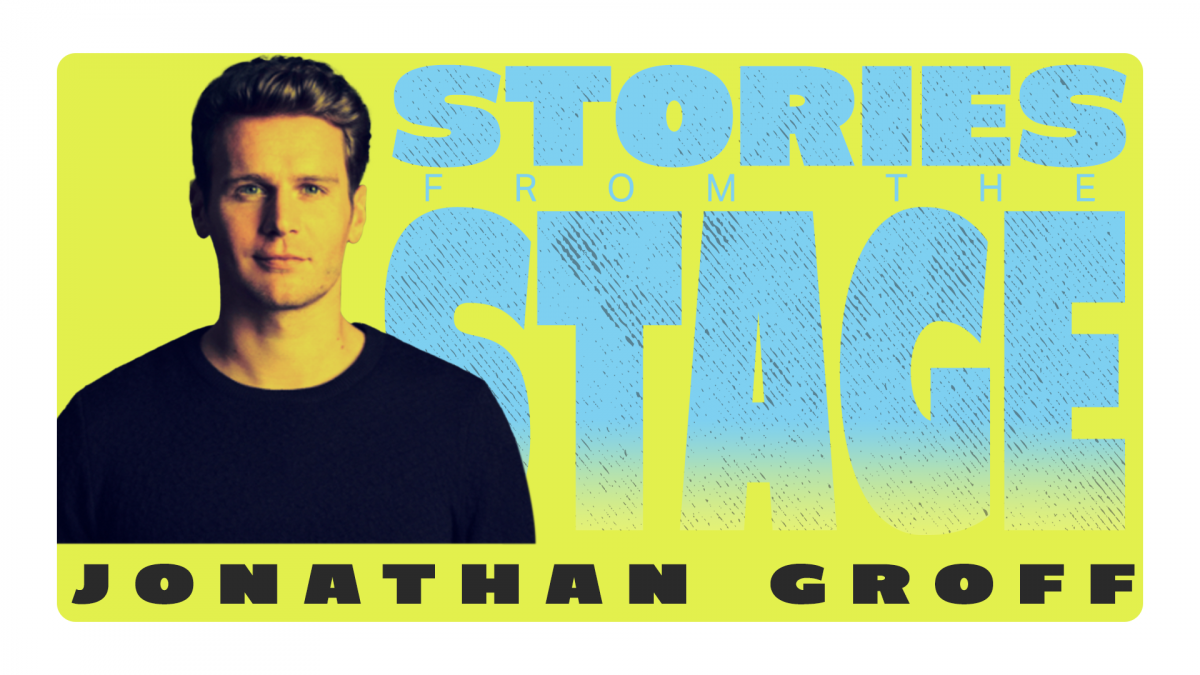
STORIES FROM THE STAGE: Jonathan Groff

During my run as Melchior in Spring Awakening, I was living a double life. (No wonder ALIAS was my favorite tv show at the time…) On stage, I played a fearless and intelligent rebel who refused to let the world define him. In my personal life, I was living a completely closeted existence. My “roommate” was just a “roommate” – certainly not a “BOYFRIEND.” Backstage at the show, I never spoke of my personal life in an honest way, and blessedly the cast never pushed me for the truth. I performed the show for almost two years. In June 2008, a month after I finished my run, I came out of the closet and started my journey towards self acceptance.  Looking back, I see how much Spring Awakening changed me. Getting the opportunity to grab the mic and express myself every night was the therapy I didn’t even know I needed. Just thinking about singing the song “Touch Me” every night still makes me well up. I found the courage to come out of the closet from cultivating bravery every night trying to be more and more like Melchior. The show changed the game for me professionally, but it hit me harder in a personal way at the exact moment I needed that form of self expression. I think the ultimate legacy of Spring Awakening is the opportunity the show provides future teenagers by taking their struggles seriously and giving them an outlet to express themselves. Every time I see the show performed in community theaters and schools, I can feel the experience is changing the lives of it’s fearless young performers in ways that they might not even be aware of yet. And watching them transforms me all over again. 


Jonathan Groff, recently seen off-Broadway as Seymour Krelborn in Little Shop of Horrors, earned Tony nominations for playing Melchior Gabor in Spring Awakening and King George in Hamilton.  His film and television credits include Disney animation’s Frozen, HBO’s Looking and Netflix’s Mindhunter.

Categories
Creative

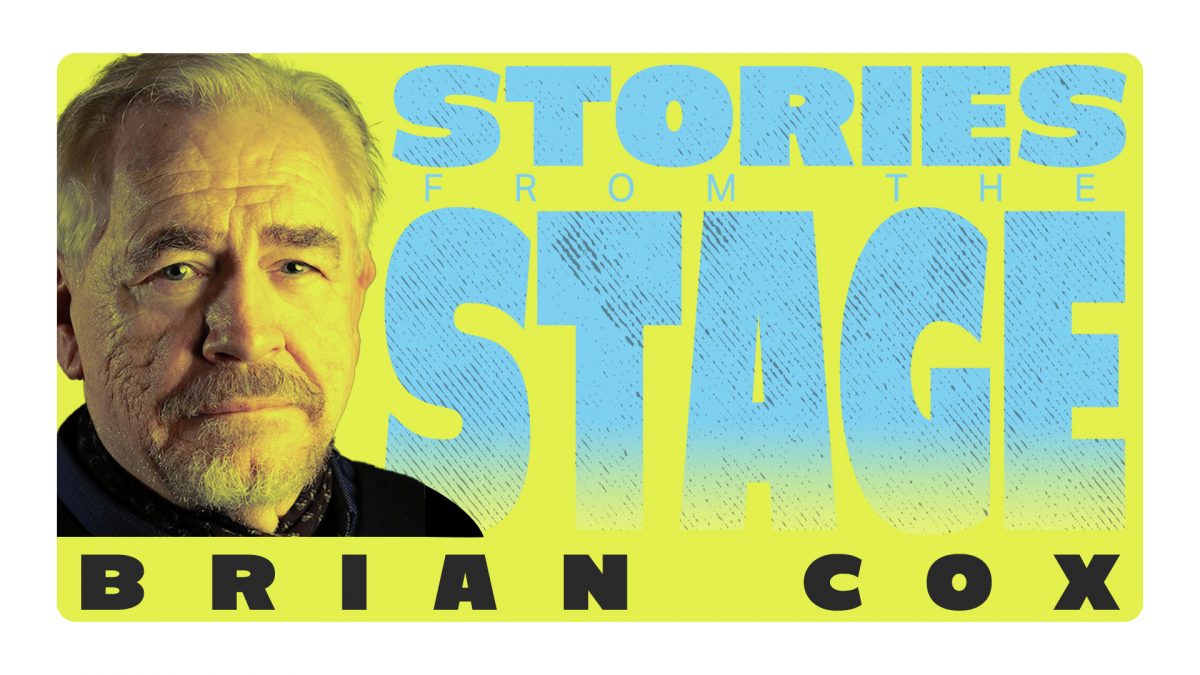
STORIES FROM THE STAGE – Brian Cox

A Memory Lapse

In 1997 I did a one man play about a drunken Irish theatre critic at the Bush theater in London. St Nicholas! Written by Conor McPherson, which I subsequently performed the following year at Primary Stages in New York on 45th street, and for which I was honored with ‘The Lucille Lortel Award’!

But the previous year the play was premiered at the Bush Theatre in London. The Bush was a small intimate theatre with the audience on three sides. This particular night was a sellout performance. The audience were packed to the rafters.

Now St Nicholas is an extremely intricate complicated and fantastical text. With a sinewy comic thread! It demands an incredible level of Concentrated attention from the player. That evening started well.

But…About 6 minutes into the evening I noticed that sitting on front row…in…the middle…to my right was my ex girlfriend. Who I had recently broken up with. I was a little thrown by this …and wondered why on earth she had chosen that particular, really, quite prominent, seat. 

I recovered from this slight ‘hiccup’ and continued, feeling proud of myself that I was not thrown by this ‘obstacle’. So I proceeded with renewed confidence.

After a few minutes, I’d just gotten back in stride when I turned to address my audience stage left and there sitting…in the middle of the left front row was…my ex ex girlfriend. The girl friend previous…to the girl friend…now sitting stage right. In fact these two young ladies were actually sitting…facing…each other. I didn’t panic… but, my anxiety…was, shall we say…mounting.

What on earth was going on? And of course various scenarios began to play out in my mind!

Had they come together?

And as some bizarre joke decided to sit opposite each other? 

Or??….were they there by pure coincidence?

My brain became occupied with, what seemed endless permutations on these shifting scenarios. The text of the play, the main purpose of my attention, was drifting in my consciousness. And..ten minutes into the evening….the inevitable happened. I went up! Dried stone dead.

I struggled like a drowning man seeking a life raft. But after..a beat..which seemed a lifetime. I stopped turned to the audience, and said “Ladies and Gentlemen I’m afraid for reasons I can’t entirely explain, I need to start the evening over again! Apologies!” And so indeed I did…and it was truly scary!

“Will I get over the point where concentration abandoned me.”

And…”Will I indeed get through the entire evening….”

The moment where I had lost my way, was looming like one of those huge fences at the English Grand national horse race. Would I get over the fence? The moment arrived… and I lept the fence.. and..proceeded obsessively to the finish. After it was over, I left the stage exhausted!

I sat in my dressing room. There was a knock on my door. It was my ex-girlfriend. “Brian that was wonderful, what an incredible evening.” I was about to answer when there was another knock at the door. Enter my ex-ex-girlfriend “Brian that was wonderful, what an amaz….Oh hello, blank!

I was about to answer when there was another knock at the door. Enter my ex-ex-girlfriend “Brian that was wonderful, what an amaz….Oh hello, blank! Were you in?”

Ex-girl friend, “Yes, were you, wasn’t it wonderful 

Ex-ex-girlfriend “Amazing!”

I sat there in a state of stupefaction! Me “But weren’t you?… didn’t you? ..Um..ah…see..?”

Both, “What?

Me,  “Oh…Nothing…”

Ex girlfriend “ I was absolutely caught from the moment you came on!

Ex-ex-girlfriend “Oh, Me too! Me too”.

Both “But..why did you stop?”

Me, “Ah!…That!…Momentary lapse of concentration!”


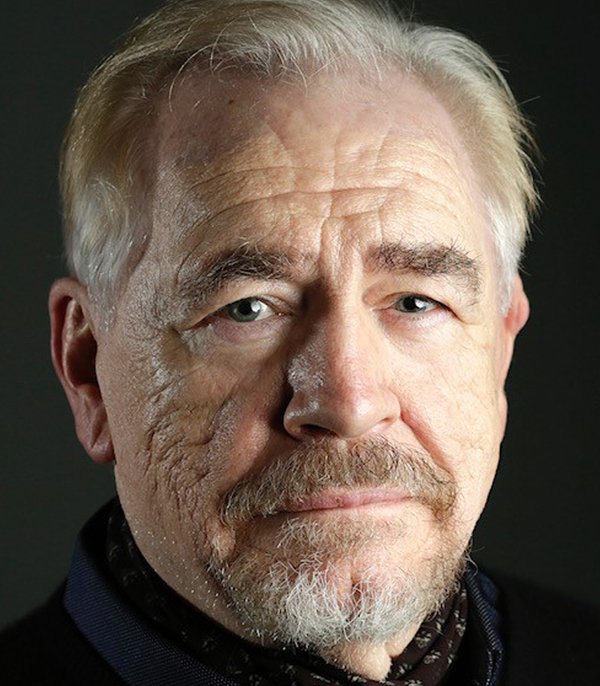
Brian Cox

Brian Cox is an Olivier Award, Emmy Award and Golden Globe winner known for playing Logan Roy on HBO‘s Succession. He has worked extensively with the Royal Shakespeare Company, where he gained recognition for his portrayal of King Lear. Additional credits include: Super Troopers, The Bourne Identity, The Bourne Supremacy, X2, Braveheart, Rushmore, Rise of the Planet of the Apes, and Troy.

Categories
Creative

ARMIE HAMMER WITHDRAWS FROM THE MINUTES ON BROADWAY

PRODUCTION STILL ON TRACK FOR 2021-2022 SEASON

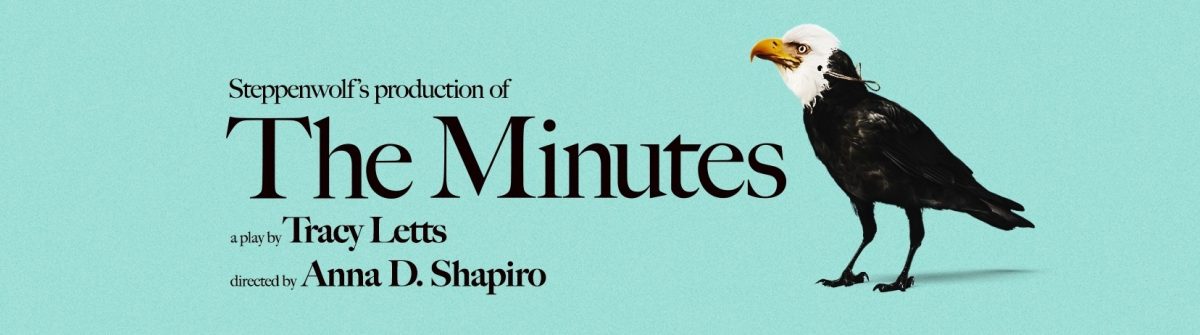
(New York, NY) Armie Hammer has withdrawn from the production of The Minutes for personal reasons.  

“I have loved every single second of working on The Minutes with the family I made from Steppenwolf. But right now I need to focus on myself and my health for the sake of my family. Consequently, I will not be returning to Broadway with the production.” – Armie Hammer

“Armie remains a valued colleague to all of us who have worked with him onstage and offstage on The Minutes. We wish only the best for him and respect his decision.” – A statement from The Minutes

As previously announced, Steppenwolf’s production of The Minutes by Tracy Letts, directed by Anna D. Shapiro, will return to Broadway in the 2021-2022 season.

Categories
Creative

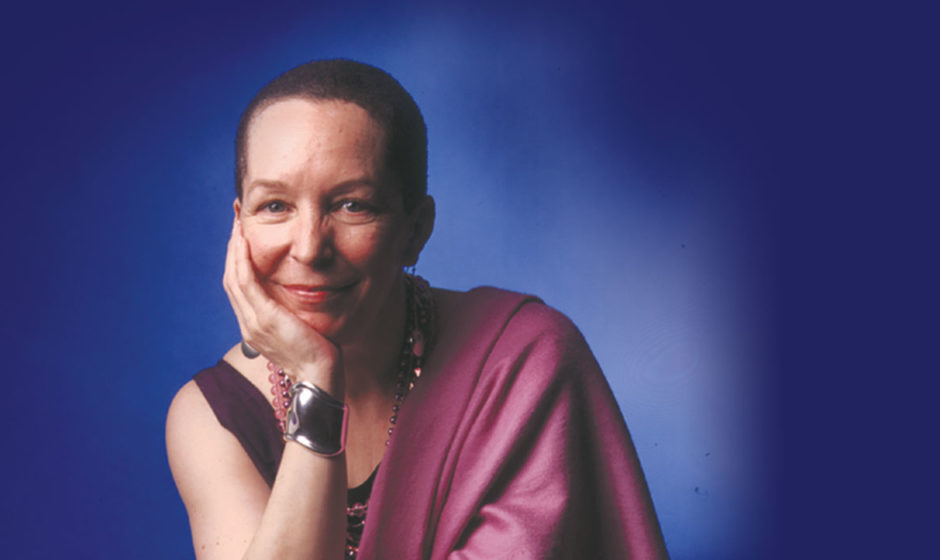
STORIES FROM THE STAGE: Pearl Cleage

by Pearl Cleage

In 1990, the year that Anna Campbell would have first performed her protest piece, “Naked Wilson,” at the National Black Theatre Festival in Winston-Salem, North Carolina, the word intersectionality was not yet in common usage. The idea that individual bodies can collide with multiple, often overlapping forms of oppression simply because of their race, gender, and sexual identities was not widely acknowledged or understood. For African American women like me, hoping to craft careers in the American theatre, the work of August Wilson presented a special challenge by forcing considerations of race and gender to be viewed exclusively through a passionate and undeniably black male lens. Many late-night sessions examined and reexamined the plays hoping they would reveal themselves to be love letters if we could just break the code. “Naked Wilson” would certainly have been part of those conversations.


Pearl Cleage is an Atlanta-based writer whose works include three novels, What Looks Like Crazy On An Ordinary Day (Avon Books, 1997), I Wish I Had A Red Dress (Morrow/Avon, 2001), and Some Things I Never Thought I’d Do, (Ballantine/One World, August, 2003); a dozen plays, including Flyin’ West, Blues for an Alabama Sky, Hospice and Bourbon at the Border; two books of essays, Mad at Miles: A Blackwoman’s Guide to Truth and Deals With the Devil and Other Reasons to Riot; and a book of short fiction, The Brass Bed and Other Stories (Third World Press).  She is also a performance artist, collaborating frequently with her husband, Zaron W. Burnett, Jr., under the title Live at Club Zebra.  The two have performed sold out shows at both the National Black Theatre Festival in Winston-Salem, North Carolina and The National Black Arts Festival in  Atlanta, Georgia.

She is a frequent contributor to anthologies and has been featured recently in Proverbs for the People, Contemporary African American Fiction , edited by Tracy Price-Thompson and TaRessa Stovall and in Mending theWorld, Stories of Family by Contemporary Black Writers, edited by Rosemarie Robotham.

Categories
Creative

Keepers of the Dream

By Karu F. Daniels

These great Black actors did King’s important legacy a great service.

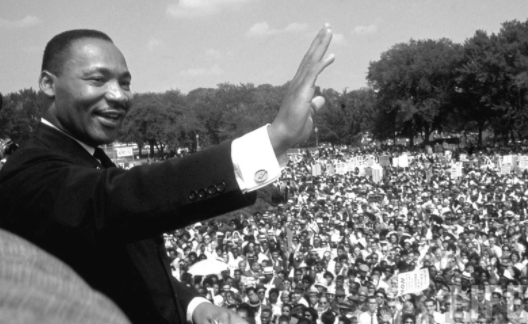
Since his April 4, 1968 assassination, the legacy of Rev. Dr. Martin Luther King, Jr. has lived on in pop culture through a multitude of projects spanning film, television, music and theater.

On Broadway, the iconic Civil Rights Movement leader’s likeness, message and “dream” has been brought to life in various forms throughout the decades.

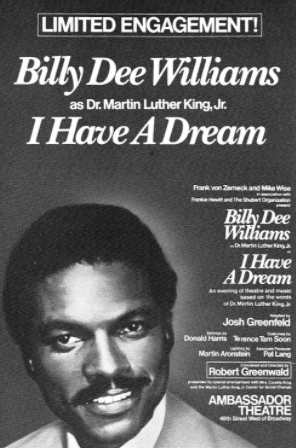
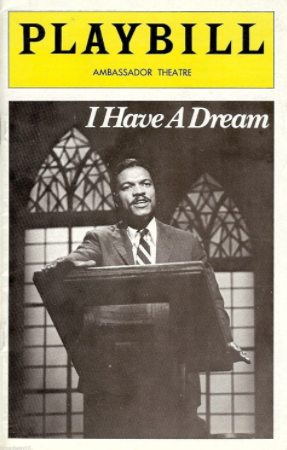
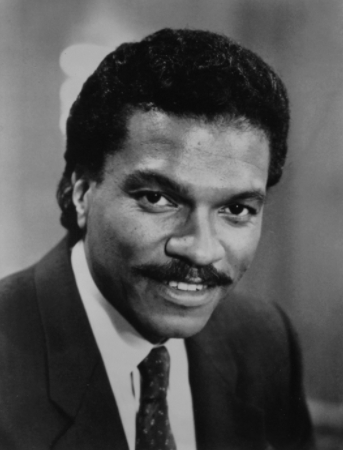
In September 1976, Billy Dee Williams appeared as King in the original play “I Have a Dream,” which was presented as an evening of music based on the life and words from the slain activist’s most famous speech of the same name. 

Conceived by Robert Greenwald (who directed “Me and Bessie”) with a book adapted by Josh Greenfield, the production played 88 performances with eight previews at the Ambassador Theatre. 

Presented with special arrangement with Mrs. Coretta Scott King and Atlanta’s Martin Luther King Jr. Center for Social Change, the play told the story of King’s life from 1955, when he helped to lead the bus boycott Montgomery, Ala., until 1968, when he was murdered Memphis.

Featuring 12 gospel and civil rights songs used to separate the scenes, “I Have A Dream” also starred Judyann Elder, Leata Galloway, Ramona Brooks, Clinton Derricks-Carroll, Sheila Ellis and Millie Foster.

Billy Dee Williams

For Williams – a big Hollywood attraction at that point thanks to the success of his starring roles in the Diana Ross-led feature films “Lady Sings The Blues” and “Mahogany” – “I Have A Dream” marked is return to The Great White Way after an absence of 10 years.

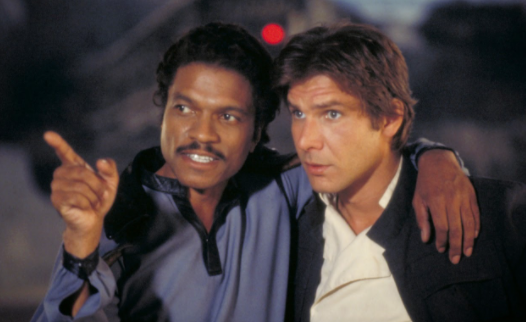
Billy Lee Williams & Harrison Ford in Star Wars

The New York City native, who went on to gain international notoriety as Lando Calrissian in the “Star Wars” franchise, was last seen on the Broadway stage in 1967’s “Hallelujah Baby” with Leslie Uggams, which won five 1968 Tony Awards, including Best Musical.

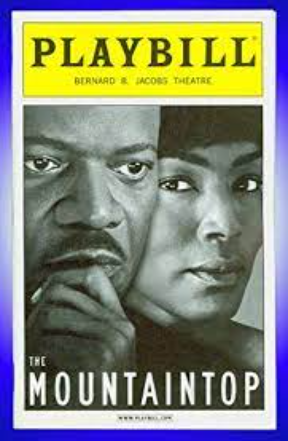
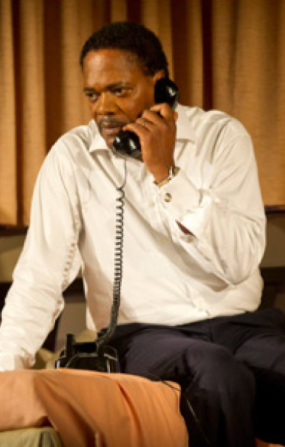
After his legacy would become the subject if numerous television films throughout the succeeding decades – starring Paul Winfield, James Earl Jones, Robert Guillaume, Clifton Powell, Courtney B. Vance,  and Jeffrey Wright, among others – his powerful presence was revived on the great stage when Samuel L. Jackson made his Broadway debut in Katori Hall’s anticipated play “The Mountaintop” in October 2011.

Directed by Kenny Leon (with Kamilah Forbes serving as Assistant Director), the two-hander play, also starring Angela Bassett, was set in Room 306 of the Lorraine Motel in Memphis and reimagined what the leader’s final moments were before his assassination after delivering his legendary “I’ve Been to the Mountaintop” speech to a massive church congregation. 

“The Mountaintop” originated overseas and after transferring to the West End’s Trafalgar Studio 1 in 2010. The production featured powerful performances by David Harewood as Dr. Martin Luther King, Jr., and Lorraine Burroughs as the mysterious maid Camae, under the direction of James Dacre.

Samuel L. Jackson

The acclaimed show garnered two Evening Standard Awards Nominations, including Most Promising Playwright for Hall, and was awarded the coveted 2010 Olivier Award for Best Play.

That same year, the playwright received the prestigious Susan Smith Blackburn prize.

Hall, a native Memphian who caused a roar on Broadway – pre-pandemic – with the Tina Turner bio-musical, “Tina,” and the creative force behind the buzz-worthy Starz drama series “P Valley,” counts August Wilson as an inspiration.  The infamous location where King was murdered is in the same neighborhood the Harvard and Julliard alum was raised.

“I grew up with this history only a stone’s throw away,” she said. “It is my bloody heritage. The Mountaintop follows Dr. Martin Luther King on the night after he gives this great, prophetic speech.”

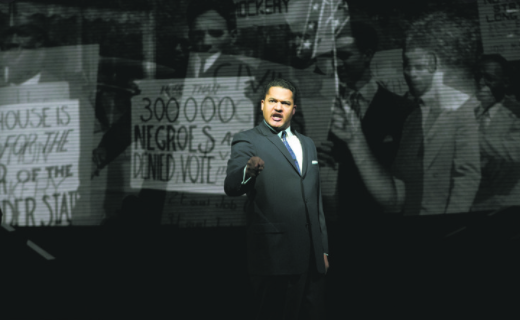
In more recent years, King’s voice was prominently featured in Pulitzer Prize winner Robert Schenkkan’s Tony Award-winning 2014 play “All the Way” starring “Breaking Bad” baddie Bryan Cranston as President Lyndon Baines Johnson.

The play presented a bird’s eye view of what happened behind the doors of the Oval Office and inside the first years his presidency and his fierce and ferocious fight to pass a landmark civil rights bill.

Brandon J. Dirden as Martin Luther King Jr.

OBIE and Theatre World Award winner Brandon J. Dirden – in his first lead Broadway role – portrayed King in a light like never before.

“I think what Robert Schenkkan has done is captured a side of him that nobody’s ever seen before — as a politician,” Dirden, who originated the role at the  American Repertory Theater in Cambridge, Massachusetts the year before, said in an interview.  “That’s not the first adjective that comes to people’s minds when they think of Dr. King. Orator? Sure. Preacher? Yes. Civil Rights Activist? Yes. But nobody ever put politician on that list. In this play, we see how he had to straddle both sides — not republican and democrat, but politics and everyday folk.”

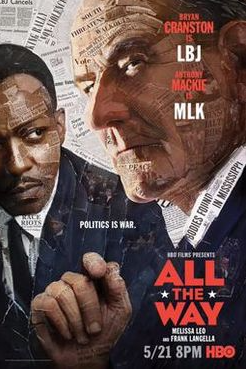
In 2016, the play was adapted into an Emmy Award-nominated HBO film helmed by “Austin Powers” director Jay Roach with Anthony Mackie starring as King.

Anthony Mackie & Bryan Cranston

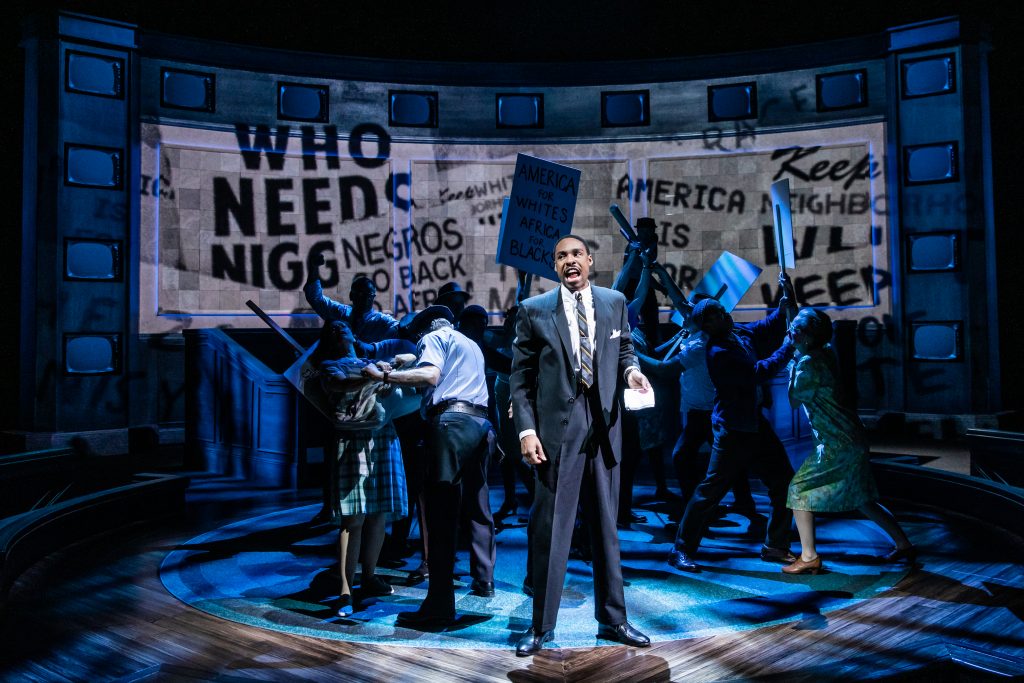
Three years later, Schenkkan had more of a story to tell about LBJ’s struggle to fight a “war on poverty” with “The Great Society,”which played Lincoln Center’s Vivian Beaumont Theater to rave reviews.

For this acclaimed production, newcomer Grantham Coleman made his Broadway debut as King, playing opposite to powerhouse Brian Cox as Johnson.  The Juilliard grad, who first gained notices with the original 2013 Off-Broadway production of Tarell Alvin McCraney’s  “Choir Boy,” knew he had big shoes to fulfill but was up for the challenge with a fair share of trepidation.

Grantham Coleman

“Research for the part was research I was doing my whole life, but I was worried I wouldn’t portray him accurately,” Colman confided. “The director and writer approached me about it, and they understood my fears. They were more interested in conveying the spirit of Dr. King and the person [he was] and his struggles, instead of casting someone who looks like him. A lot of his personal beliefs are mine as well, so it wasn’t a huge struggle to get to where his mind was.”

These great Black actors did King’s important legacy a great service.

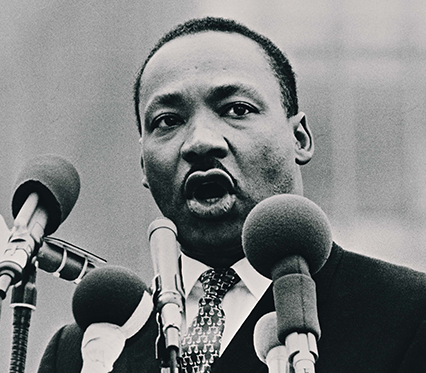
Martin Luther King Jr.

Here’s to hoping there’s much more from whence they came to keep the dream alive on The Great White Way.

Karu F. Daniels has written for the Associated Press, The New York Times, New York Daily News, CNN, ABC News, Billboard, NBC News, The Daily Beast, Ebony, Essence, and Playbill among other outlets.

Categories
Creative

The Cool World

It’s all but forgotten now, but The Cool World still points like an arrow at how the country was changing at the beginning of the 1960s.

 By: Mark Blankenship

It’s all but forgotten now, but The Cool World still points like an arrow at how the country was changing at the beginning of the 1960s. 

As Warren Miller was writing his 1959 novel about youth gangs in Harlem, JFK was promising voters he would deliver social change, the Civil Rights Movement was building toward its zenith, and the Vietnam War was beginning its years-long escalation. When he adapted the tale for Broadway in 1960, the American theatre was absorbing the impact of socially and politically conscious plays like Gore Vidal’s The Best Man and Lorraine Hansberry’s A Raisin in the Sun. Even a crowd-pleasing musical like Bye Bye Birdie was making audiences contend with the hero’s racist mother. 

Or to put it another way, The Cool World arrived when millions of people were actively trying to understand the cracks in the social contract. Perfectly attuned to its moment, it told a story that was lifted from the the very streets the country was learning to see. 

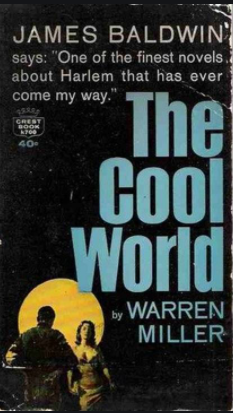
Miller wrote his novel while he lived in Harlem himself, watching young Black men participate in gang activity. His story follows Duke, a teenager determined to rise through the ranks of his crew, and it is brutally unsentimental about how violence, racism, and classism warp the boy’s life. When the book was published, Miller’s unvarnished style earned immediate praise from artists like James Baldwin, who called it “one of the finest novels about Harlem that had ever come my way.” 

Robert Rossen, Academy Award winning Director

Robert Rossen was another fan. Well-known at the time for writing and directing the Oscar-winning film All the King’s Men, he worked with Miller to co-write the stage adaptation of The Cool World and then directed its Broadway premiere. 

Granted, the production only ran for two performances, but it nevertheless gave major roles to future stalwarts like Cicely Tyson, James Earl Jones, Roscoe Lee Brown, and a 22 year-old Billy Dee Williams, who played Duke. 

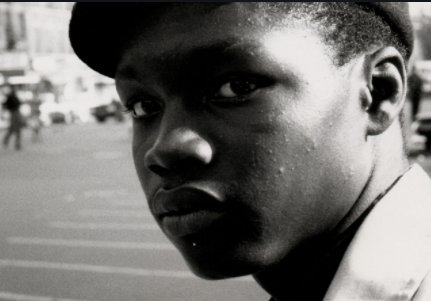
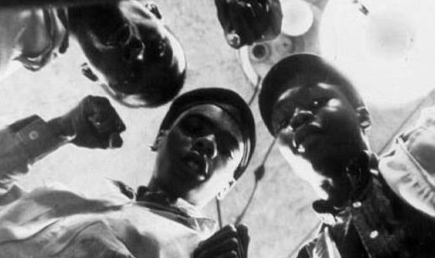
Production Still from “The Cool World” film

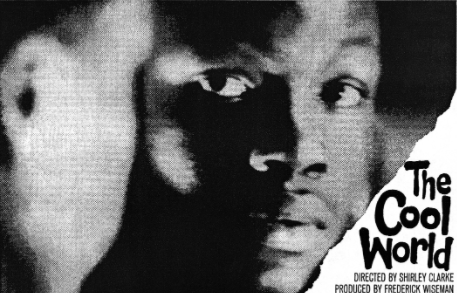
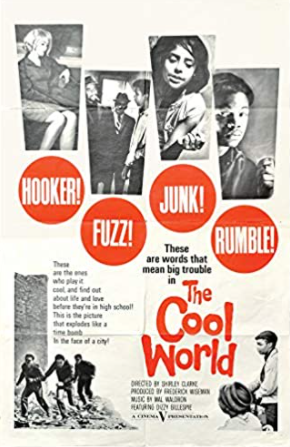
And they were hardly the last major artists to be involved with this story. In 1963, legendary documentarian Frederick Wiseman produced a film version, which was directed by Shirley Clarke, who had been Oscar nominated for a documentary of her own.  

That sensibility made her film stand out: Though she worked from a script that she adapted from the novel and the play, Clarke let the movie feel like nonfiction. She cast several non-actors who lived in Harlem, and she included long, improvisatory scenes that aimed to capture the actual rhythm of the neighborhood. 

Just like the play, the movie’s cast featured future stars, including Clarence Williams III and Gloria Foster. No less than Dizzy Gillespie wrote the music, and his soundtrack album is still regarded as a classic among jazz fans. 

It should be noted, of course, that The Cool World is a story about Black boys that was not created by Black people. Miller, Rossen, and Clarke were all White, and a modern audience might be understandably skeptical of their take on Harlem. Still, the novel, the play, and the film remain excellent reminders of how American culture shifted in the early 1960s and how the arts documented the change as it happened.

Mark Blankenship is the editor of The Flashpaper and the co-author of the recently published book Madonna: A to Z.

Categories
Creative

HOME

By Linda Armstrong

There is something so moving when a drama, and a One Act that was delivered through only three characters (Cephus Miles, Pattie Mae and Woman Two)—portraying over 25 roles–can grip the audience and discuss such relevant, socially significant topics.

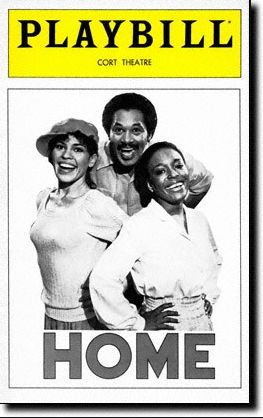
It is absolutely marvelous, the contributions that the Negro Ensemble Company (NEC) has made to Broadway Theatre through the decades. It has proven to be a vessel through which creative, black writers have gotten to get their voices heard and appreciated. In the 70’s “The First Breeze Of Summer” by Leslie Earl Lee originated there and moved to Broadway. In the 1980s, Samm Arthur Williams {Samm Art-Williams} play “Home” followed suit. It was first performed at the Negro Ensemble Company and then previewed on Broadway at the Cort Theatre April 29, 1980, opening May 7 and closing January 4, 1981. During that time it was nominated for two Tony Awards and two Drama Awards for Best Play and Outstanding Actor in a play, Charles Brown. The play won the Outer Critics Circle Award for John Gassner Playwrighting Award in 1980 and the Guggenheim Fellowship for Creative Arts, U.S. & Canada in 1981.

Samm Art-William, famed playwright

Art-William’s not only looks at the Black experience in “Home”, he also takes on the serious topic of the Vietnam War and how some Black men chose to be conscientious observers and not fight, even if it meant prison time. One realizes that the draft was a system that the government used to get poor Blacks into the military and it was simply unfair on so many levels. There is something so moving when a drama, and a One Act that was delivered through only three characters (Cephus Miles, Pattie Mae and Woman Two)—portraying over 25 roles–can grip the audience and discuss such relevant, socially significant topics. Topics that are still relevant 41 years later, with how some people still feel about fighting in Wars and the injustices that happen to Blacks in this country. In Art-Williams play “Home” originally performed at NEC and then transferred to Broadway, one experienced a drama which begins in the 1950s and goes through to the Civil Rights Movement, about a Black male–Cephus Miles–coming of age in the small community of Crossroads, North Carolina where segregation is alive and well. Miles is an orphan who was left his family’s farm. He is trying to find his way in life and love. He is also someone who serves five years in prison for being a conscientious objector pertaining to the Vietnam War in which he refused to fight. The One Act play, which took 1 hour and 45 minutes to unfold, found Cephus in love with his high school sweetheart, Pattie Mae. That relationship proved to break his heart, as she went away to college and fell in love with and married, a professional man that showed promise. When Cephus returned to Crossroads after serving the five years in prison, taxes had claimed his farm. Moving to the big city he found himself doing manual labor of loading and unloading trucks, until his prison record got him fired. He went from welfare to getting involved with street life—drugs and prostitution. He hit rock bottom and gets an invitation to come back to Crossroads, someone has bought his farm. When he returns 13 years later, the segregation that had been a part of the town is over, but the townspeople consider him an outsider and spread lies about him being mean. His world becomes improved after he learns that not only is Pattie Mae divorced, but she is the one who bought his family’s farm for them to have a life together. The two find that they left their small town looking for happiness only to return and discover the true meaning of home. “Home” looked at how we are connected as human beings and takes us through the cycles of life that we go through going from adolescence to adulthood.

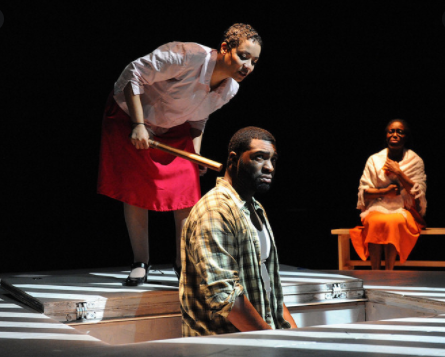
Ashley Honore, Kamal Angelo Bolden and Tracey N. Bonner at Court Theatre

When “Home” was on Broadway it remained with direction by Douglas Turner Ward. Playing 278 performances the cast consisted of Charles Brown as Cephus Miles; L. Scott Caldwell as Pattie Mae Wells and Michele Shay as Woman Two.

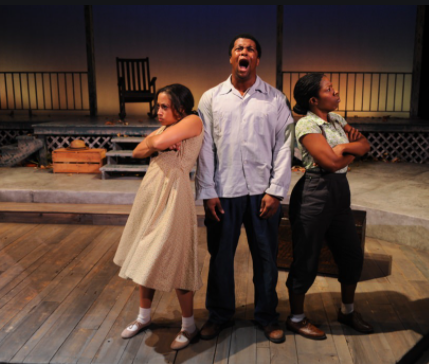
The timelessness of this play has been displayed in the fact that it has been revived a few times. In the Signature Theatre’s 2008-2009 season dedicated to NEC, “Home” was revived at the Peter Norton Space. It previewed Nov. 11, 2008, opened Dec. 7 and ran through Jan. 4, 2009. The cast consisted of Kevin T. Carroll, Tracey Bonner and January LaVoy. It was directed by Ron O.J. Parson. It was also presented by Rep Stage in March 2013 at Howard Community College’s Horowitz Center and featured Robert Lee Hardy, Felicia Curry and Fatima Quander, with direction by Duane Boutte.

Art-Williams writing about life in the south was perfectly appropriate as he is a child of the South and lived through segregation and racism. Born January 20, 1946 in Burgaw, North Carolina, he was the son of Valdosia and Samuel Williams. His mother was a school teacher and Art-Williams attended segregated public school through high school. He was educated at Morgan State University and is an Artist in Residence at North Carolina Central University where he teaches rules of equity theatre and the art of playwrighting. Art-Williams has had a very creative life. He proved himself to be a versatile actor, as he originally performed in New York theatre in plays including “Black Jesus” in 1973, in NEC productions of “Nowhere to Run, Nowhere to Hide” in 1974 and “Liberty Calland,” “Argus and Klansman” and “Waiting for Mongo” in 1975. Taking on the role of the playwright, Art-Williams (a name change he chose to make before performing in the last two NEC plays mentioned above) wrote “Welcome to Black River,” which was produced by NEC, “The Coming,” and “Do Unto Others”, produced by the Billie Holiday Theatre in Brooklyn in 1976, “A Love Play” produced by NEC in 1976, “The Last Caravan” in 1977 and “Brass Birds Don’t Sing”, both at New York City Stage 73 in 1978. “The Sixteenth Round” in 1980, “Eyes of an American” in 1985, and “The Waiting Room” in 2007, were produced by NEC. He wrote and directed the play “The Dance on Widow’s Row” produced by New Federal Theatre in 2000. He has been executive producer of television series like “The Fresh Prince of Bel-Air”. He was nominated for an Emmy Award in 1985 for Outstanding Writing in a variety or Music Program for Motown Returns to the Apollo. He was story editor for “Frank’s Place” which was nominated for an Emmy in 1988 for Outstanding Comedy Series.

Robert Lee Hardy, Felicia Curry and Fatima Quander at Rep Stage

“Home” may have been his only work to reach Broadway, but his plays touch the heart of any audience and completely succeed in relying the Black experience in this country.

Linda Armstrong is a theatre critic with the New York Amsterdam News and Theatre Editor for Neworldreview.net, a global online magazine.

Categories
Creative

The First Breeze of Summer

By Linda Armstrong

“I am a black playwright, I am not a playwright who happens to be black…I am very happy writing about black people. I do not have to write about anybody else.”

Black playwrights have the sacred responsibility of depicting the lives of African American people on stage in a way that is honest, candid, engrossing and inspiring. They are charged with telling stories of Black families that show their love, care, vulnerability, conflicts, spirituality and their beauty. One playwright who definitely understood this sacred duty was the late Leslie Earl Lee. Lee was also a director, and professor of playwrighting and screenwriting. His commitment to authentically depict the lives of Black families is beautifully evidenced by his brilliant, Tony nominated and Obie and Outer Critic Circle Best Play Award winning drama, “The First Breeze of Summer”. The play tells the story of Gremmar, the matriarch of the Edwards family and of the secrets and flashbacks to her youth that she shares on a hot June weekend with her family in Northeastern Pennsylvania.

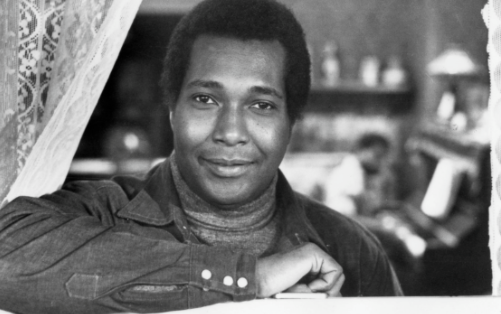
Leslie Lee, famed playwright

This play was close to Lee’s heart, as it was an autobiographical work and the grandson character of Lou, was him as a teenager, getting ready to graduate high school, dealing with issues of sexuality and his blackness and then learning of the devastating secrets in the past of his beloved grandmother. Lee was born in 1930 in the town of Bryn Mawr, Pennsylvania and grew up in a close, middle-class family. The secret that his character learns on that weekend in June, is that his grandmother had a scandalous past– especially for those times–she had three children, each by a different man and none married her. Gremmar shares her secrets of these three lovers–Sam Green, a Black man, Briton Woodward, a White man and Harper Edwards, a Black man–through flashback scenes. Gremmar feels that her life is nothing to be ashamed of and that she has been a useful person in her family. Lee’s creation of the Gremmar character demonstrates his ability to realize that everyone is human and dealing with feelings of love and passion and sometimes those feelings can result in actions that can impact people’s lives and those of their family members.

The messages behind “The First Breeze of Summer” are definitely timeless. Bruce Webber of the New York Times, wrote after Lee’s death on January 20, 2014, that his work “focused on stretching the boundaries of the African-American experience as it was portrayed on the stage.” In an interview in 1975, Lee said, “I want to expand the thinking of Blacks about themselves.” Lee wanted Black people to see themselves, look deeper into who they are and embrace their beauty—that of the mind and the body. And he succeeded in bringing his vision of Blacks expanding their minds with regards to themselves, certainly with “The First Breeze of Summer.”

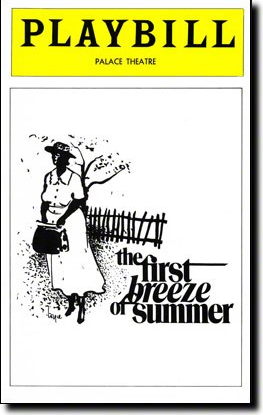
The production was first performed by the Negro Ensemble Company at St. Marks Playhouse in the Village, on March 2, 1975. It was subsequently transferred to the Palace Theatre on Broadway, where it previewed on June 7, 1975 and opened on June 10, 1975. The production, directed by Douglas Turner Ward, featured a stellar group of African American actors including Frances Foster as Gremmar; Reyno as Lou Edwards; Janet League as Lucretia (Gremmar’s younger version); Barbara Montgomery as Aunt Edna; Moses Gunn as Milton Edwards; Charles Brown as Nate Edwards; Carl Crudup as Sam Greene; Douglas Turner Ward, yes the director, as Harper Edwards and Mosely Anthony McKay as Briton Woodward. Understudies included Bill Cobbs and Samm-Art Williams. The play ran 48 performances.

The play was so well received that on January 28, 1976 it was presented on television as part of Great Performances with the Broadway cast. 

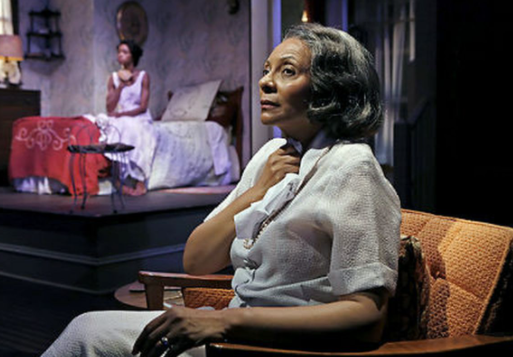
Demonstrating the timelessness of this drama, the Signature Theatre Company brought it back in 2008, as it did a tribute to the Negro Ensemble Company. I am thrilled to say that I was fortunate enough to see this rendition of the production, which was brilliantly directed by Ruben Santiago-Hudson. The cast was superb! There was Leslie Uggams as Gremmar; Jason Dirden as  Lou Edwards; YaYa Da Costa as Lucretia; Gilbet Owuoro as Sam Green, Quincy Dunn-Baker as Briton Woodwood; John Earl Jelks as Harper Edwards, Brandon Dirden as Nate Edwards; Keith Randolph Smith as Milton Edwards; Brenda Pessley as Aunt Edna.

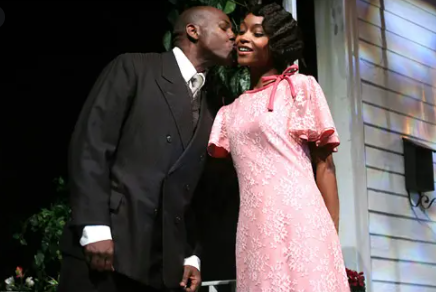
Yaya DaCosta and John Earl Jelks at Signature Theatre 2008.

September 29, 1987, Lee was a guest speaker in the University of Connecticut’s course—Black Experience in the Arts and this holder of a M.A. in Theatre from Villanova University, told students, “Now, I am a black playwright, I am not a playwright who happens to be black…I am very happy writing about black people. I do not have to write about anybody else.” Lee puts his writing behind his words as he created numerous plays that depicted Black life including: “Elegy for a Down Queen” in 1970, which began his New York City career at La MaMa Experimental Theatre; in 1971, also at La MaMa he did “Cops and Robbers”. He returned to La MaMa in 1997 with “Love in the Eyes of Hope Dies Last.” Lee’s other works included “Black Eagles” about Black fighter pilots in Italy in World War II; “Ground People,” (originally called “The Rabbit Foot”, about Southern black sharecroppers and visiting minstrel-show performers in the 1920’s. “Blues in a Broken Tongue,” focused on the daughter of a family that had moved to Russia in the 1930s as an escape from racism and discovered a pile of recordings by Billie Holiday, Paul Robeson and others and reconsidered her heritage. “The War Party,” was about the conflicts within a community of civil rights organizations in the 1960s. “The Book of Lambert” written in the 1970s, set on an abandoned New York subway platform, showed a black intellectual despairing over the loss of the white woman he loved. “Colored People’s Time”, goes from the civil war through to the dawn of the civil rights movement in a series of vignettes. “Hanna Davis” was a play about a well-to-do black family.

Lee’s other creative contributions included television scripts including an adaptation of Richard Wright’s short story “Almos’ a Man.” He also did collaborative work with composer Charles Strouse and lyricist Lee Adams in a musical, “Golden Boy” in 1989 at the Coconut Grove Playhouse. They teamed up again for a musical on Rev. Dr. Martin Luther King Jr. that showcased him as a teenager in Atlanta to the Montgomery Bus Boycott of the 1950s. The show was mounted in 2011 at the Kraine Theater.

Leslie Lee, famed playwright

While “The First Breeze of Summer” was Lee’s only work to make it to a Broadway stage, his works have been performed in off-Broadway and regional theaters, which means that his message of black self-discovery, pride, love and beauty has been experienced by generations and should continue to be known by many more.

Linda Armstrong is a theatre critic with the New York Amsterdam News and Theatre Editor for Neworldreview.net, a global online magazine.