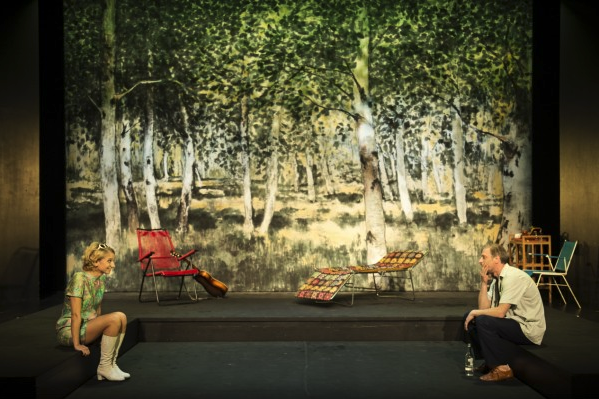
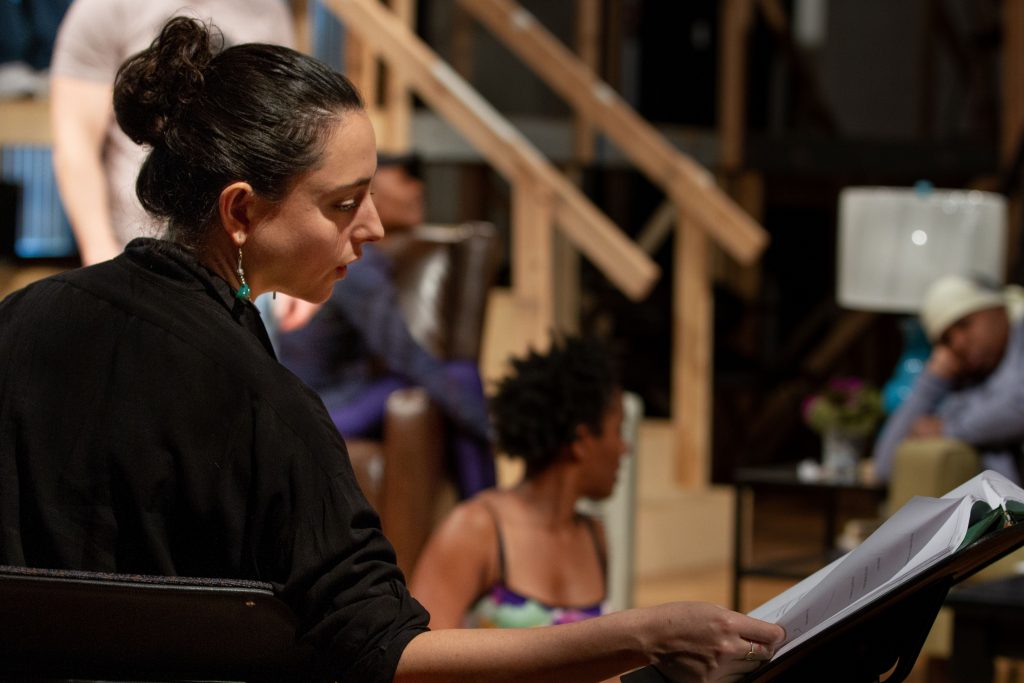
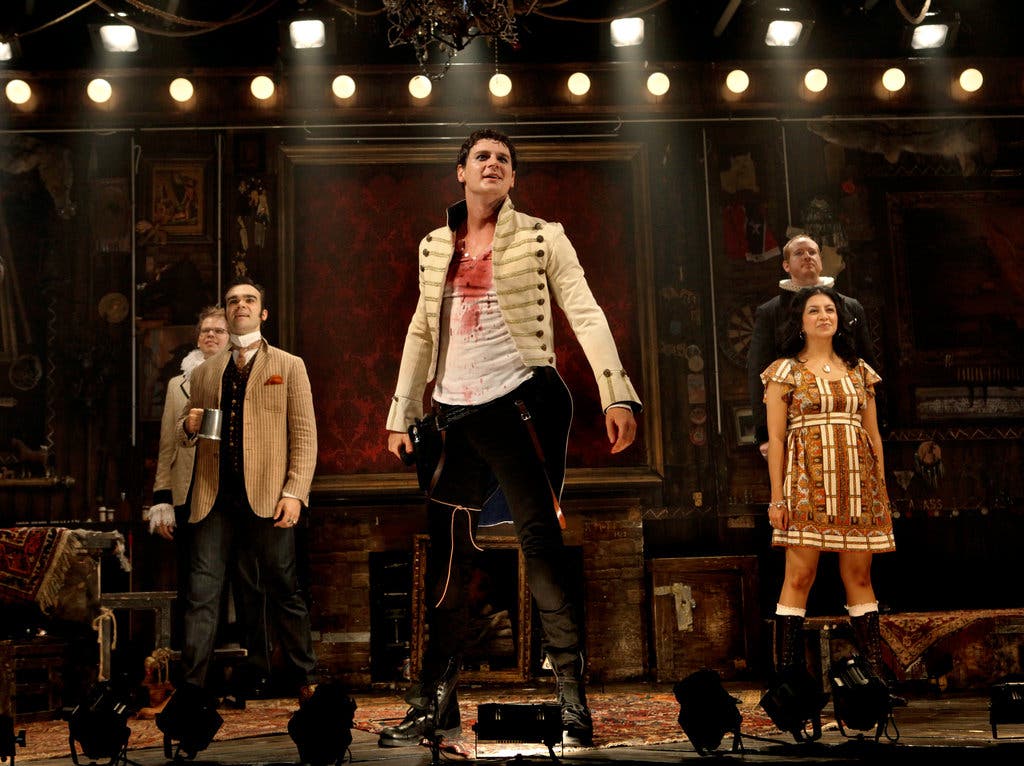
Imagine an American playwright directing a Russian play for a German-speaking audience…and if that wasn’t enough, setting it in Czechoslovakia! This is where I found myself just a few years ago at Theater Konstanz, the oldest working theater in Germany (nestled in the South near Switzerland on beautiful Lake Konstanz).
I had worked several times with the artistic director there, a wonderful man named Christoph Nix, along with his fantastic in-house repertory troupe of actors, and I was returning to direct a play on the main stage for the first time. Without hesitation I chose UNCLE VANYA.
It was an immersive dream to create with a company of actors in that way, men and women who work together year round and season after season–it was like coming to live with a family during the holidays with all the ups and downs that you can imagine could come with such an experience. Every actor had been in multiple productions with each other and knew all the tricks and tics of their contemporaries; I was the one play- ing catchup but luckily we were given a generous six weeks in which to discover the heart of the play.
We worked each day in harmony (mostly), pouring over my own adaptation of the play, along with a German translation and a copy of the text in the original Russian (thanks to having an interpreter available to the production throughout). Even after working on my own version for several months, many new and wonderful questions about the play cropped up from the eager actors and myself as we slowly worked our way from one end of the play to the other.
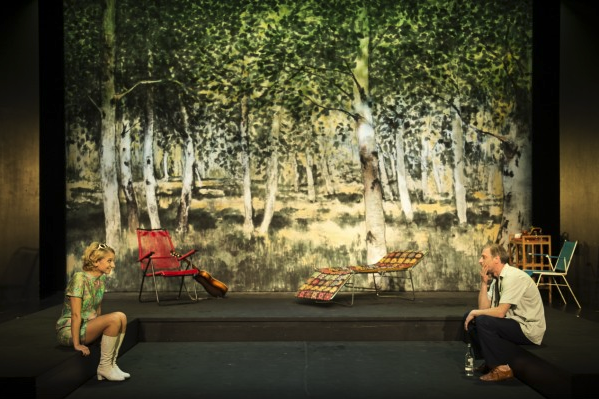
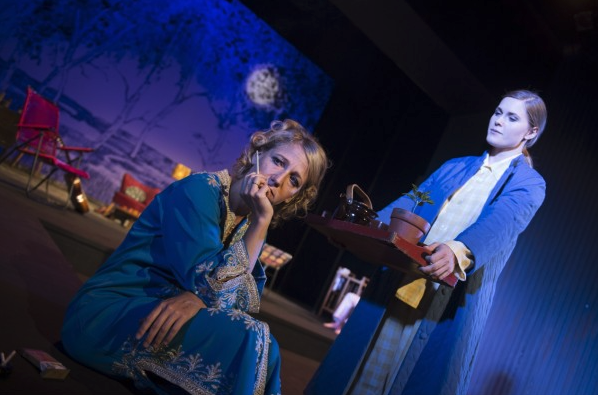
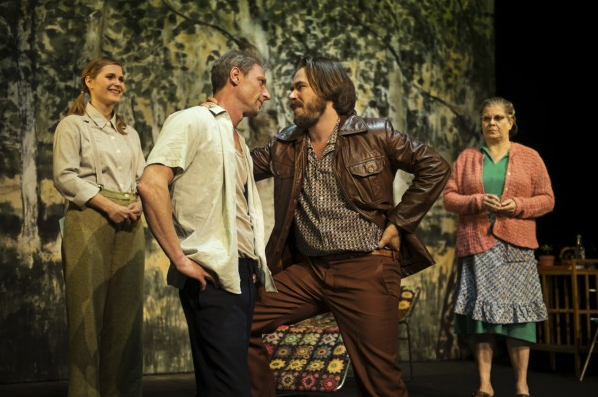
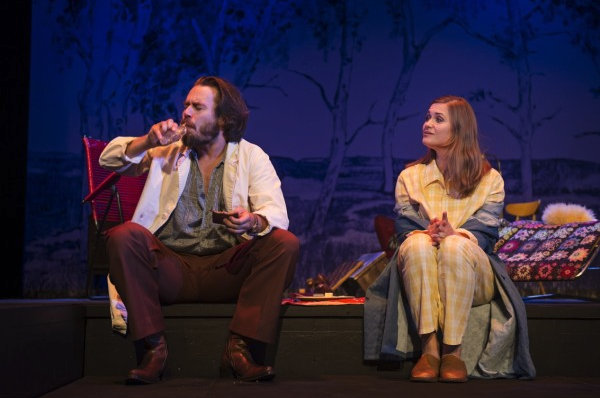
Our production was placed in a very specific time period–the ‘Prague Spring’ in Czechoslovakia, 1968, just before Soviet tanks rolled through the streets–and it was a great pleasure to watch the colorful design take shape under the guidance of the hugely talented Regina Fraas. Period furnishings, details and costumes augmented a soundtrack of vintage Beatles music.
All in all, I spent a wonderful two months in the beautiful lake-side town (a marvel of Medieval architecture) and had an intensive, engrossing and fulfilling experience with a group of actors and technicians who didn’t share a common language but shared something far deeper, a profound and endless love for the history and craft of the theater.
Our VANYA ended like no other production I’ve ever heard of or seen but I believe we really did seize upon the spirit of Chekhov’s play and ran with it…I’ve never had a greater or more satisfying stage experience in my entire career.
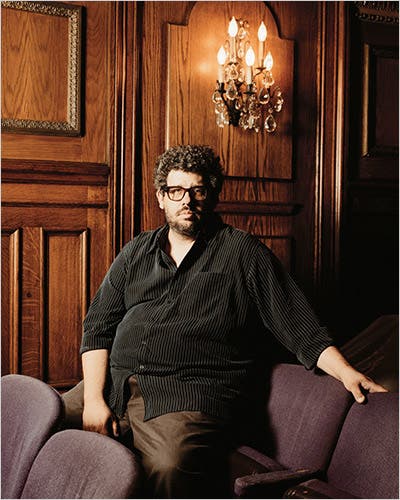
Neil LaBute is one of our most illustrious playwrights, whose body of work includes Reason to Be Pretty (Tony nomination for Play), Bash: Latter-Day Plays, The Mercy Seat, The Distance From Here, Autobahn (a collection of five of his one- act plays), Fat Pig and Some Girls. His motion picture output is equally impressive, as writer and director, including: In the Company of Men (New York Critics’ Circle Award for Best First Feature and the Filmmakers’ Trophy at the Sundance Film Festival), Your Friends and Neighbors, Possession, and The Wicker Man.
Please tune in beginning Thursday, November 19th at 8pm through Monday, November 23rd to see Neil LaBute’s World Premiere adaptation of Anton Chekov’s UNCLE VANYA. Tony Award winner Alan Cumming takes on the titular role joined by Constance Wu, Emmy Award winner Samira Wiley, K. Todd Freeman, Anson Mount, Mia Katigbak, Manik Choksi and Academy Award Winner Ellen Burstyn. Gabriel Ebert narrates the proceedings in an evening directed by Danya Taymor (Heroes of the Fourth Turning). Tickets from $5 and are available only on TodayTix. Proceeds go to benefit The Actor’s Fund.
Like many directors before me, acting was my gateway drug into the theater. I caught the bug very early on, when my mom brought me to an audition at my local Children’s Theater. I remember feeling a thrill as I lied about my age on the audition sheet: you had to be 7 years old to try out and I was just shy at 6 years 10 months. I felt an even bigger thrill when the cast list was posted, and I saw my name on the list. After the first rehearsal, I was hooked.
Later on, the possibility of directing came into my life through my incredible high school drama teacher, Kristen Lo. We all thought Kristen was impossibly cool: 28 years old, she was close enough in age to know what we were going through, but far enough that she could keep boundaries. We adored her, and she inspired us to consider all aspects of theater-making: light board operator, playwright, costume designer, stage manager. We were able to see theater through her eyes: an incredible tool with which to break down social barriers, an artform that demands rigor and mutual respect among its practitioners. Kristen shared her boundless love of plays by dead writers like Ibsen and Shakespeare, but also a devotion to new work by a myriad of voices. Kristen rallied parents from the community to organize field trips to our nearest regional theaters: ACT, Berkeley Rep, Oregon Shakespeare Festival. I didn’t yet recognize the names: Heather Raffo, Dael Orlandersmith, Edward Albee, Mary Zimmerman, August Wilson, Les Waters, Eve Ensler, Caryl Churchill, Nilo Cruz. But I could feel the power of their voices and of the freshness of the work. As I look back now, I can see the profundity of this early exposure. But Kristen didn’t stop at just exposing us to these pieces, if we saw something we loved, she programmed it the next year and let us take a swing at our own interpretations. If we didn’t like the piece, she encouraged fiery and open debates and encouraged us to get specific. By placing our work alongside that of the pros, and validating our disparate points of view, she made us feel like we could do anything. She shared the anthologies of work from the Humana Festival, 10-minute plays that were hot off the press and encouraged us to direct them ourselves. I directed a one-act that year that had premiered only a few years before at the Humana Festival.
Kristen wanted to inspire us further and show that we truly didn’t need anything but ourselves and our imaginations to create theater: She created a new work festival “Speed Limit 25”. All work produced in the festival had to be directed, written, and produced by people under the age of 25. In reality, it was all created by students 18 and under. This was revelatory. We witnessed each other be creative in ways we had not yet dreamed we could be and expanded our perceptions of each other. Whether we went on to pursue theater or not, we all were emboldened by the brilliant audacity of our teacher and her fierce belief in each of us.
Kristen somehow managed to treat us as adults, while not denying our youth. She taught us to respect one another by showing us how it’s done: never favoring the actor over the techie, stage manager over understudy. Kristen taught us that every theater marker is crucial, and it is only through a collective effort that the work can truly sing. When I think of the director who made me feel most inspired, free, collaborative and safe enough to take risks, I still picture Kristen Lo.
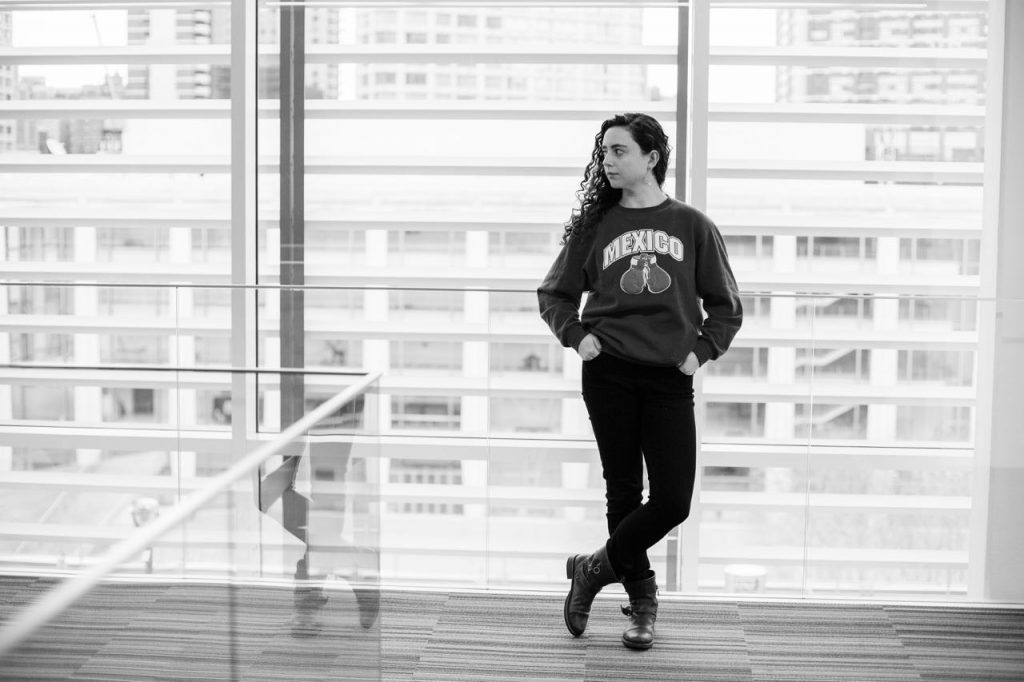
Danya Taymor is an Obie-award winning New York based director, writer and translator. Recent direction includes Will Arbery’s HEROES OF THE FOURTH TURNING (Playwrights Horizons) Korde Arrington Tuttle’s GRAVEYARD SHIFT (Goodman Theater), Jeremy O. Harris’ “DADDY” (Almeida London + New Group/Vineyard), Antoinette Nwandu’s PASS OVER (Lincoln Center + Steppenwolf, Lortel Outstanding Play), Danai Gurira’s FAMILIAR (Steppenwolf), Martyna Majok’s QUEENS (Lincoln Center Theater).
Please tune in beginning Thursday, November 19th at 8pm through Monday, November 23rd to see Neil LaBute’s World Premiere adaptation of Anton Chekov’s UNCLE VANYA directed by DANYA TAYMOR (Heroes of the Fourth Turning). Tony Award winner Alan Cumming takes on the titular role joined by Constance Wu, Emmy Award winner Samira Wiley, K. Todd Freeman, Anson Mount, Mia Katigbak, Manik Choksi and Academy Award Winner Ellen Burstyn. Gabriel Ebert narrates the proceedings. Tickets from $5 and are available only on TodayTix. Proceeds go to benefit The Actor’s Fund.
Sitting at home in exile from doing the thing one loves the most as well as the thing that supports ones existence has been torture, as I’m sure it has been for many others. I had never imagined that I would live in a time that truly experienced a worldwide plague of medieval proportions. Living through the initial AIDS crisis was as awful as I thought it would get during my lifetime. Clearly I was wrong. I never imagined that something would threaten the existence of something so essential to the breath of humankind….. the mass gathering of humanity, theatre. The sharing of a communal experience. The universal religious communion of soulful connection that is theatre.
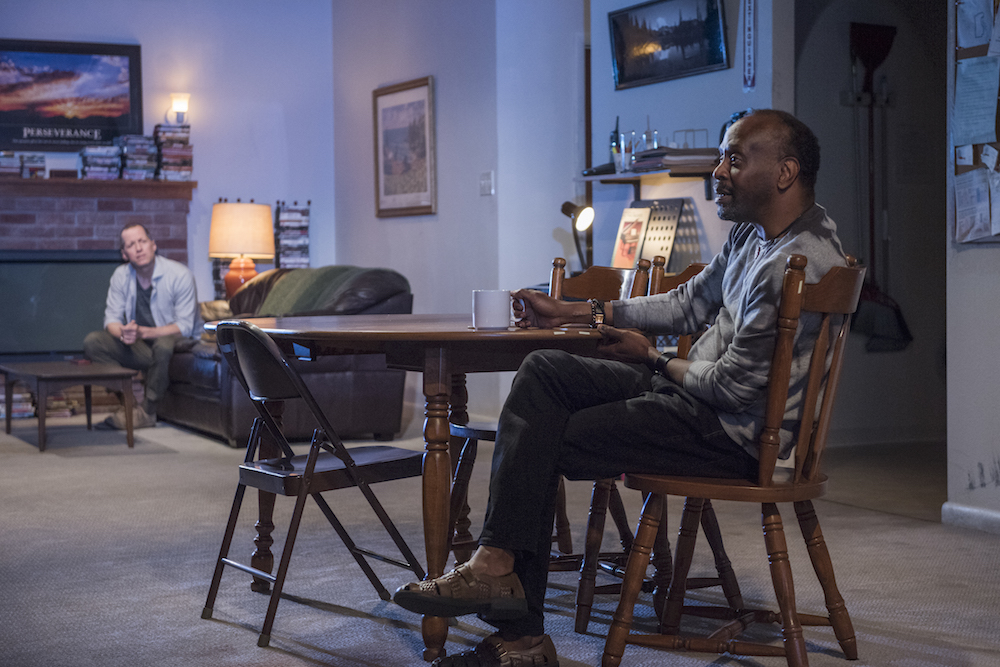
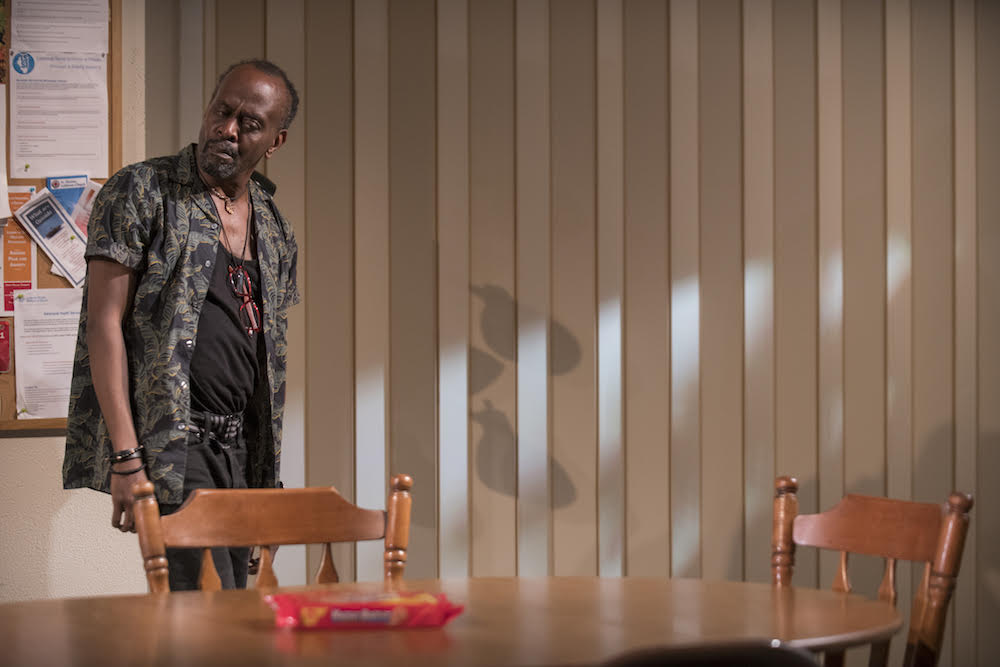
Being trapped at home has postponed my participation in many theatre projects that were slated to come to New York City. One being The Minutes by Tracy Letts, which will hopefully see the light of day on Broadway in the near future. The other is Bruce Norris’ DOWNSTATE which I have been blessed to be a part of since it’s premier at Steppenwolf Theatre Company in Chicago in the fall of 2018. We then moved it to The National Theatre in London in 2019 and hopefully it will be coming to New York via Playwrights Horizons next year.
The play and the role have been an extraordinary highlight of my life.
Photo Credit: Michael Brosilow
Americans, as we have all hopefully figured out by now, are living through an extraordinary time in history. Daily, we are being challenged with tough questions that will affect our futures in profound and significant ways. Bruce’s play DOWNSTATE does that as well, which to me is the absolute best sort of dramatic literature. It provokes and challenges in a similar way that Angels in America did in the early 1990’s. DOWNSTATE, takes place in a group home for sex offenders in southern Illinois, and it is those offenders, of varying degrees and types, who are our protagonists. Those roles are some of the most, complex, nuanced, fascinating, difficult, and exhilarating parts written for the American stage. Obviously, in my opinion. I’m a bit biased, apparently.
Photo Credit: Michael Brosilow
This theatre piece does exactly what I demand all great plays should do: challenge and provoke. It demands each audience member to look inside themselves and reexamine their prejudices, morality, and ethics at a base almost primal level. Playing the character I played in front of a live audience every night was a thrilling and intoxicating rush. I felt as though I were center court in a Wimbledon final every night playing alongside the likes of Nadal, the Williamses, McEnroe., and Sampras. The electricity that flowed between audience and actors was life affirming. An intangible, unquantifiable purity that I miss so excruciatingly much, during this particularly difficult time of blight.
K. Todd Freeman recently performed in Steppenwolf’s The Minutes on Broadway, as well as Steppenwolf’s Downstate (Jeff Award, Evening Standard nom.). Broadway: Airline Highway (Tony nom., DD Award), The Song of Jacob Zulu (Tony nom.). Off-Broadway: Fetch Clay, Make Man (Obie); Spunk. TV: “A Series of Unfortunate Events,” “God Friended Me.” Film: Anethesia, Cider House Rules, Grosse Point Blank.
Please tune in beginning Thursday, November 19th at 8pm through Monday, November 23rd to see K. Todd Freeman in Neil LaBute’s World Premiere adaptation of Anton Chekov’s UNCLE VANYA. Tony Award winner Alan Cumming takes on the titular role joined by Constance Wu, Emmy Award winner Samira Wiley, K. Todd Freeman, Anson Mount, Mia Katigbak, Manik Choksi and Academy Award Winner Ellen Burstyn. Gabriel Ebert narrates the proceedings in an evening directed by Danya Taymor (Heroes of the Fourth Turning). Tickets from $5 and are available only on TodayTix. Proceeds go to benefit The Actor’s Fund.
I lost my memory during intermission of Ma-Yi Theatre’s production of Alice Tuan’s Last of the Suns.
I was in the cast.
Before the act ended, I made my exit, walked to the wings and stood motionless for the last quiet moments of the scene. I held my breath so I wouldn’t make a sound, and because I had to desperately empty my bladder.
Blackout. Exhale. I hurriedly made my way to the bathroom backstage. Fade out.
Fade in. Four hours later. A plastic bag with my street clothes crosses my line of vision. Fade out.
Fade in. About ten minutes later. I’m standing beside a hospital bed in said street clothes, looking down and thinking it odd that I’m wearing my shoes from the show. Fade out.
Fade in. A few minutes later. I’m walking out of the hospital smoking a cigarette, with my friends Ching Valdes-Aran (who played my father-in-law) and Jorge Ortoll (the producer), who are arguing about whom I should spend the night with. I have no idea what they’re on about, I’m slightly perplexed about the circumstances, and in the cab on our way uptown, they finally tell me the whole story.
When we received our “places” call after intermission, I dutifully complied, and asked one of the actors what happened next. Thinking I was being funny, she reminded me that in the scene coming up my husband threatens me with a kitchen knife. I laughed, then a few seconds later asked the same question. She thought I was milking the joke, but saw that I was in earnest, and after I asked yet again, she decided something was wrong. She informed the ASM, who passed the message to the PSM, and then those words, “Is there a doctor in the house?” followed. There happened to be one and she came to examine me in the dressing room. She asked me if I knew where I was. I said no, but told her I recognized my make-up bag on the dressing room table.
She led me to a chair by an open doorway. Surrounded by the cast, she asked me my name, my address, my phone number. I answered correctly. She asked me who the president was, and I replied “Bush.” Then she asked me the year and I wasn’t sure. It was 2003 and I may have been confused by which Bush I meant. She then asked me if I knew any of the people surrounding me. I knew most of them, but I politely told the gentleman who was holding my hand and comforting me that I didn’t know him. The doctor’s diagnosis was TGA, Transient Global Amnesia (a great name for a rock band, my friend Jessica later tells me), which affects short term memory. I had worked with many of the cast for several years, but had only met the very kind hand-holding actor when we began rehearsals for the show. I went to the emergency room of Beth Israel, the closest hospital, accompanied by several friends from the show.
Over the next four hours, my poor friends, who took turns keeping me company, were subjected to the same question over and over again: “did we finish the show?” They started to quote lines from the play addressed to the 100-year-old character Ching was playing, who asked for the time incessantly and immediately forgot the response. “You fucking c**t, I said no!” “You ask me again and I’ll slap you.” I’d laugh, then ask it again. Jorge begged the doctor to tranquilize me to put them out of their misery, but that was a no-no in cases like this because my brain had to be monitored without medication. They just had to wait until I started to get normal again. After which I couldn’t be left alone for the next 24 hours.
Although I never lost consciousness, those four hours are forever lost to me. I only had my friends’ accounts of what had transpired. My doctor explained the condition in the cinematic way I experienced it. If we think of memory as a life-long compilation of movie reels, the progression of frames forming the narrative of our experiences, TGA expunges a frame just as the next one is being developed. So for four hours there was nothing there. It can also temporarily compromise earlier sections of the reel. As I started to recover, more frames became viable, hence the fade outs and fade ins, until there were no more fade outs.
How odd that although I remembered nothing after my walk to the restroom, my only preoccupation despite TGA was whether we finished the show or not.
Ching won the argument and I went to her apartment from the hospital. I couldn’t sleep until I had said the entire play in my head. I didn’t perform the next two nights, and when I went back to the show, I devised a ritual. I arrived at the theatre two hours before curtain. I sat in the house and sipped a bottle of spinach/aloe/berry/banana juice. I asked all the ghosts of that venue to be my friends. Then I took a ½ hour nap in the house, entrusting myself to their care.
I finished the run without memory-related incident, pondering on the actor’s brain’s tenacity, holding on to our responsibility to performance, frames expunged or not.
Mia Katigbak is the Artistic Producing Director and co-founder of NAATCO (National Asian American Theatre Co). She is the recipient of an Obie Award for performance (2014) and a Special Drama Desk Award in 2019 for her vital presence as the artistic director of NAATCO and sustained excellence as a performer and mentor.
Please tune in beginning Thursday, November 19th at 8pm through Monday, November 23rd to see Mia Katigbak in Neil LaBute’s World Premiere adaptation of Anton Chekov’s UNCLE VANYA. Tony Award winner Alan Cumming takes on the titular role joined by Constance Wu, Emmy Award winner Samira Wiley, K. Todd Freeman, Anson Mount, Mia Katigbak, Manik Choksi and Academy Award Winner Ellen Burstyn. Gabriel Ebert narrates the proceedings in an evening directed by Danya Taymor (Heroes of the Fourth Turning). Tickets from $5 and are available only on TodayTix. Proceeds go to benefit The Actor’s Fund.
My first break in Show Business would have to be my acceptance into the first class of the Drama Division of The Juilliard School. Group One. It was the Golden Ticket in more ways than one. It not only armed me with an invincible technique that slyly reveals itself to this day, but the four years of brutally exacting instruction opened up opportunities well beyond our acting, movement, speech and voice classes.
At the start of our second year, the actors were invited by our beloved singing teacher, Roland Gagnon to join the chorus of the Opera Division’s Il Giuramento. The rehearsals would take place after our 13 hours of technique, technique, technique. Three actors joined the production… until the Opera Division and the Juilliard Orchestra were chosen to represent America at the Festival of Two Worlds in Spoleto, Italy. That’s when two more actors clawed their way on to the stage, Sam Tsoutsouvas and me. We performed the opera on the Juilliard Theatre stage, then boarded a chartered Pam Am flight to Rome. That’s when my life changed.
It was my first trip to Europe. It was my first opera production directed and conducted by two of the greats, Tito Capobianco and Thomas Schippers. It was my first experience with anti-Americanism. It was my first experience with an emotional awakening. No one in Italy or Yugoslavia, or France, the countries I hitchhiked through, knew my history. It was the first time I was free of familial and emotional bonds. I was just me at my tender age in my truest sense. No back history. People who I met had to take me as I presented myself. It was a freedom that I had never known. And in that strange and vulnerable place I learned observation, one of the actor’s most important tools. I was measured and more thoughtful in my presentation. At the same time, I didn’t understand the hatred coming at me because I was an American but I soon found out in spirited arguments. I found myself embarrassed at my lack of political knowledge or the impact America had on the countries of Europe.
In that European summer I gave birth to my personal and political conscience. I delved into my soul. I deepened and broadened my existence. My big break ended up not being on the stage I was trained for but rather in my personal awakening and growth. An actor needs a serious tool box. Now my tool box had more clarity, empathy, and I have to say rage. My European experience, all thanks to Juilliard made me the actor I am today.
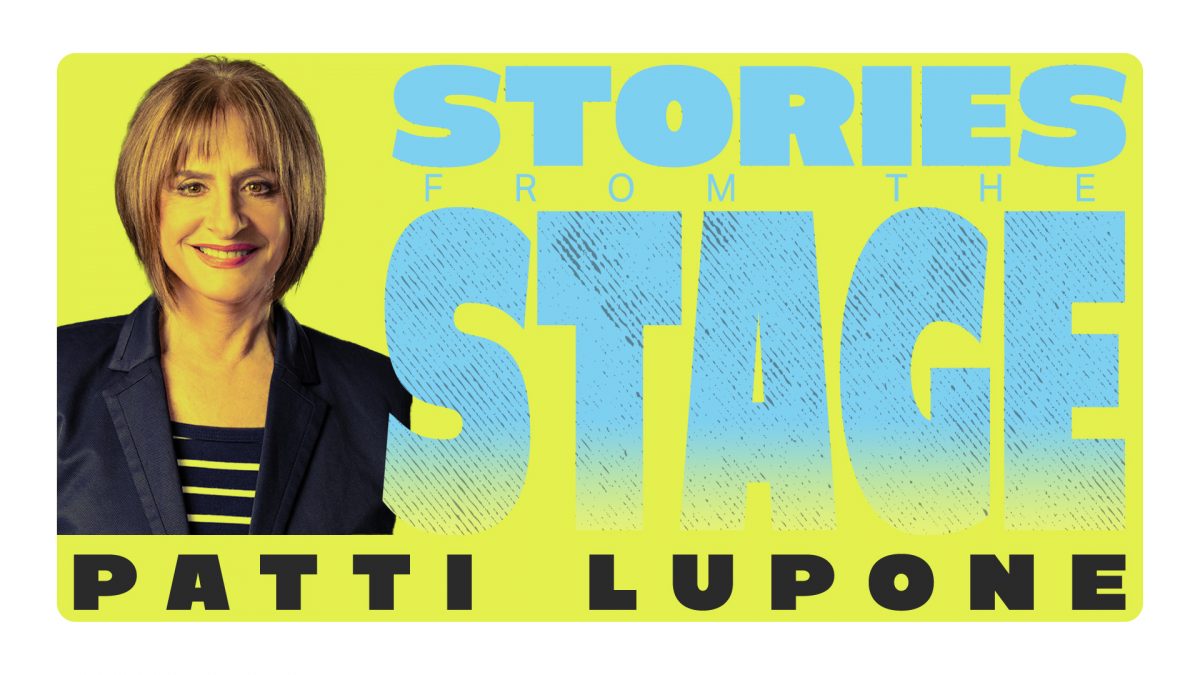
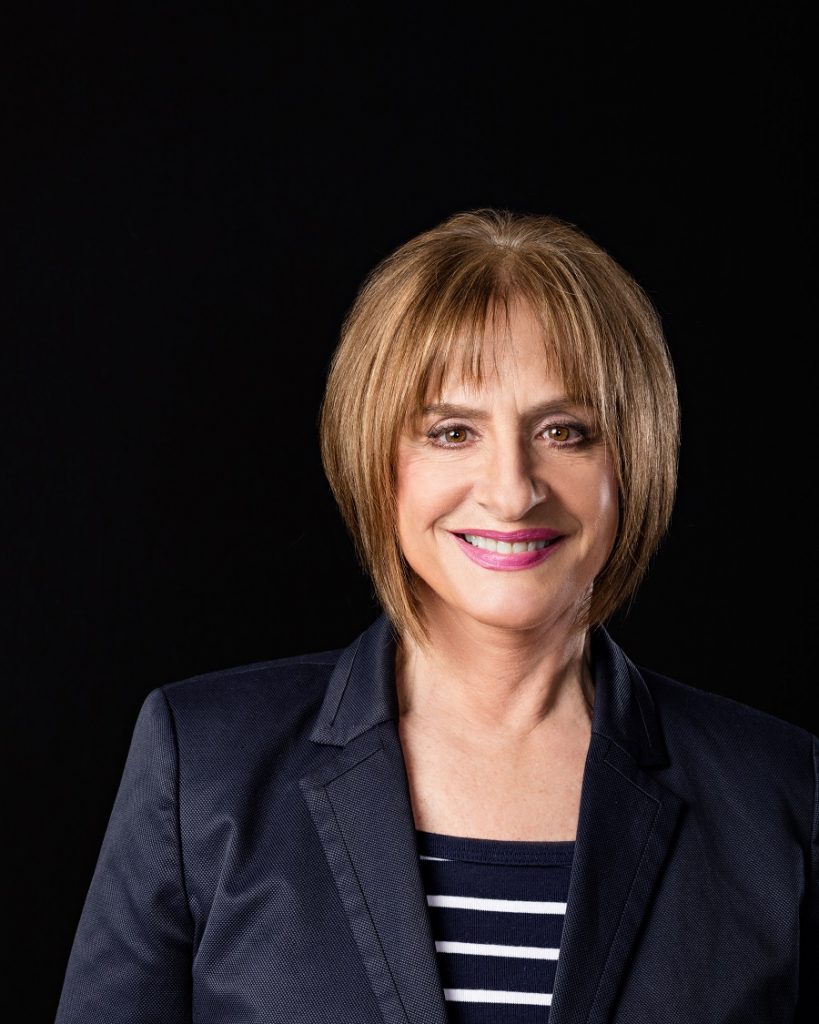
Patti LuPone is one of the great leading ladies of the American musical theatre. Nominated for 7 Tony Awards, she has twice won that honor for her defining roles as Eva Peron (“Evita”) and Rose (“Gypsy”). Her Tony nominations also include “The Robber Bridegroom”, “Anything Goes”, “Sweeney Todd”, “Women on the Verge of a Nervous Breakdown” and “War Paint”. She is also the recipient of two Grammy Awards (the Los Angeles Opera production of Rise and Fall of the City of Mahagonny- Best Classical Album and Best Opera Recording) and two Olivier awards ( for “The Cradle Will Rock” and “Les Miserables” in 1985 and for the recent acclaimed revival of “Company”).
On television, she starred in the drama series Life Goes On (1989-1993) and received Emmy Award nominations for the TV movie The Song Spinner (1995) and her guest role in the sitcom Frasier (1998). She also had recurring roles on two FX series, the thriller American Horror Story: Coven (2013-2014) and the drama Pose (2019), as well as on Hollywood on Netflix. Her film appearances include Waitress (1985), Driving Miss Daisy (1989), State and Main (2000), Parker (2013), and The Comedian (2016).
Her memoir recounting her life and career from childhood to the present, which was released in September 2010, is simply titled Patti LuPone: A Memoir, which was, according to LuPone, the winner of the competition she held to name the book. Patti was honored as an American Theatre Hall of Fame inductee in 2006. Her highly anticipated return to the New York stage in her award-winning performance as Joanne will be seen when “Company” returns to Broadway in 2021.
Please tune in to see two-time Tony Award winner Patti LuPone, Rebecca Pigeon and Sophia Macy beginning tonight Thursday, November 12 at 8pm through Monday, November 16th in BOSTON MARRIAGE, written and directed by David Mamet.
Anna and Claire have their world upended when Anna receives an enormous emerald…professions of love, emotional blackmail and downright bullying ensue. “Very funny…dazzling repartee and exquisite literary banter…4 stars!” (The Guardian)
Tickets from $5 and are available only on TodayTix. Proceeds go to benefit The Actor’s Fund.
In David Mamet’sBOSTON MARRIAGE Anna and Claire, two scheming “women of fashion” have their world upended when Anna receives an enormous emerald and an income to match from a wealthy admirer. Claire, meanwhile, is infatuated with a respectable young lady and wants to enlist the jealous Anna’s help for an assignation. Tony Award winner Patti LuPone and Rebecca Pidgeon are Anna and Claire, with Sophia Macy as their Maid. Mamet directs.
The first time I nearly died onstage was in Cleveland, Ohio. I had stolen the text of the Book of Job from the Bible and was performing it as a play. I was playing Job.
I was twenty-four years old, way too young and healthy to look the part, so I decided to wear about a half pound of suppurating sores made of putty as well as a bald pate with wisps of crepe hair. I didn’t really know how to keep the hair glued down, and on opening night, while I was complaining to God, a little piece of crepe hair floated off my face and wafted through the air. When I took a deep breath to launch into another complaint, it flew into my mouth and down my windpipe. I started choking miserably. For the first minute of distress, instead feeling embarrassment, I was sure the audience thought I was an incredibly realistic actor. Not quite. If anybody thought it was acting I was doing, around the second minute, they were probably thinking, This kid is going to die right in front of us. I coughed and choked so long and so pathetically, they had to bring down the curtain. And this was opening night. I finished the play—not to especially rousing applause—and after the curtain came down, I could hear an elderly theatergoer in the front row say to his wife, “What did they put that on for?”
The second time I nearly died was, again, on an opening night. This time on Broadway. The play was called “Fair game for Lovers” and I, still in my early twenties, was playing a young man frustrated by love.
My character had been jilted by his fiancée, and there I stood, alone onstage, ranting with passion about my fickle girlfriend—while I smoked a cigarette. Unfortunately, I had never quite got the hang of smoking. Smoke made me choke, and I often found it difficult to light a cigarette without burning the end of my nose. This night, I managed to get the thing lit and waved out the match, which I held at my side while I went on with my rant. There were two important things I didn’t realize: I was wearing a cheap acetate robe, and the match head was still glowing. Halfway through my monologue, I heard a whoosh, like wind suddenly rushing through an open car window. I looked down and saw that the entire front of my robe was a sheet of flames. In a moment like this, a normal person might think, How close am I to a seltzer bottle? Not me. My first thought was, Oh, God, this is going to get such a gigantic laugh. The audience, of course, familiar with the image of people being trampled to death in a burning theater, was not laughing. There was dead silence while I furiously patted out the flames. I didn’t even get a round of applause for my quick thinking. I did get a nice mention in the New York Times review the next day when Walter Kerr said that I was a young actor willing to do anything to get attention, including set myself on Fire. I was more interested in getting a laugh, than life itself.
The third and final brush with death on stage was during the Boston tryouts for “The Apple Tree.”
It was Act Two, where we told the story of “The Lady or the Tiger?” I had just finished a song and was heading upstage to choose one of two doors. Behind one was the Lady and behind the other was the Tiger, and certain death. Just as I turned, a huge lighting apparatus fell from the flies, grazed the feathers of my cape, and pounded against the floorboards, pinning the cape to the stage. It must have weighed a hundred pounds, and the noise was like that of a car crash. It had passed a couple of inches from my head. The audience gasped. I, of course, tugged at the feathered cape as though I were Marcel Marceau, and somehow that managed to get a laugh.
Finally. A laugh.
In the old joke, an actor is dying, and his friend says, “Dying must be hard.” The actor says “Dying is easy. Comedy is hard.” Especially, if you combine them.
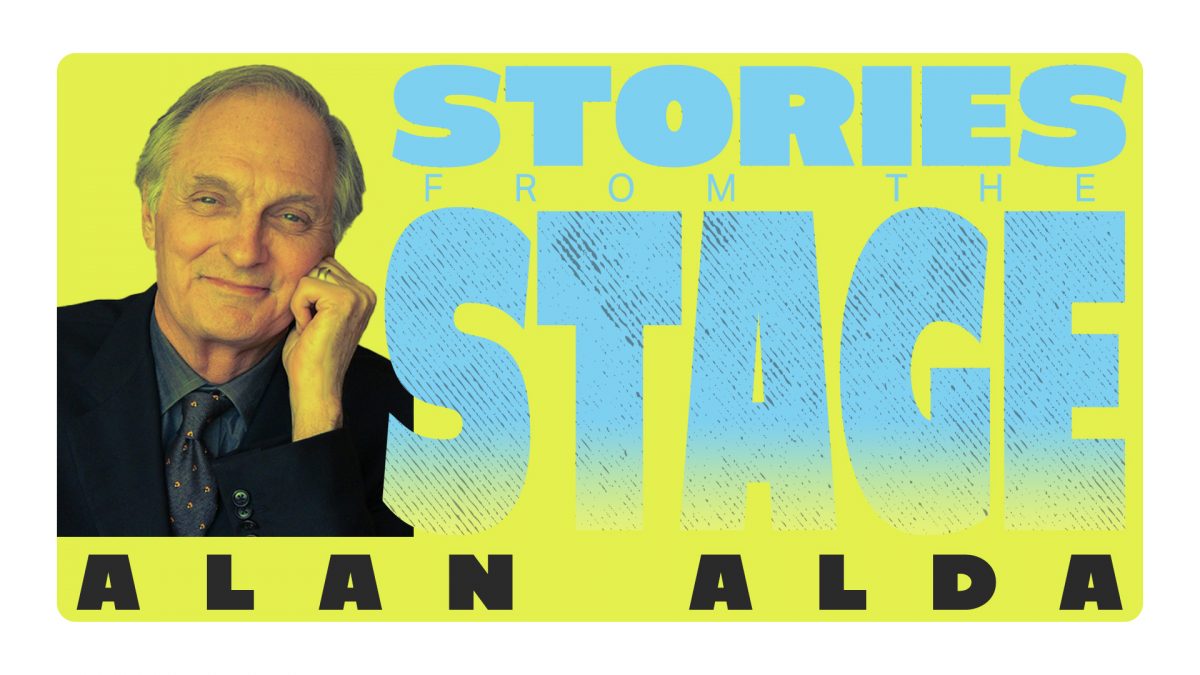
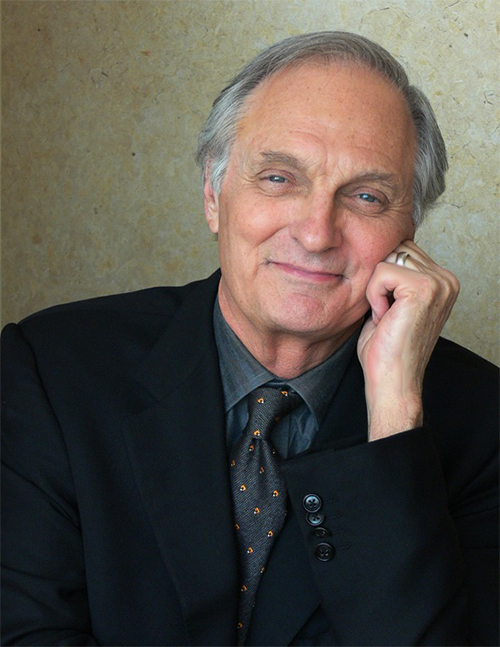
Alan Alda is an American actor, director, and screenwriter best known for his role in the long-running television series M*A*S*H (1972–83).
On Broadway, Alda is a three time Tony Award nominee whose career includes productions of Purlie Victorious, The Apple Tree,The Owl and the Pussycat, Jake’s Women, QED, Glengarry Glen Ross (2005 Revival), Art and Love Letters.
Alda’s books included Never Have Your Dog Stuffed: And Other Things I’ve Learned (2005), Things I Overheard While Talking to Myself (2007), and If I Understood You, Would I Have This Look on My Face?: My Adventures in the Art and Science of Relating and Communicating (2017).
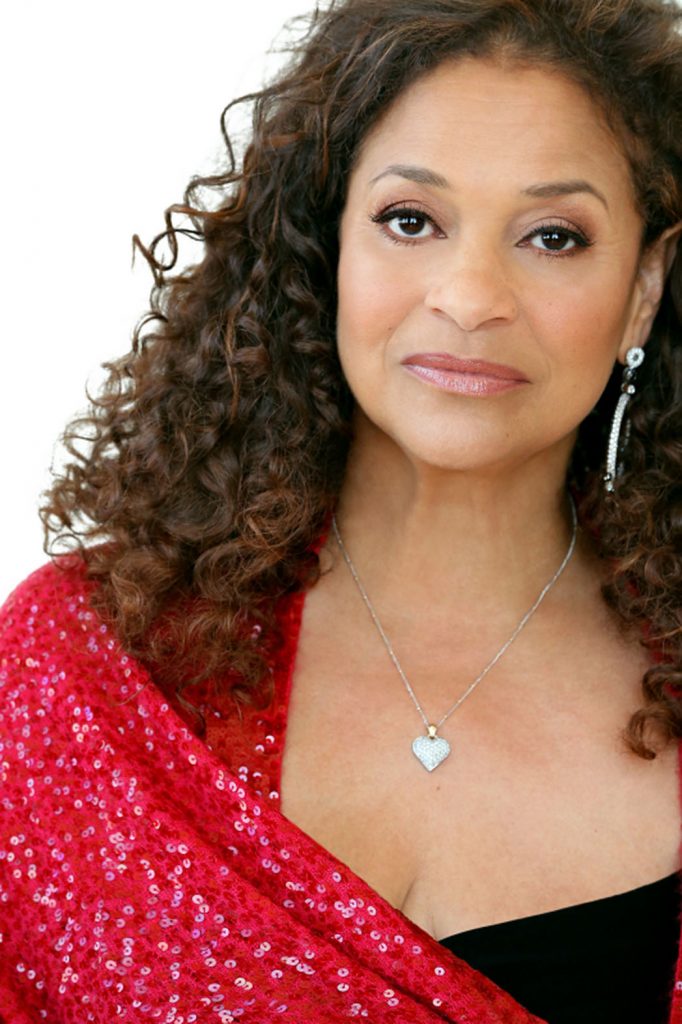
As a young woman of 27 years old, I was cast as Anita in West Side Story. I had no idea how the work process of putting that together would inform me, inspire me, and truly lead me to want to direct and choreograph. I first auditioned for Leonard Bernstein, then it was Jerome Robbins. And then, when we actually went to go to work and rehearsal, there was a man – Gerald Freedman – who did a lot of the scene study work with us in between learning different variations of “America.” We sat at the table for at least two weeks and it was there that I truly experienced taking a script, breaking it down, deconstructing the narrative, creating the circumstances that were not written in the play, and understanding the musicalization of all the emotions that I was going through as an actor. It was exciting. Coming from Houston, Texas, where everything was segregated, we couldn’t even go to the theater or to the movies that the general public attended. So I didn’t grow up with West Side Story, but I came to love it and was inspired by the work ethic of the production to guide others on the path that led me to success.
Debbie Allen is a two-time Tony Award nominee for her electrifying performances in Sweet Charity and West Side Story. In a career that spans three decades, the name Debbie Allen is synonymous with dynamic energy, creative talent and innovation. For her vast body of work, Ms. Allen has earned three Emmy Awards, a Golden Globe, five NAACP Image Awards, a Drama Desk, an Astaire Award (for Best Dancer), and the Olivier Award. Debbie made her Broadway debut in Purlie. She holds four honorary Doctorate degrees and has a star on the Hollywood Walk of Fame. She is currently an Executive Producer as well as a director and actress on ABC’s Grey’s Anatomy.
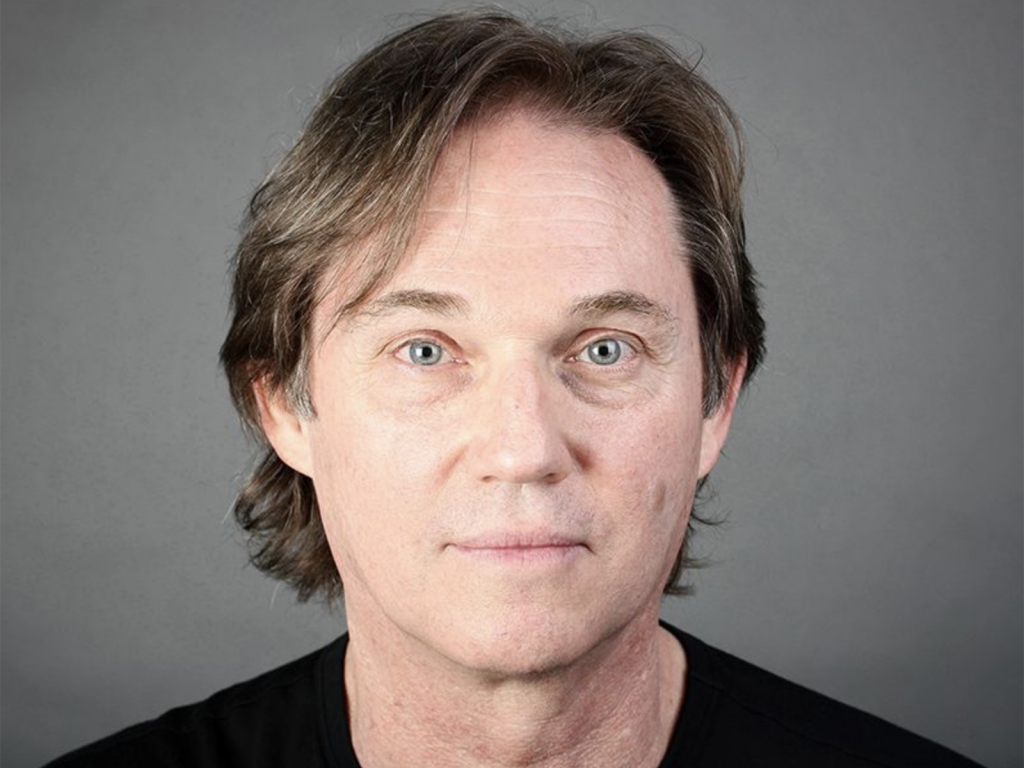
I was ten years old. Jane Fonda, who was a ballet student of my father’s at the June Taylor School, walked into class one day and said, “Your son’s an actor. We’re planning the first Actor’s Studio production on Broadway – STRANGE INTERLUDE – and there’s a part for a child. Would Richard like to go down to the Studio and meet Jose Quintero?”
I went down to the Studio and walked into Jose’s office. He sat me down and asked, in his gruff and emotional way, “So. What do you want to be more than anything in the world?”
“An actor,” I said.
He slammed the flat of his hand onto his desk and said, “That’s it! You got the Part!”
He then looked toward a closet in the room and said, “Gerry!” The closet door opened and Geraldine Page emerged. She walked to my chair, knelt down, took my hands in hers, looked me into my eyes and said, “My son. You’re my son.”
Richard Thomas began is career on Broadway in 1958 in “Sunrise at Campobello” and has never looked back. Among his prominent Broadway credits are “The Little Foxes” (Tony nomination), “Strange Interlude”, “The Fifth of July”, “Democracy”, “The Front Page”, “You Can’t Take It With You”, “The Great Society” and “Race”. Richard is an Emmy Award winning actor beloved for the his iconic John-Boy Walton in “The Waltons” and will soon be seen throughout the country as another iconic figure, Atticus Finch, in the National Tour of “To Kill a Mockingbird.” This Thursday, October 29th through next Monday, November 2nd, Richard has recreated his role of Charles Strickland in “Race” (co-starring Ed O’Neill, David Alan Grier and Alicia Stith) in a Special Benefit Performance for the Actors Fund which can accessed on this site.
The Best Man
Gerald Schoenfeld Theatre
Cast List:
Candice Bergen
Kerry Butler
James Earl Jones
Angela Lansbury
John Larroquette
Jefferson Mays
Eric McCormack
Michael McKean
Curtis Billings
Corey Brill
Tony Carlin
Donna Hanover
Sherman Howard
Olja Hrustic
Bill Kux
James Lecesne
Dakin Matthews
Angelica Page
Fred Parker, Jr.
Amy Tribbey
Production Credits:
Michael Wilson (Direction)
Derek McLane (Scenic Design)
Ann Roth (Costume Design)
Kenneth Posner (Lighting Dsign)
Other Credits:
Written by: Gore Vidal
In one way or another, being the American president means having a relationship with the American theatre. That might mean being a regular attendee (like Bill Clinton) or a one-time Broadway producer (like Donald Trump). It might mean meeting the future First Lady while starring with her in a community theatre production (like Richard Nixon), or it might mean, of course, losing your life at Ford’s Theatre.
But more than anything, being the president means having the symbolic power of your office — and very often the specifics of your own administration — embodied on stage. As we approach another election, it’s a good time to survey how dramatists have imagined the Commander-in-Chief, because no matter who wins in November, he’ll likely find himself in a play soon enough.
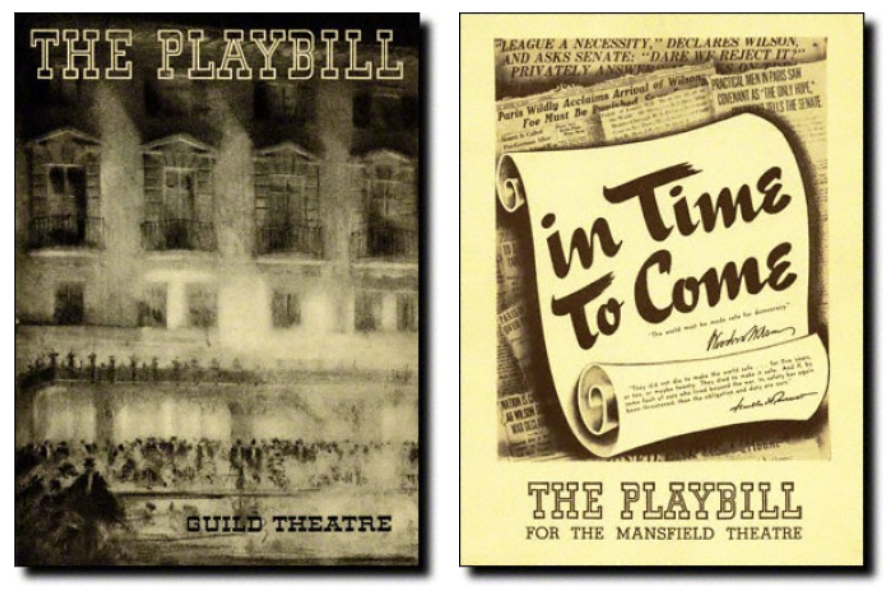
Broadway has been delivering shows about presidents for almost as long as it has existed. Take Benjamin Chapin’s drama Lincoln, which premiered in 1906 and was revived in 1909. it launched a decades-long trend of serious-minded plays that depict real-life presidents as heroes. This includes Maxwell Anderson’s 1934 drama Valley Forge, which lionizes George Washington; Charles Nirdlinger’s 1911 play First Lady in the Land, which celebrates both James and Dolly Madison; and In Time To Come, a tribute to Wilson’s creation of the League of Nations that was written in late 1941 by Howard Koch and the legendary filmmaker John Huston as a direct response to World War II.
Chapin, meanwhile, was just the first of many playwrights to respectfully depict Honest Abe. John Drinkwater had a smash hit in 1919 when his play Abraham Lincoln ran on Broadway for almost six months, and The Rivalry, Norman Corwin’s 1959 dramatization of the Lincoln-Douglas debates had a starry L.A. revival as recently as 2008, with David Strathairn as Lincoln and Paul Giamatti as Douglas. And Robert Sherwood nearly outshone them all with Abe Lincoln In Illinois, which focuses on the future president’s rise to political prominence. It opened to raves in 1938, won the Pulitzer Prize in 1939, and ran for over 470 performances.
However, it’s hard to imagine a show like Abe Lincoln in Illinois being embraced today. As historian Bruce Altschuler says in his book Acting Presidents, “Which presidents are portrayed and in what ways [tells] us quite a bit about how Americans have perceived their leaders,” and since the late 1960s, the theatre has reflected the nation’s political strife, disillusionment, and ambivalence. While the occasional play like Give ’em Hell Harry (about Truman) or musical like 1776 still depicts the nation’s leaders as the undeniable good guys, the president is now more likely to represent conflict, confusion, or downright villainy.
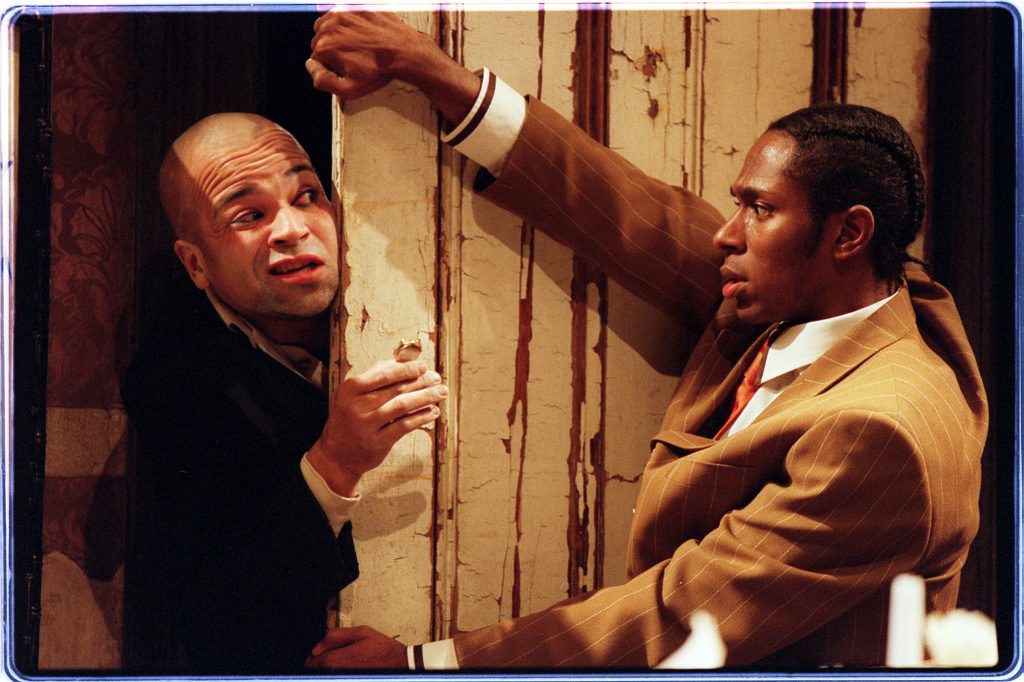
Just look at what happened to Lincoln: He appears in the musical Hair, which is synonymous with the counterculture rebellion, after a character’s acid trip leads to historical hallucinations. In both 1993’s The America Play and 2001’s Pulitzer Prize-winning Topdog/Underdog, Suzan-Lori Parks probes the country’s fraught racial history by depicting a Black character who performs as a Lincoln impersonator.
TopDog/Underdog
These more subversive productions are part of a lineage that arguably starts with MacBird!, a 1967 satire that reimagines MacBeth as the story of Lyndon Johnson’s rise to power, complete with the murder of a king who resembles JFK. At the time, this was considered so scandalous that Walter Kerr called the play “tasteless and irresponsible”, and according to Altschuler’s research, there were cries of treason at a backer’s audition. While there had certainly been shows that mocked the foolishness of American politics (including the Gershwin’s musicals Of Thee I Sing! and Let ‘Em Eat Cake), MacBird! marked the first time a major production took specific, vitriolic aim at a sitting president.
Audiences didn’t mind. The show ran for 386 performances Off Broadway and earned Stacey Keach an Obie for his lead performance. Soon enough, both sitting presidents and living ex-presidents were considered fair game.
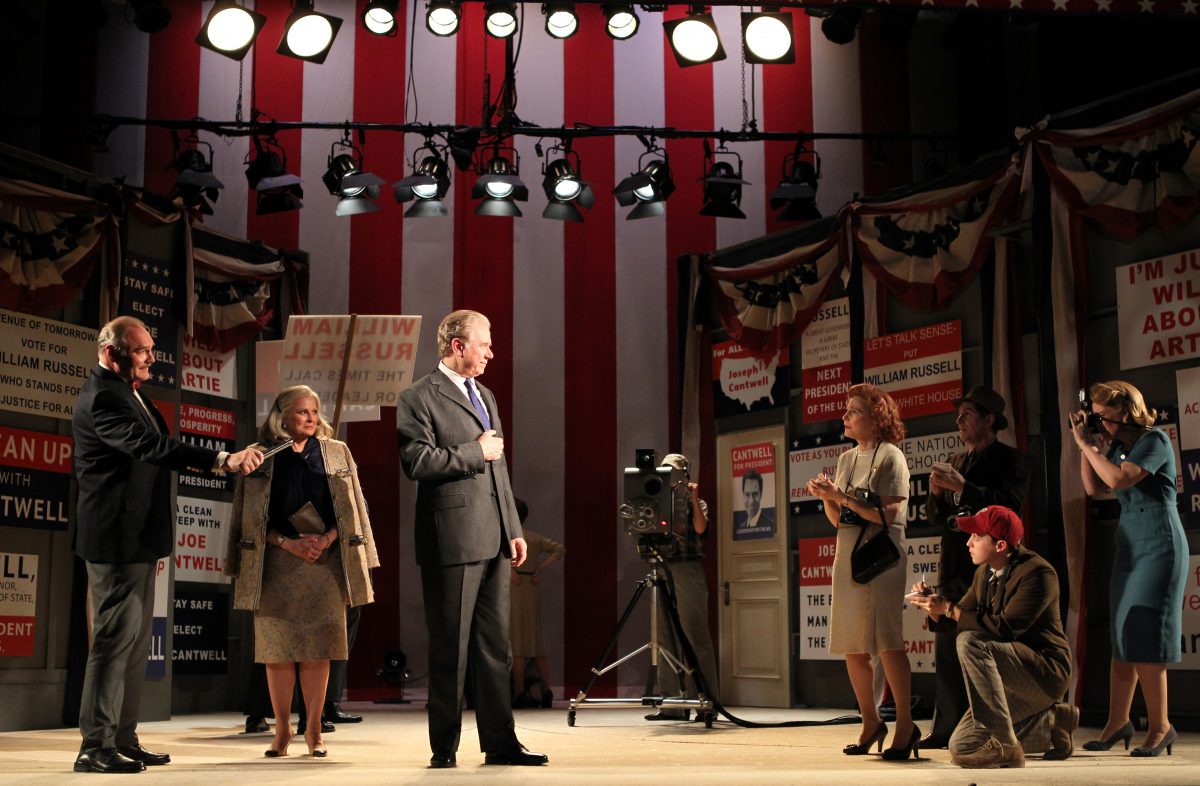
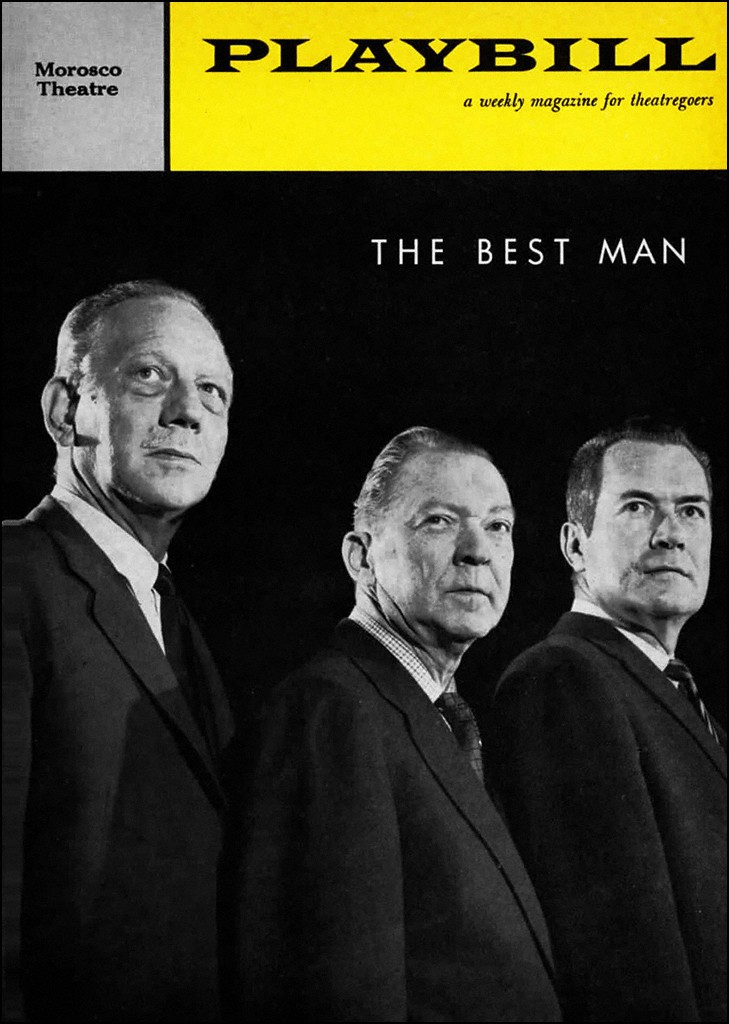
Gore Vidal is another key figure in this evolution. His 1960 play The Best Man is arguably one of the best American dramas ever written about politics, and though it draws inspiration from real-life figures like Truman and Kennedy, it uses fictional characters to probe the American political system.
Meanwhile, in 1972 Vidal wrote An Evening With Richard Nixon and…, using the then-current president’s own words in a play that sees him judged by the ghosts of presidents past. Similarly, George W. Bush was still in office when David Hare dissected his administration in the play Stuff Happens, and shortly after he left the White House in 2009, he was lampooned by Will Ferrell in the Tony Award-nominated solo show You’re Welcome America. More recently, Lucas Hnath’s play Hillary and Clinton, which came to Broadway in 2019, imagined the fateful night in 2008 when Hillary Clinton lost the Democratic nomination to Barack Obama.
With its poetic look at the Clintons’ inner lives, Hnath’s play belongs to a 21st-century tradition of presidential plays and musicals that seek to challenge our conventional understanding of a political narrative. In Michael Friedman and Alex Timbers’ Bloody Bloody Andrew Jackson, which premiered on Broadway in 2010, the controversial president is reimagined as an emo rock star whose volatile emotions help him gain the public’s ardor. Peter Morgan’s play Frost/Nixon shows us Richard Nixon after his resignation, when he’s lost his influence and is desperately trying to rehabilitate his reputation. And Hamilton, of course,is famous for casting the Founding Fathers with actors of color, which among other things underscores that every American deserves to take ownership of the ideals pursued by presidents like George Washington and Thomas Jefferson.
Bloody Bloody Andrew Jackson
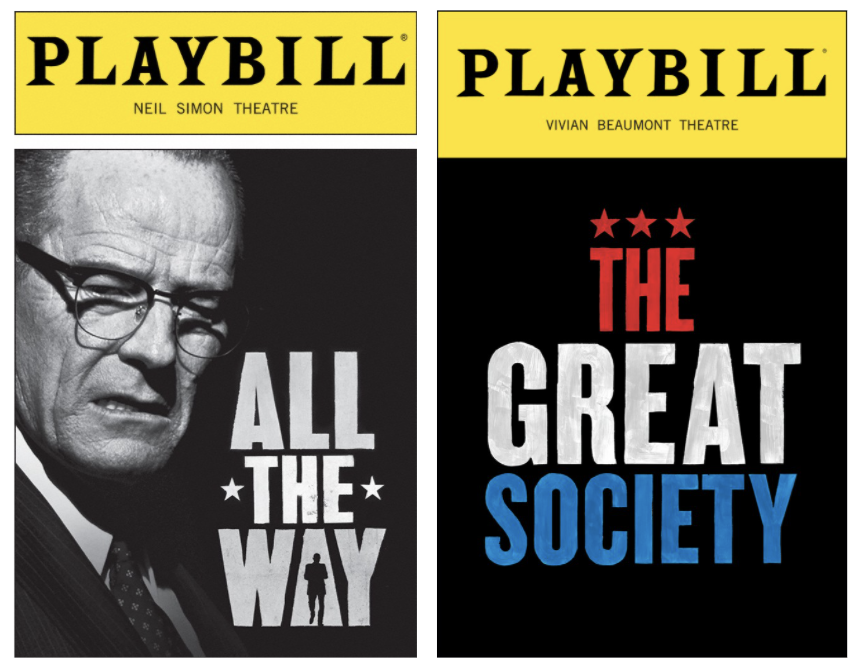
And not unlike MacBird!, Robert Schenkkan’s plays All the Way and The Great Society give LBJ’s presidency a Shakespearean tinge. Instead of satire, however, Schenkkan opts for the sweep of a history play and the emotional punch of a tragedy. All The Way, which won the Tony Award for Best Play in 2014, charts one of Johnson’s greatest victories — the passage of the 1964 Civil Rights Act — but this climax becomes painfully bittersweet when it’s considered alongside The Great Society, whichdepicts the Johnson administration’s disastrous descent into the Vietnam War.
Often, the most enduring shows about presidents — either real or fictional — stay with us because they seem to understand our current moment. For instance, David Mamet’s play November, about a fictional (and morally dubious) chief executive named Charles “Chucky” Smith, premiered on Broadway in 2008. One of Smith’s final lines (“I always felt I’d do something memorable — I just assumed it’d be getting impeached”) was funny at the time, but it feels shockingly prescient in the Trump era. Likewise, unless politicians suddenly change, the mudslinging campaign tactics in Gore Vidal’s The Best Man are guaranteed to be freshly relevant every four years.
And with this year’s presidential election feeling especially fraught, there’s no doubt it will inspire another crop of plays to keep the president on stage for years to come.
Mark Blankenship is the founder and editor of The Flashpaper and the host of The Showtune Countdown on iHeartRadio Broadway.